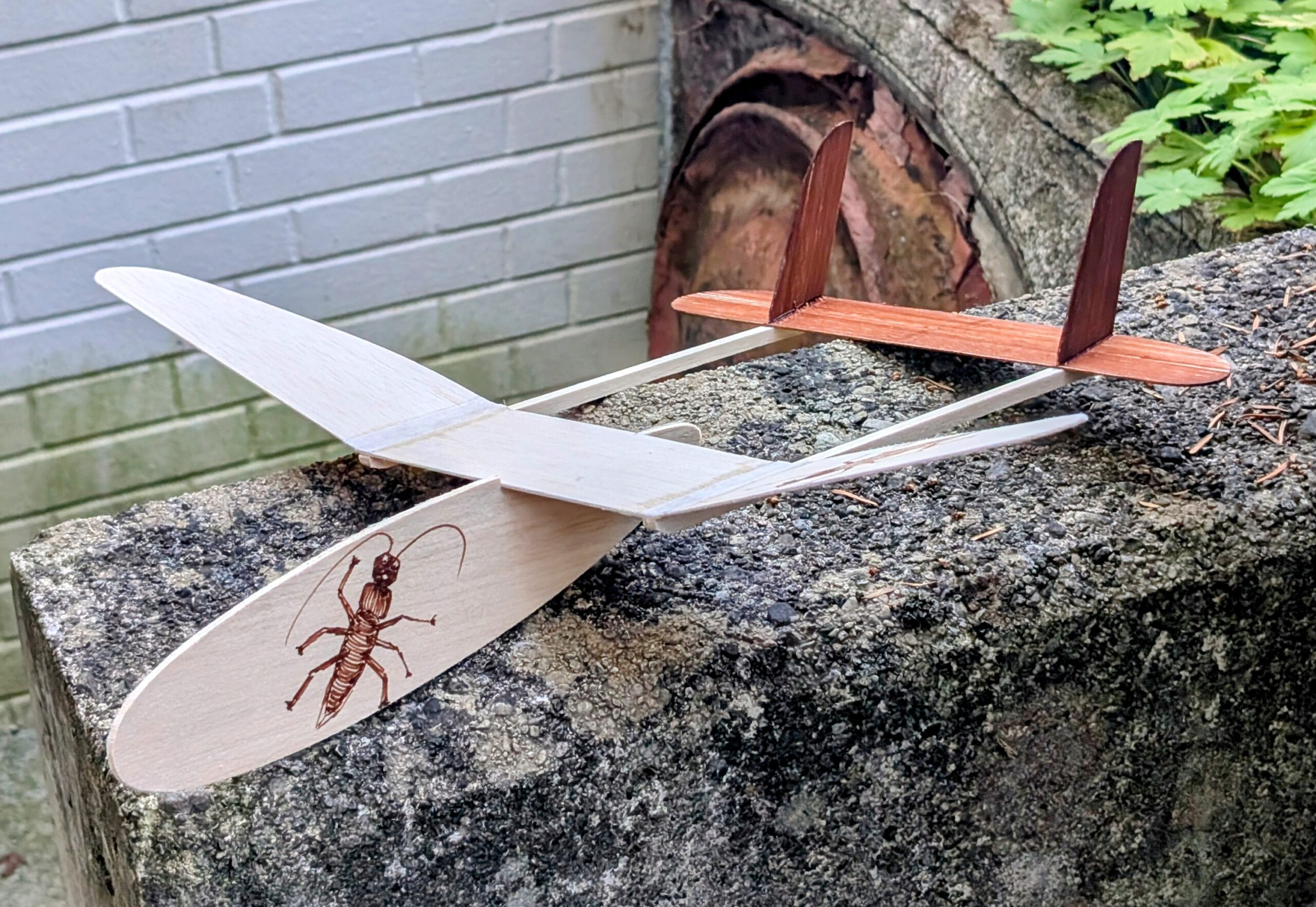
Span 51 cm / 20 in
Weight 26 g / 0.92 oz
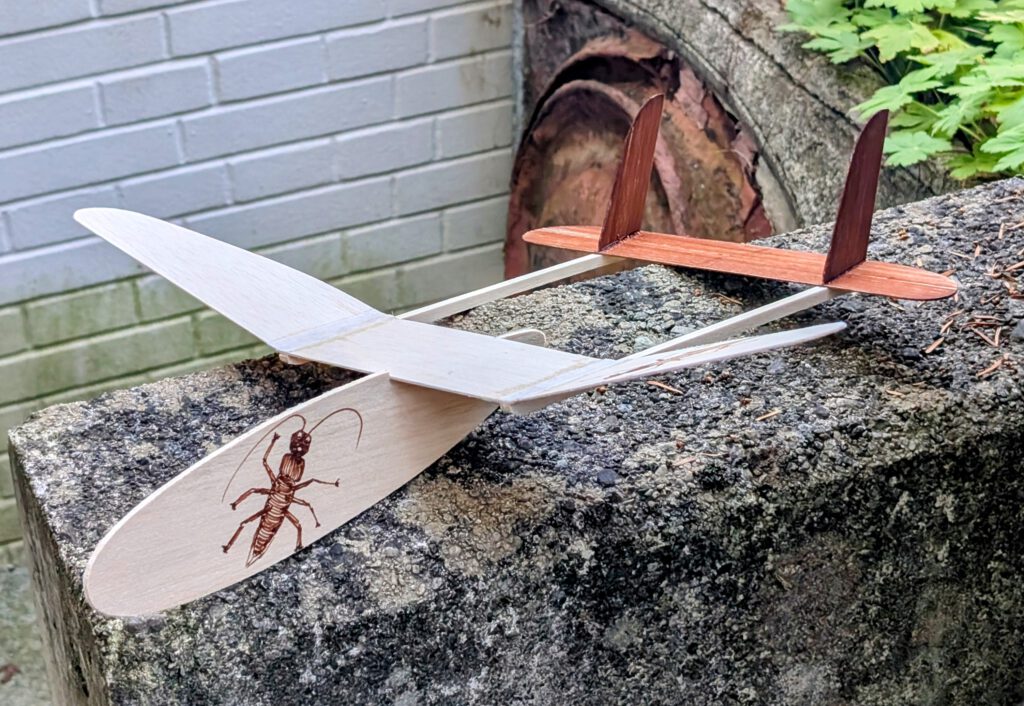
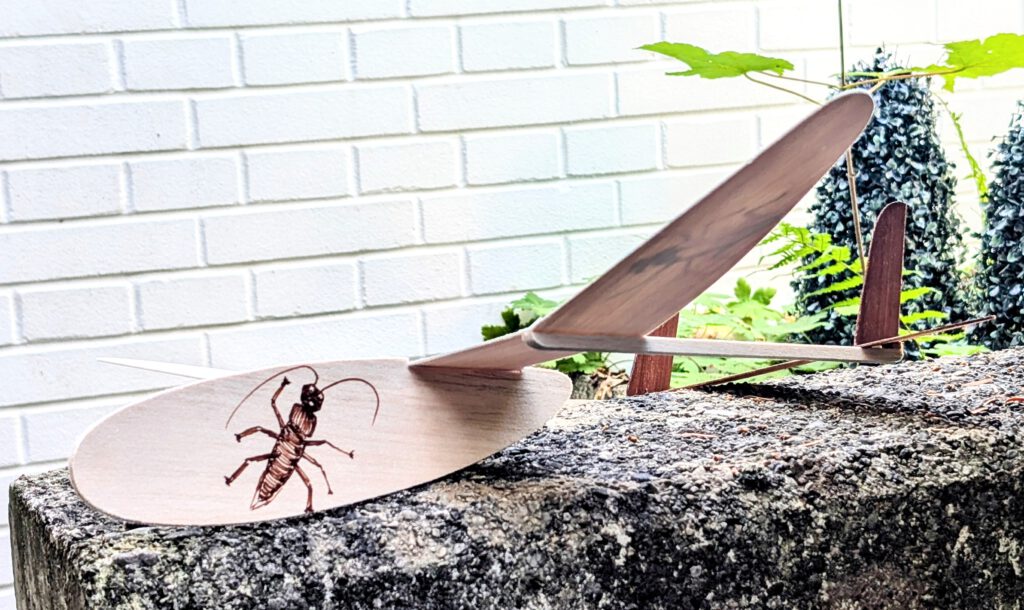
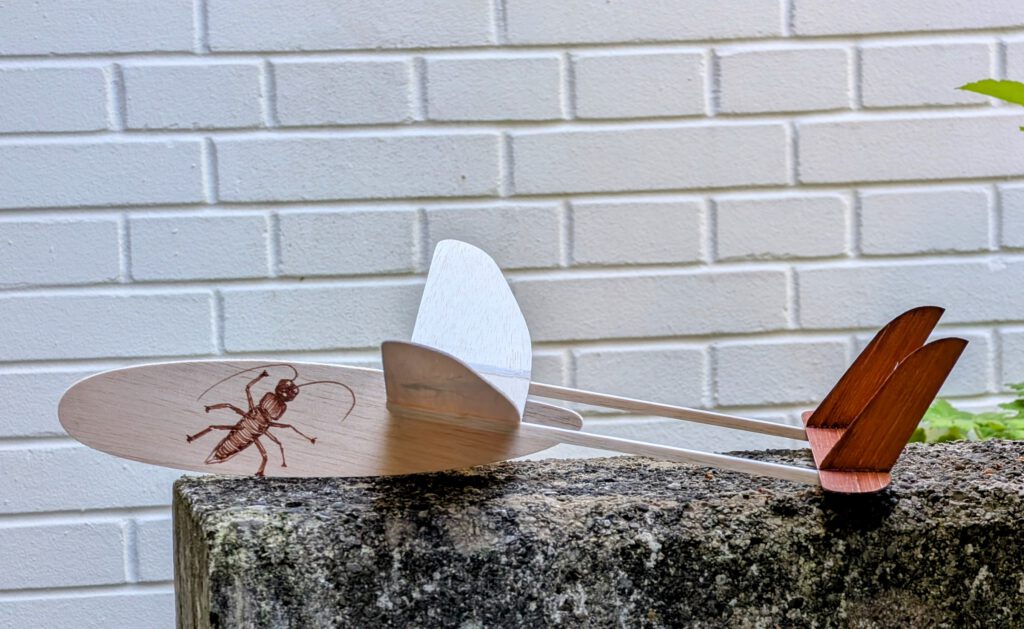
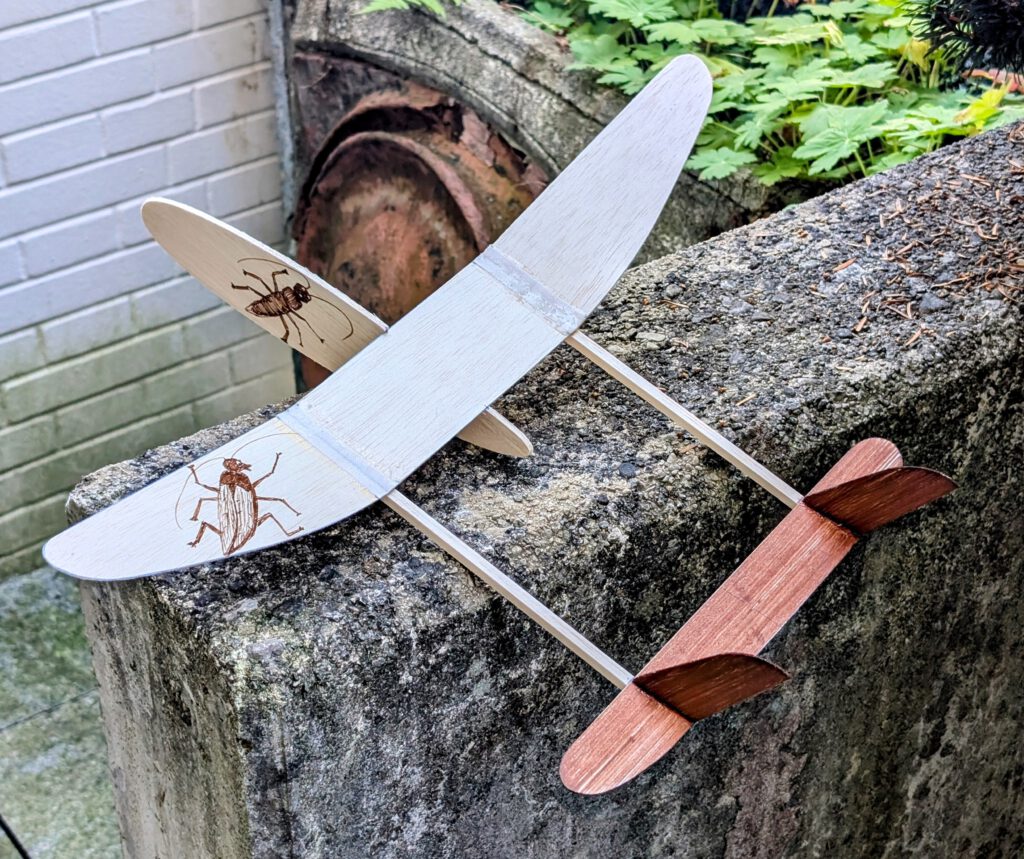
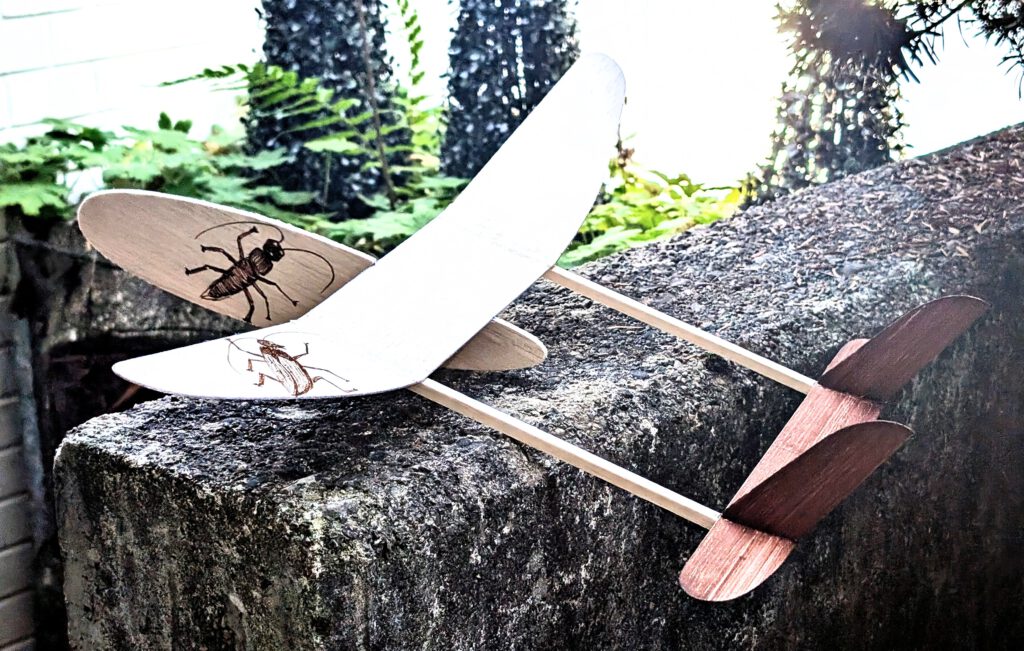
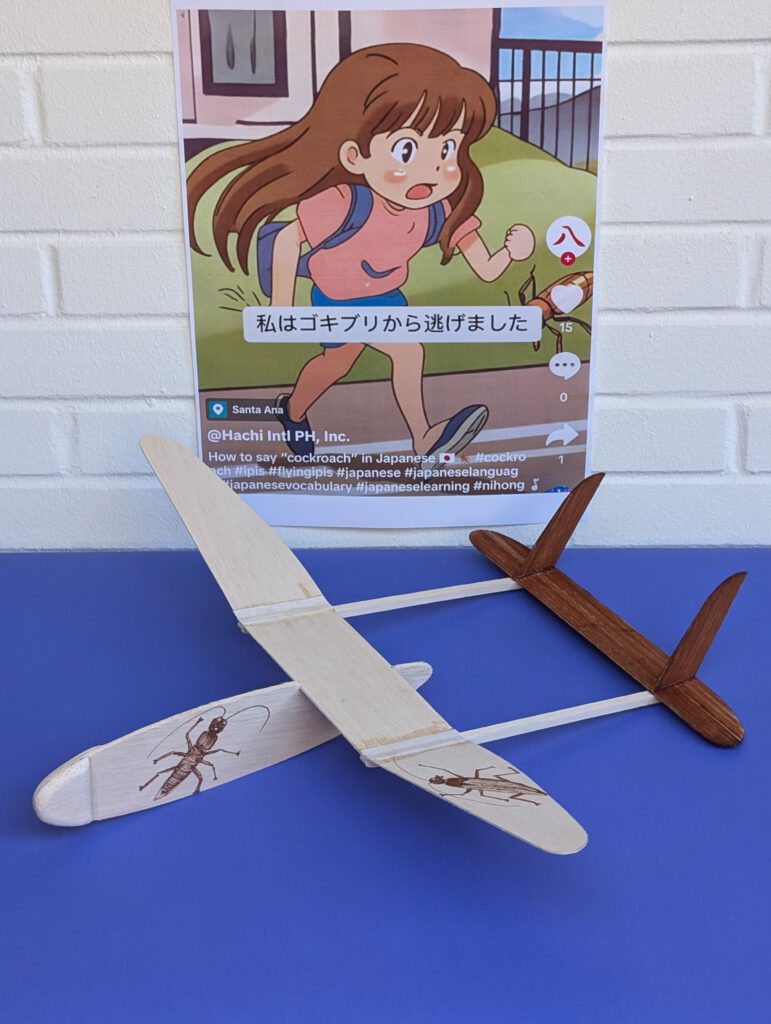
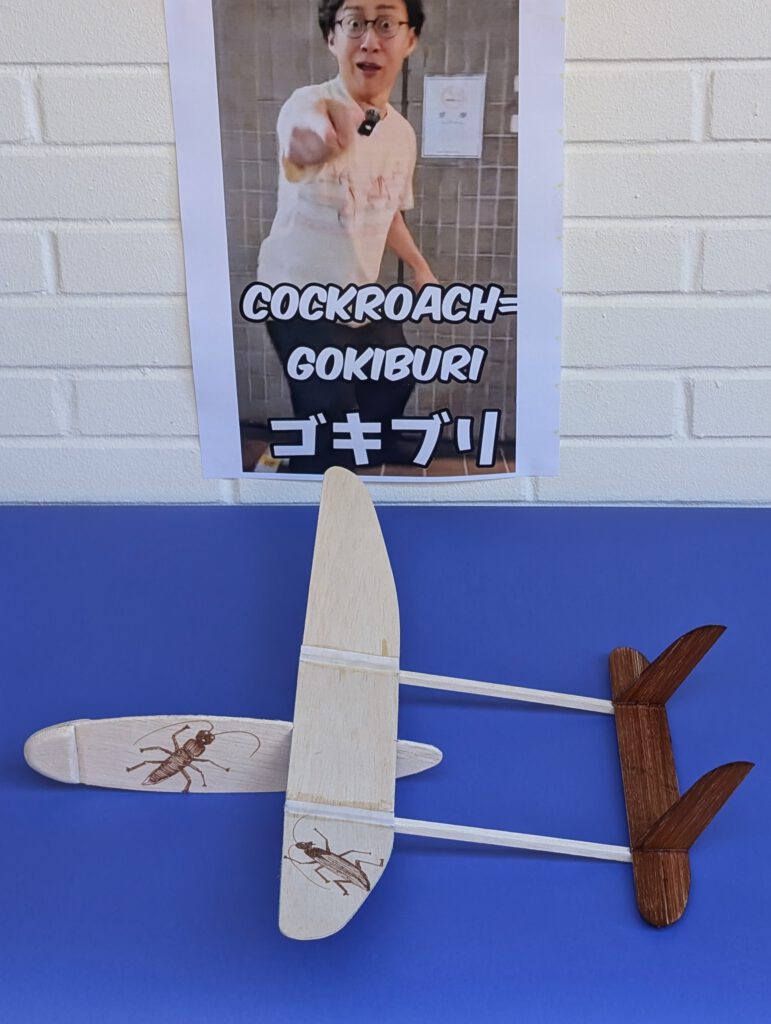
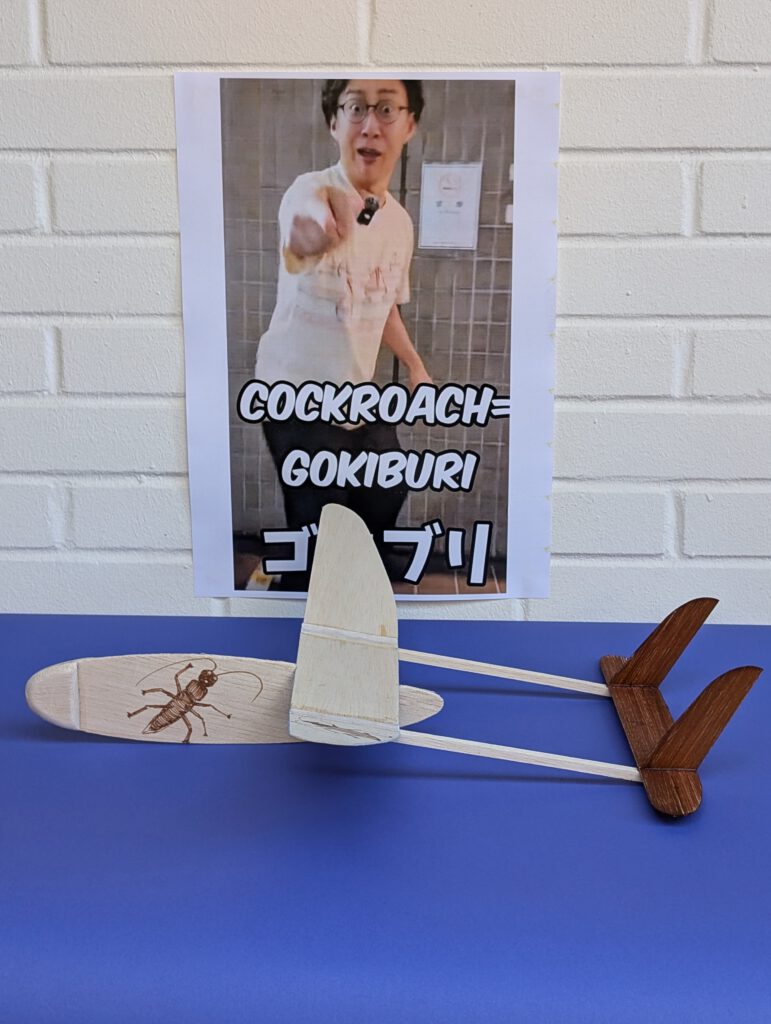
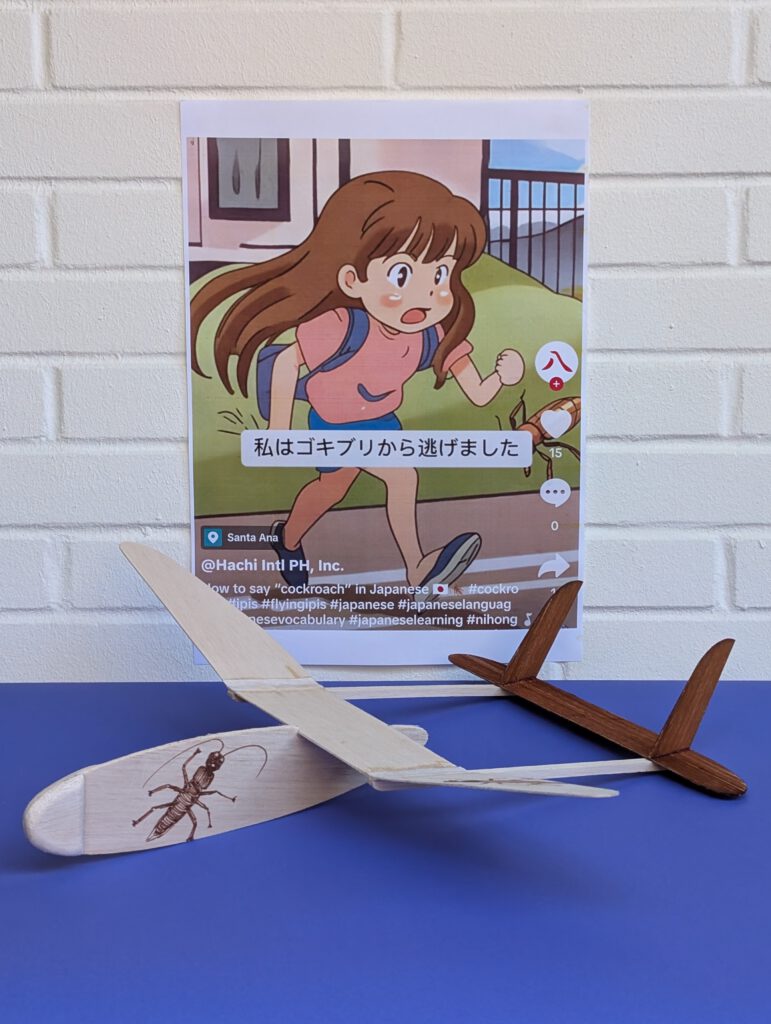
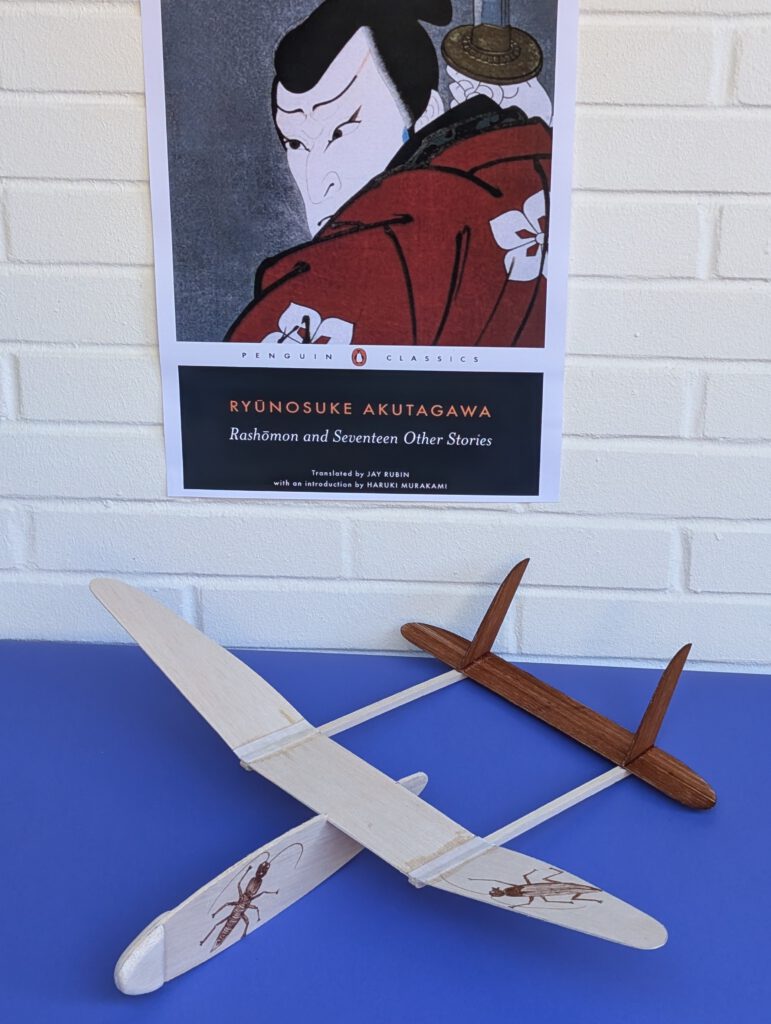
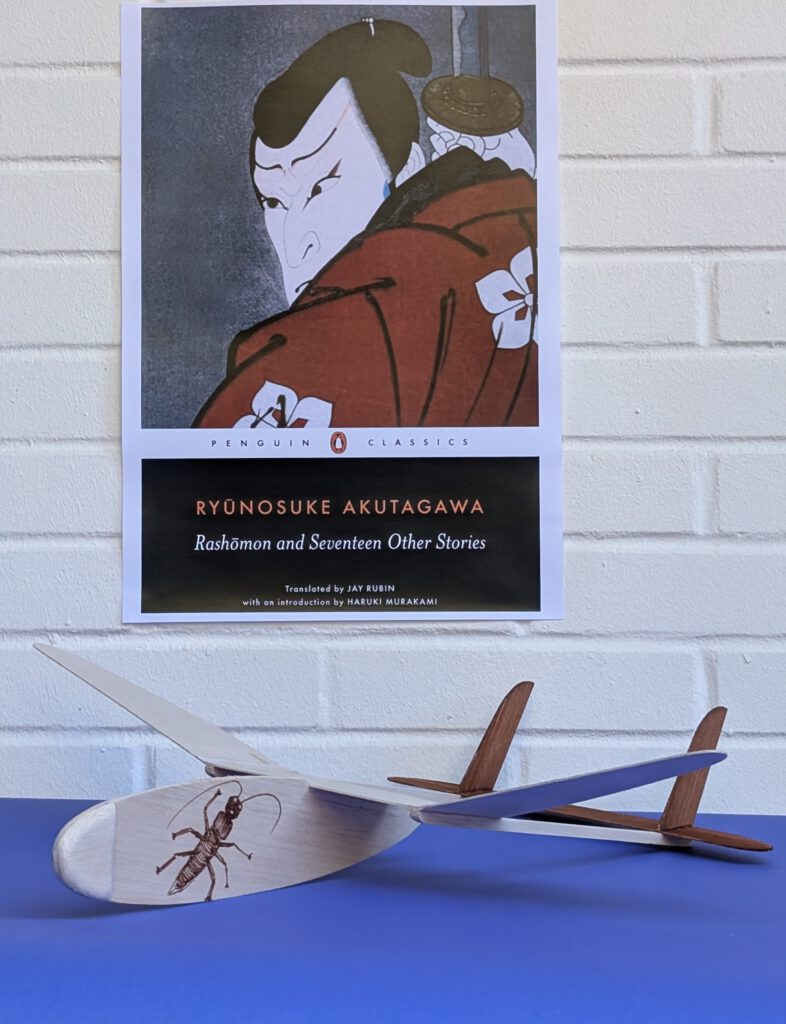
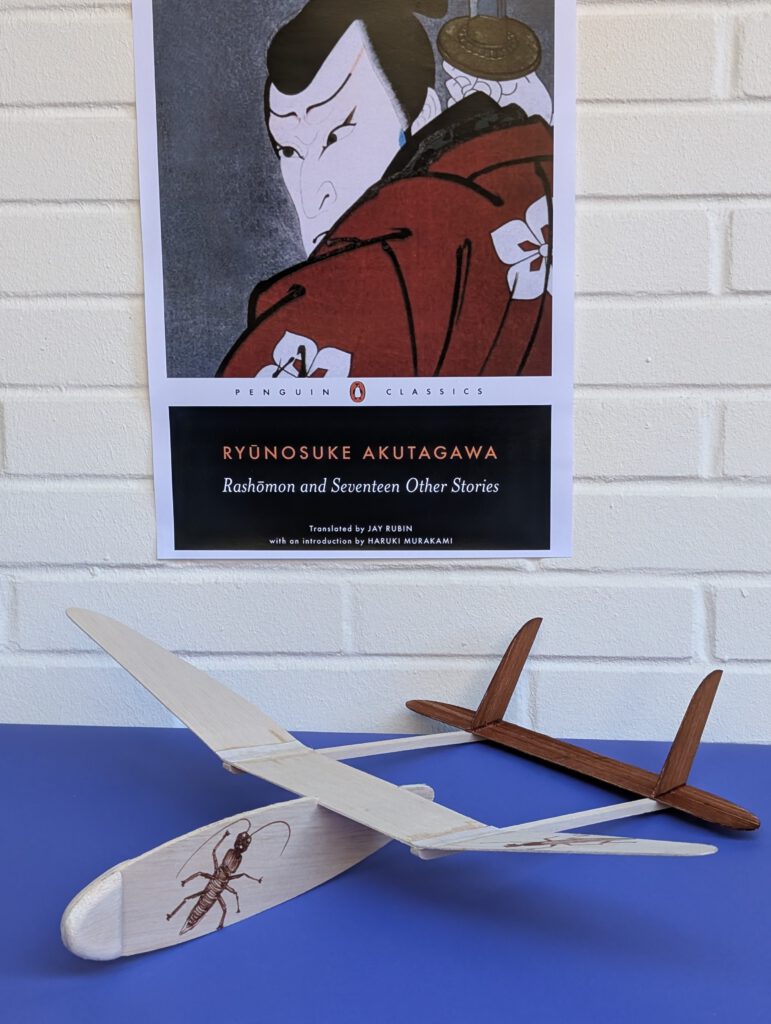
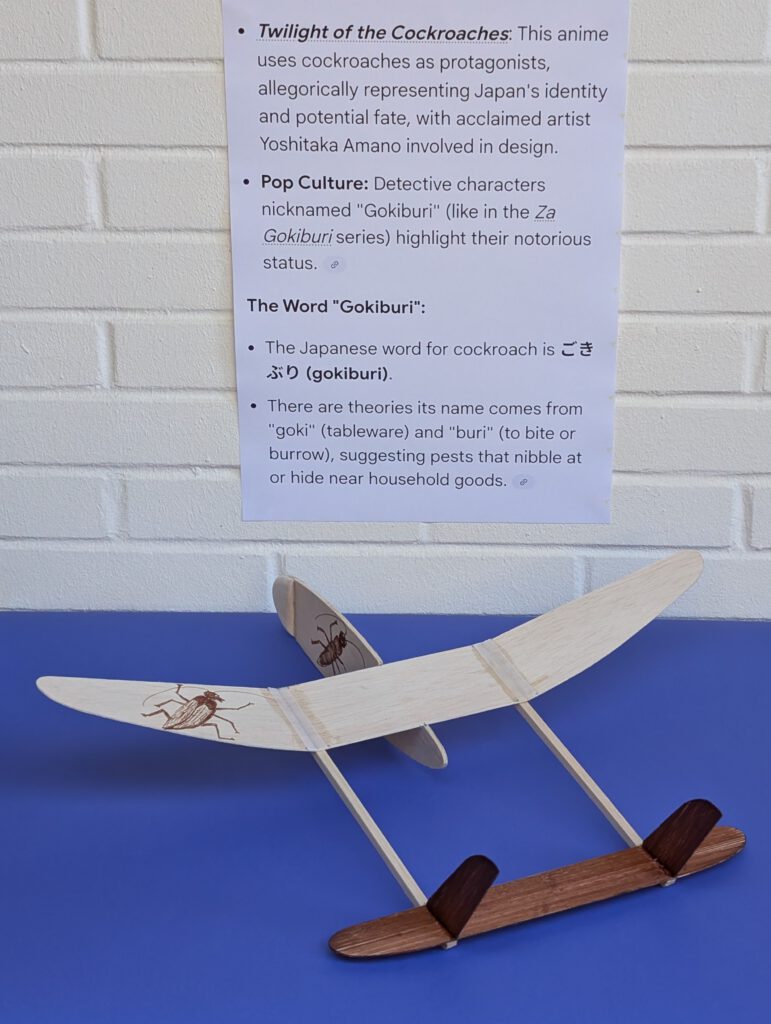
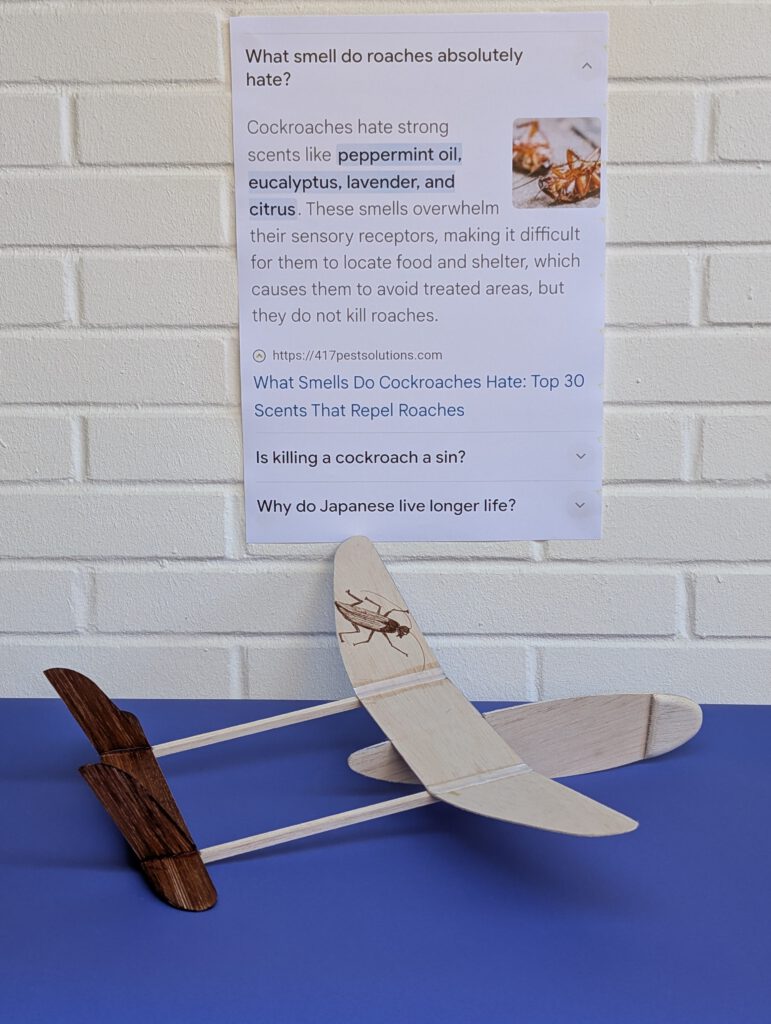
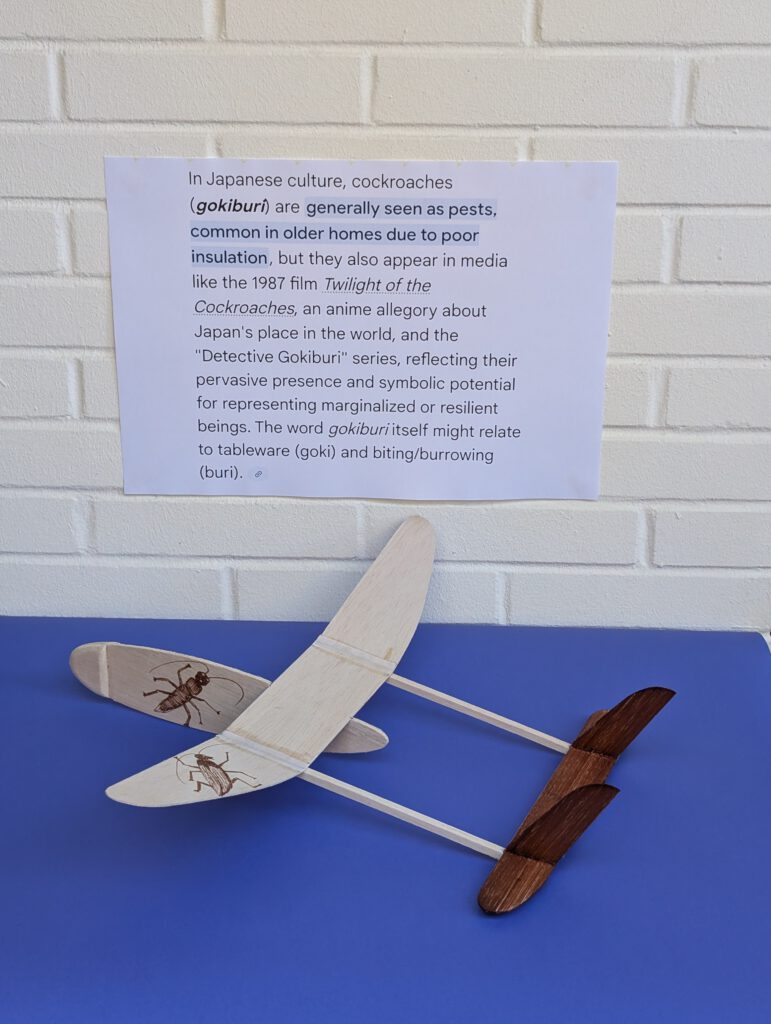
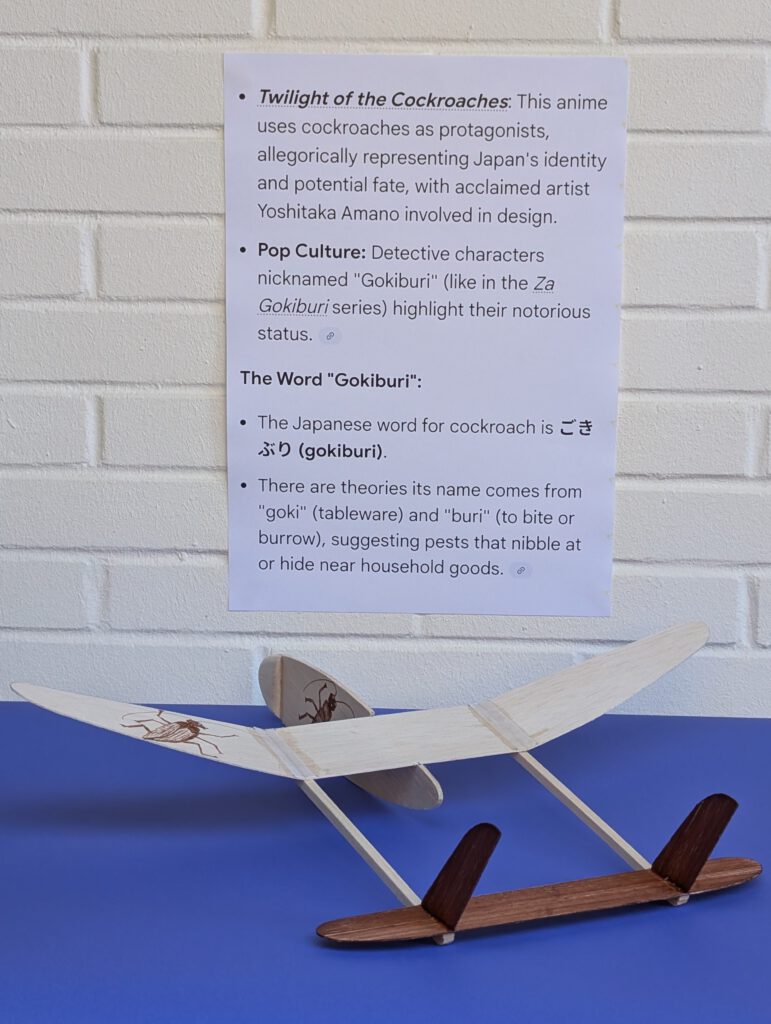
The concept:
• Twinboom layout
• Easy to build
• Good flight characteristics
• Lightly built
• Hand launched glider or slope soarer
About the Name “Gokiburi”
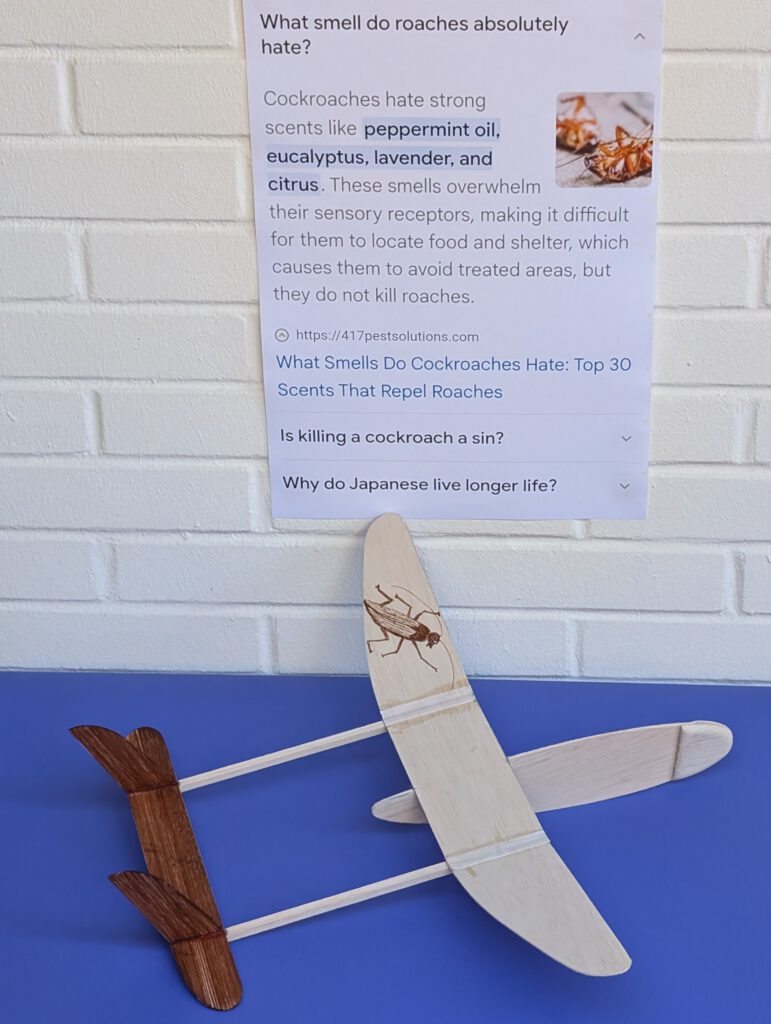
Many years ago, when I was studying Russian in the Soviet Union, cockroaches accompanied me in my daily and nightly life, sometimes by the hundreds. Locally they were called “Tarakany” or “Prussians.” They were everywhere, and since it was impossible to ignore them, I eventually began to take an interest in them.
Some cockroaches, like humans, live only on the ground. Others have wings and can fly when the temperature is warm enough. However, much like chickens, they walk faster and with greater endurance than they fly.
There is no country in the world without cockroaches, and every language has its own name for them. I went through many dictionaries until I found a word that sounded just right to me: the Japanese name.
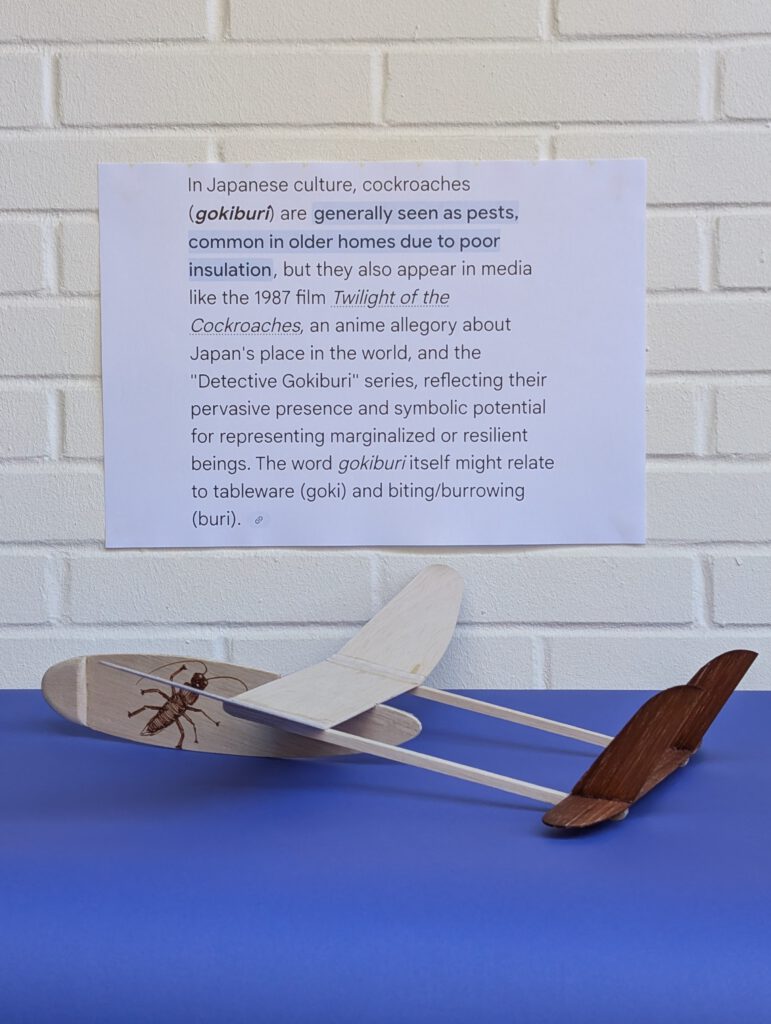
Later I discovered that these insects even have a small place in Japanese culture. As in most countries, cockroaches, or gokiburi, are generally regarded in Japan as symbols of impurity and filth. However, in Japanese online subculture they appear quite often in anime and manga. There they can represent many things, ranging from extreme disgust to a playful or humorous insult.
Cockroaches have existed far longer than humans, over 300 million years compared with roughly 300,000 years for our species. A decapitated cockroach can live for up to a week. When submerged in water, cockroaches can hold their breath for about 40 minutes. Another remarkable fact is that they are capable of surviving very high levels of radiation.
I chose the name Gokiburi for my model simply because it sounded right to me, not for any deeper reason. Japanese, by the way, is a beautiful language, and I may borrow more names from it for my future models.
Building the sheet balsa chuck glider Gokiburi:
Materials:
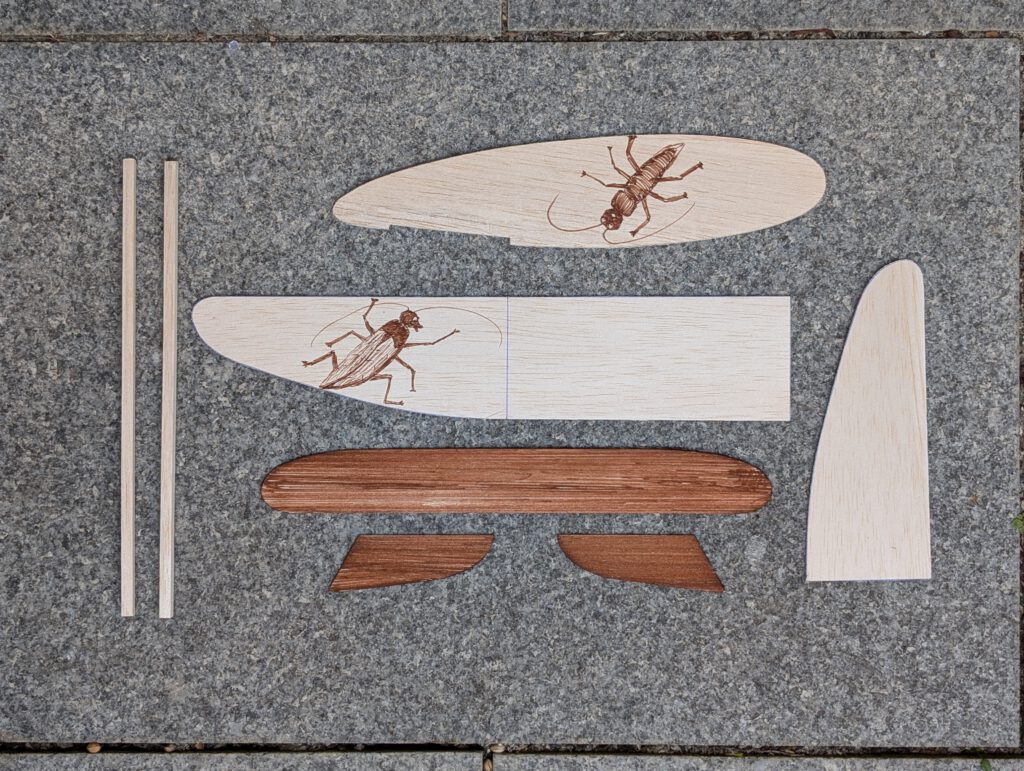
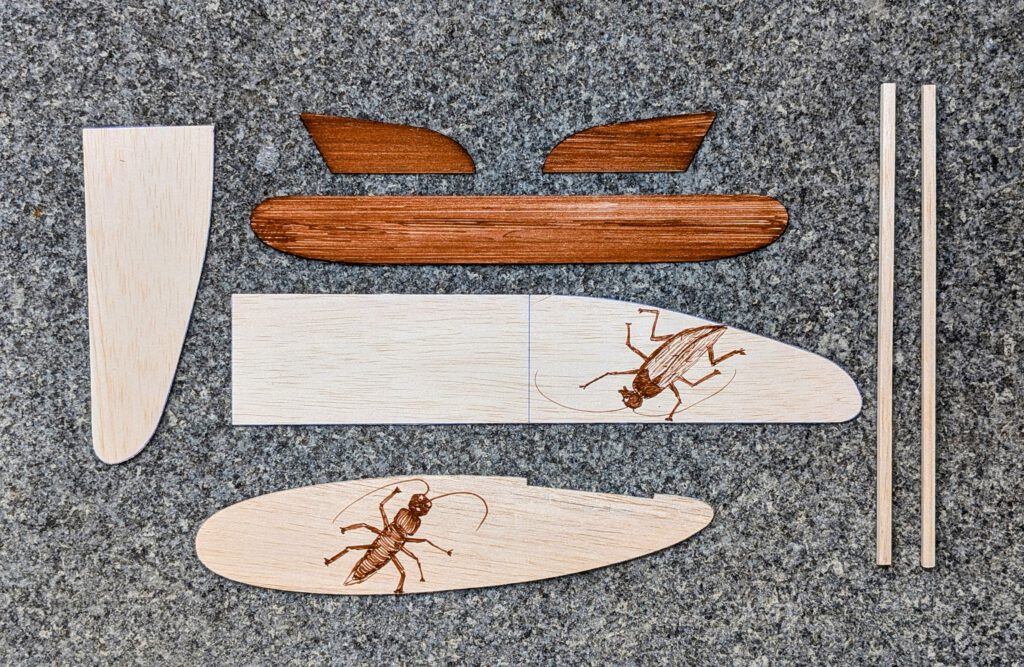
Fuselage gondola: B 3; fuselage nose doublers: B 3; wings: B 1; horizontal stab: B 1; horizontal stab wedges: scrap piece of Balsa as shown on plan; fins: B 1; booms: B sticks 6 x 6; linen/cotton band width: ½ in = 12 mm; ballast: piece of scrap steel or lead or small coins.
Assembly:
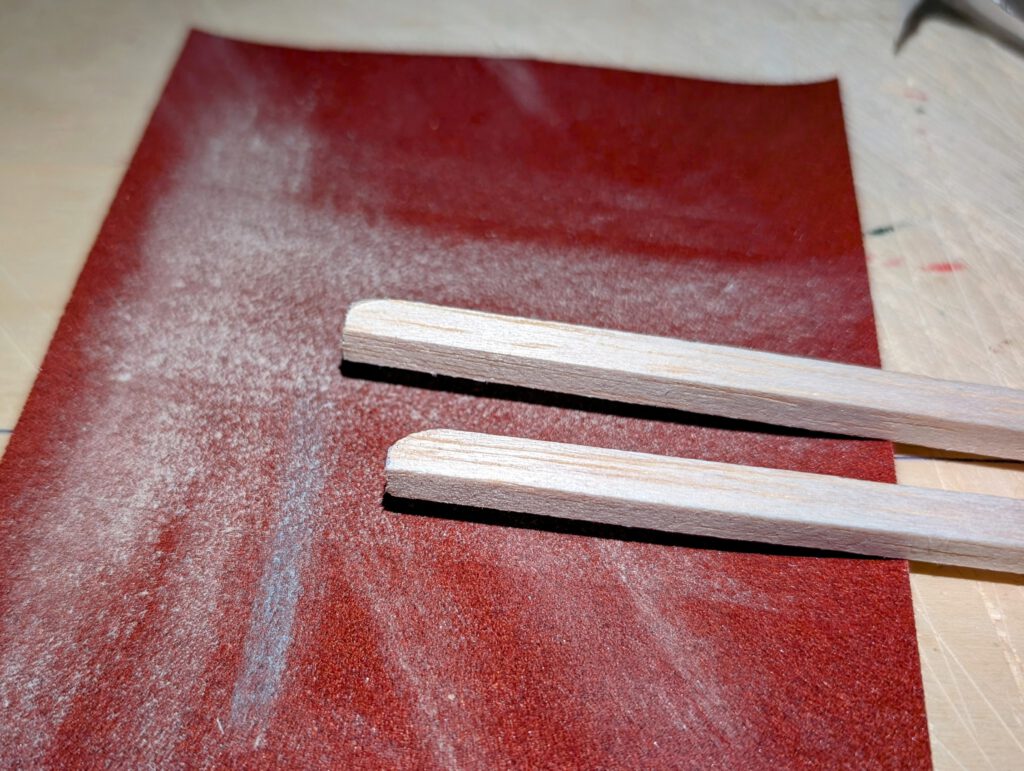
Cut out balsa parts according to plan. Sand meticulously. Make colouring now, if desired.
Fuselage gondola:
Make cutouts for wing according to plan.
Wings:
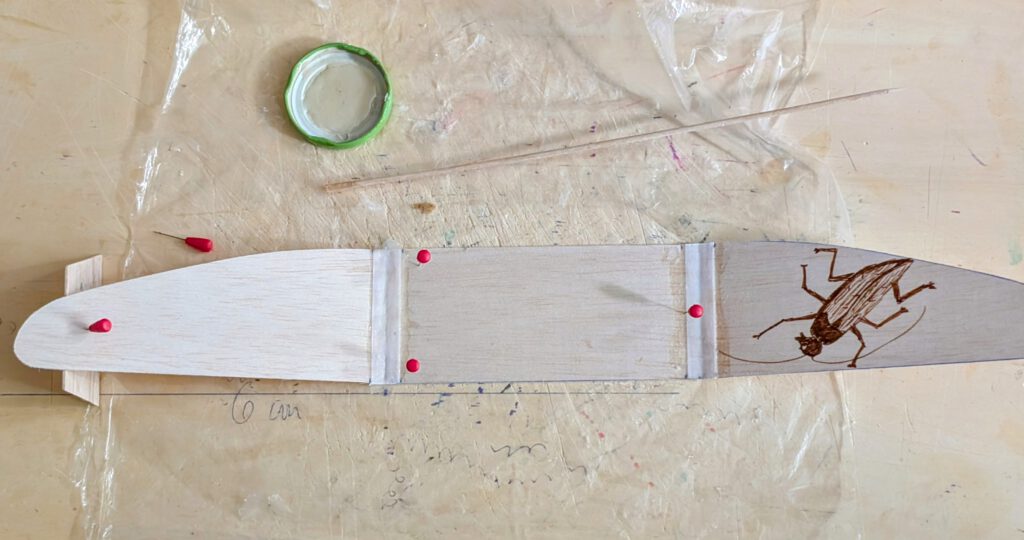
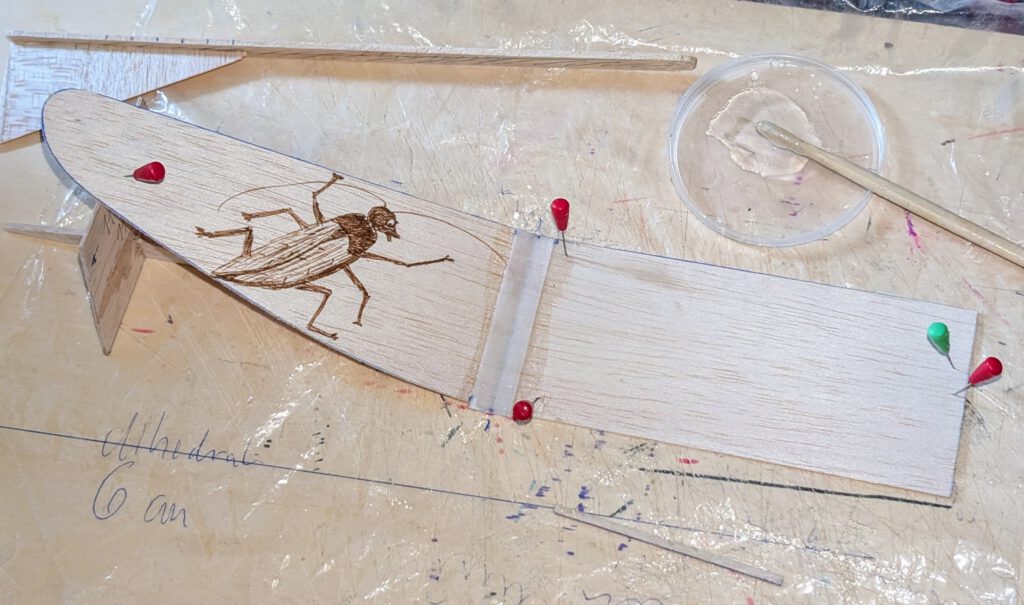
Pin wing center section according to plan on building board. Cement outer sections one by one to center section paying attention to given dihedral. Let dry. Use linen/cotton band for reinforcing joints. Let dry.
Booms:
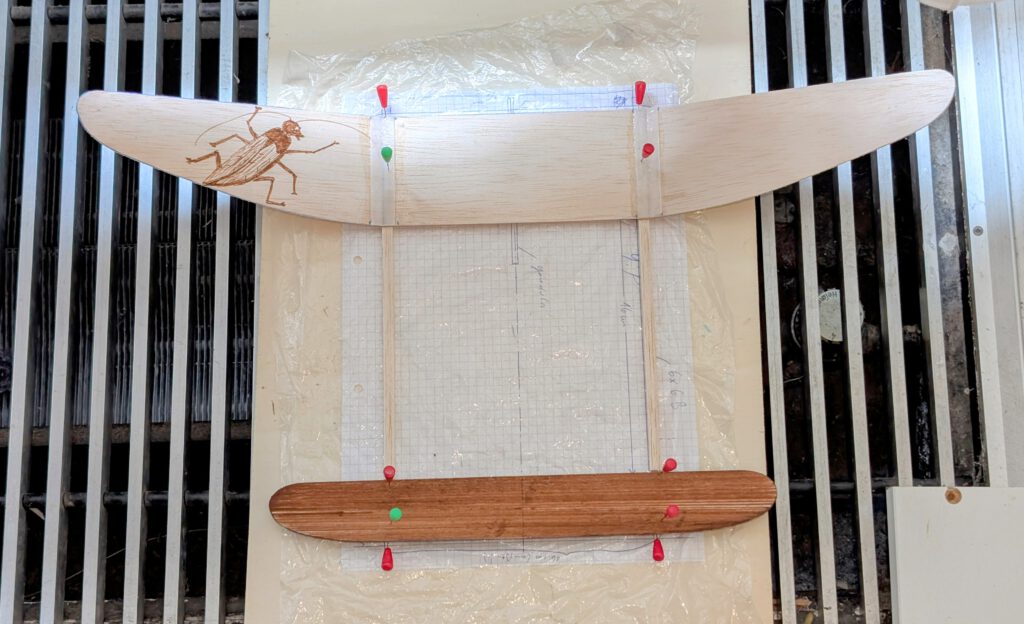
Align and pin booms on building board as they must sit absolutely parallel.
Cement wing on booms. Watch for symmetry. Let dry.
Horizontal stab:
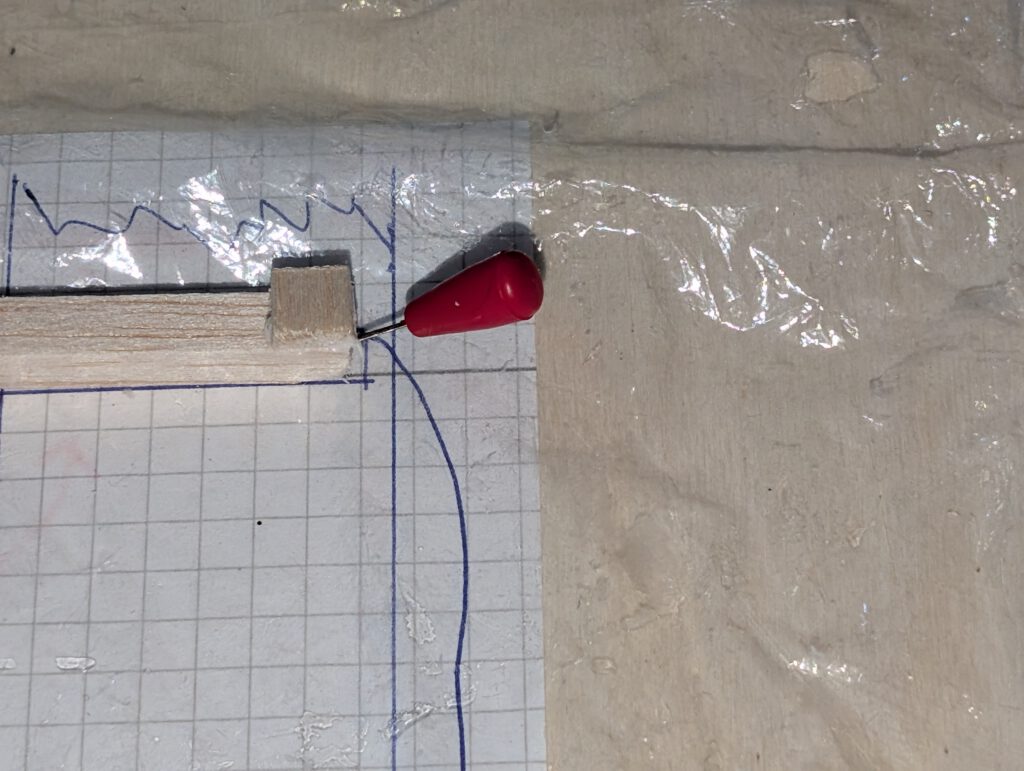
Bring wedges into position as shown on plan and cement. When dry cement horizontal stab in its place just as on plan.
Final assembly:
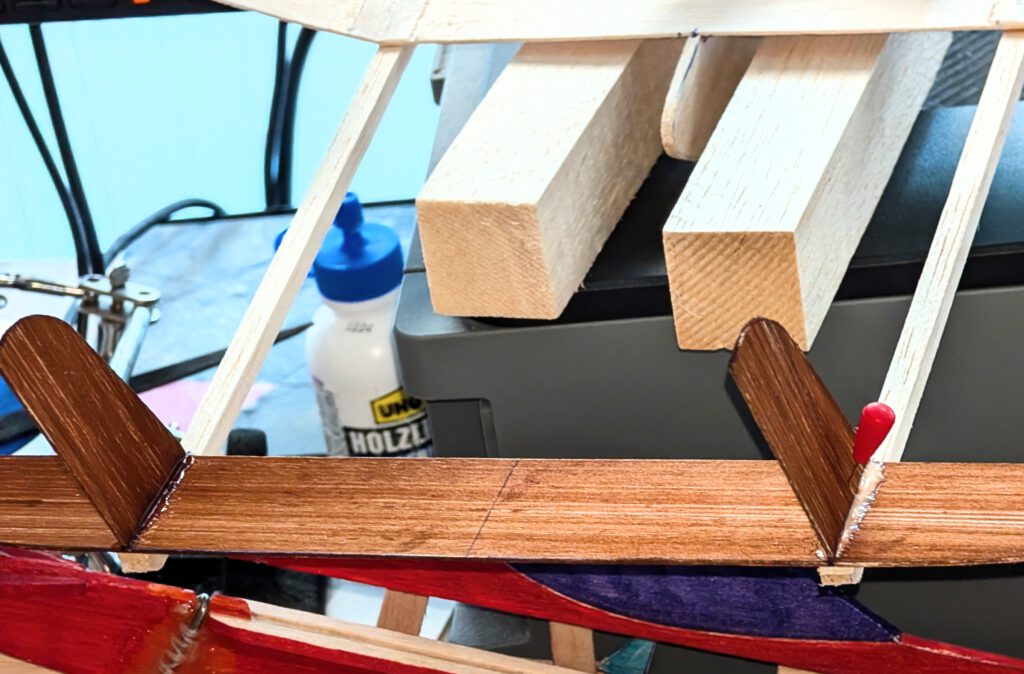
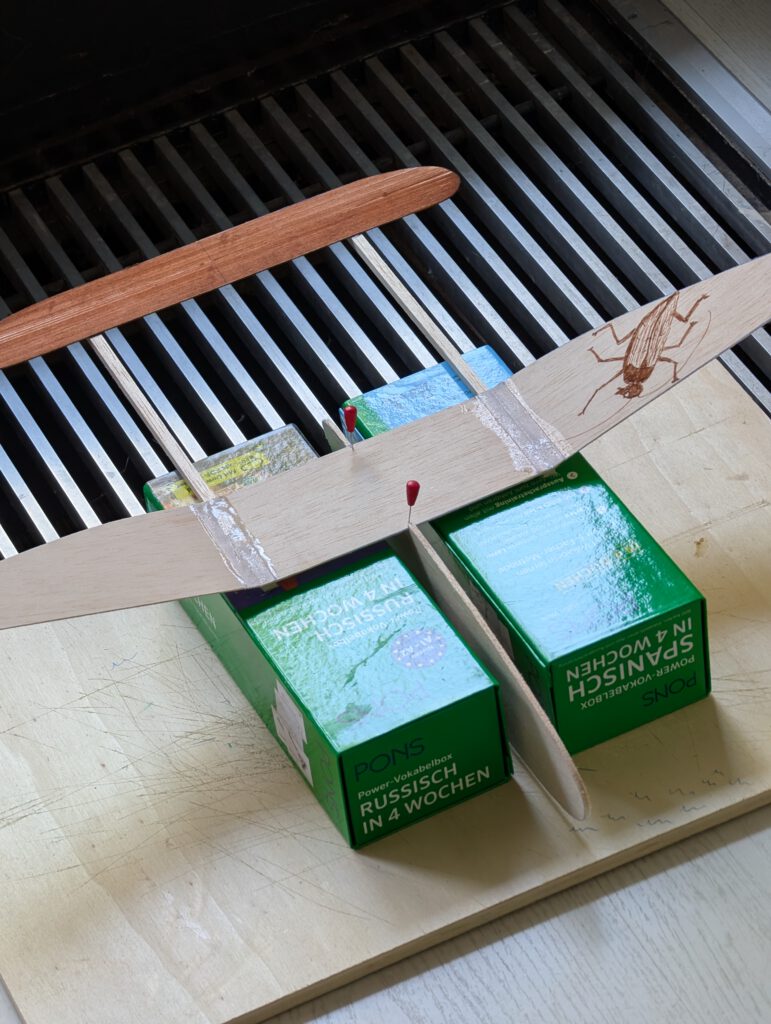
Remove wing-boom-empennage assembly from building board and lay aside. Take two voluminous books of same size or two equal sized cardboard boxes or something comparable and position both parallelly. Cement fuselage gondola to wing-boom-empennage assemblyafter having checked diligently symmetry. Hold in place with pins. Now put your nearly-ready model on both books/boxes the fuselage gondola hanging free between them. Let dry.
Cement fins on horizontal stab and let dry. Pay attention to symmetry and 90° angle.
Balance at given CG.
Observation:
Hand launch gliders and slope soarers usually have different CG. If you intend to use yourGokiburi as a hand launched model CG is a bit more ahead than on the slope soarer version.
Have fun with your Gokiburi which is a glider with very pleasing flight characteristics.
良いフライトになりますように。
(Yoi furaito ni narimasu yō ni.)
Leave a Reply