
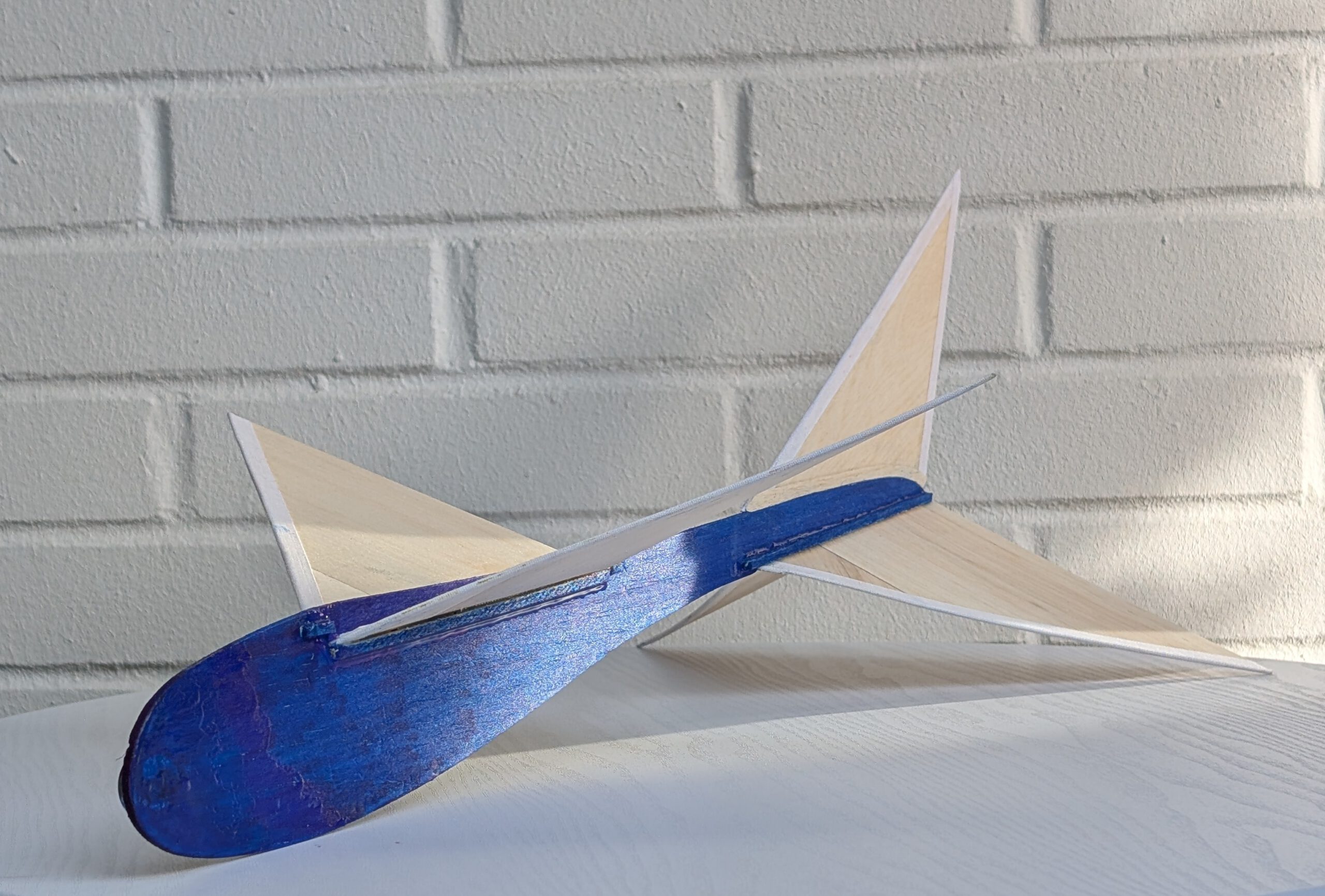
Span 29.5 cm / 11.6 in
Length 49 cm / 19.3 in
Weight 36 g / 1.27 oz

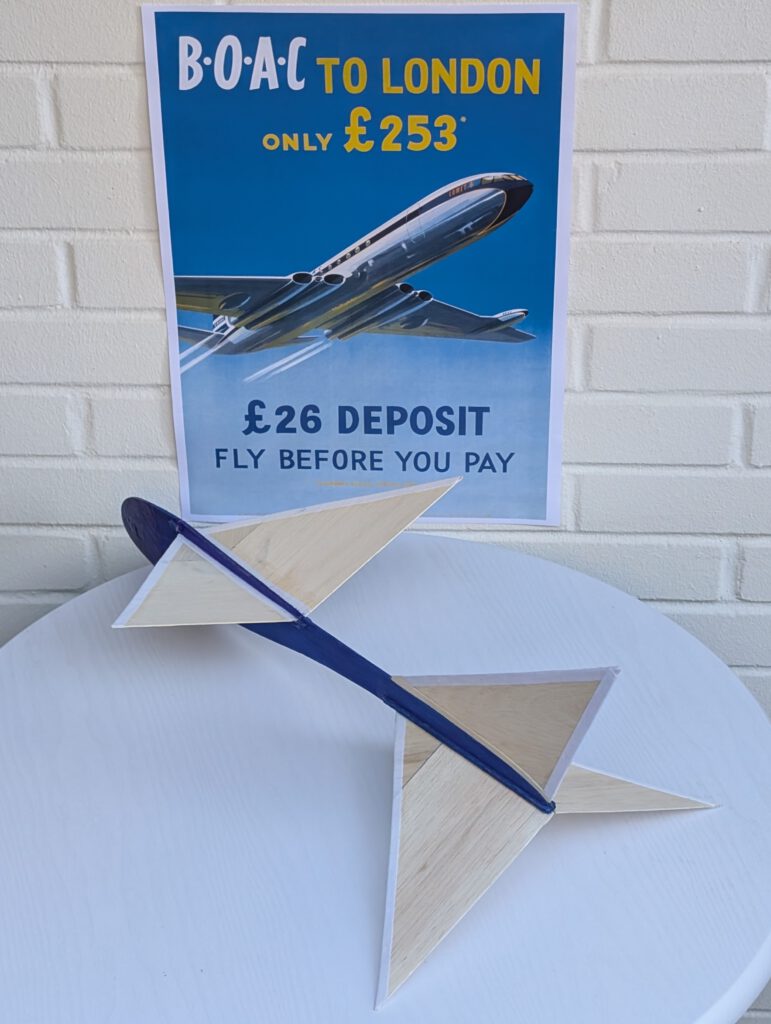
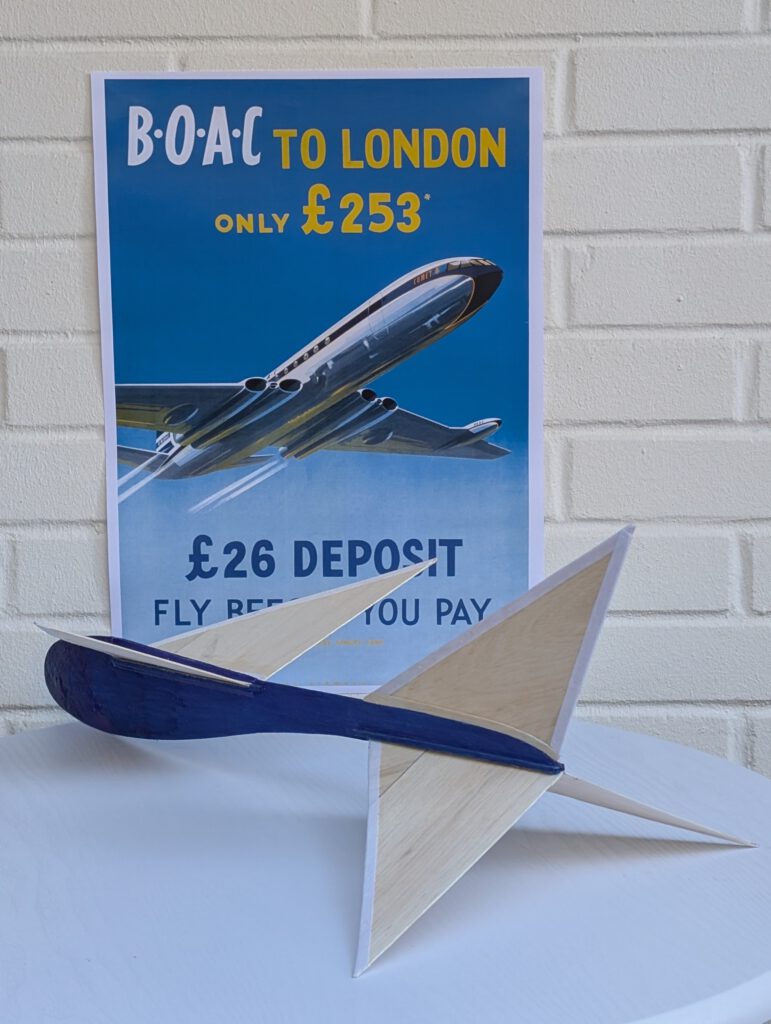
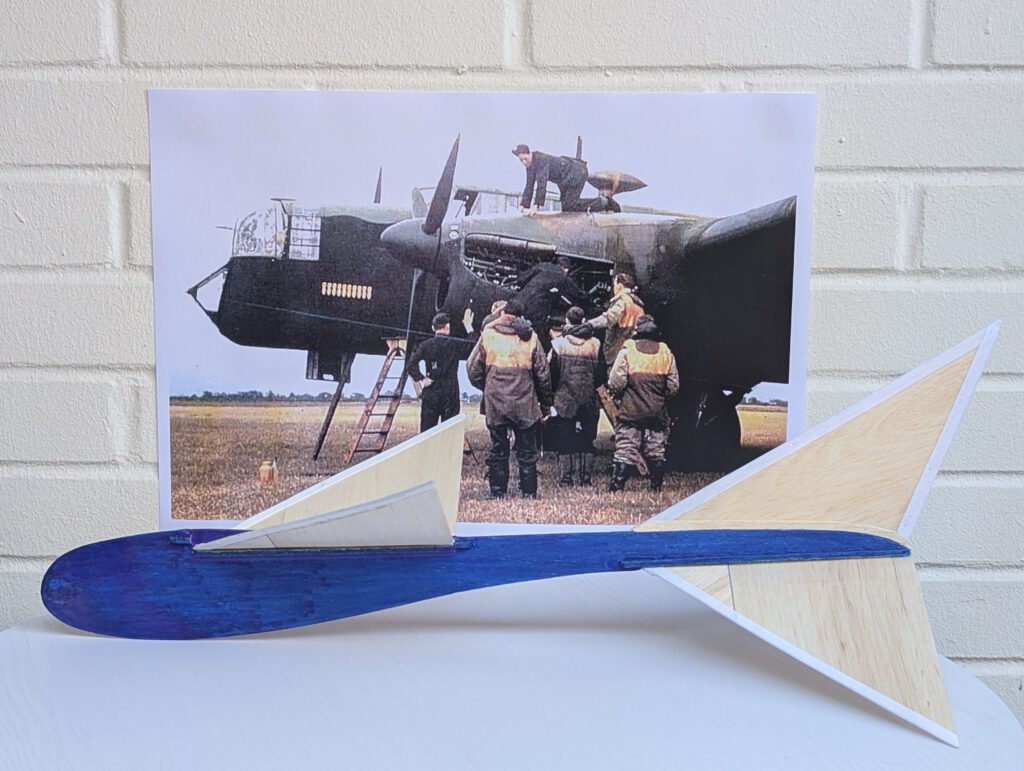
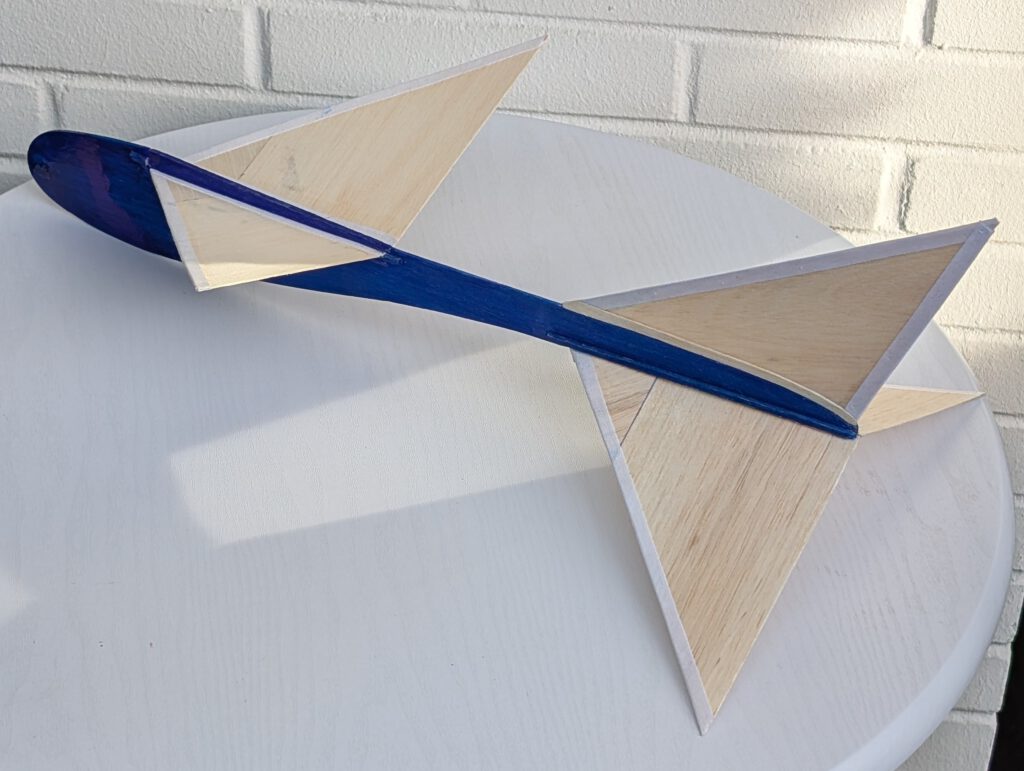
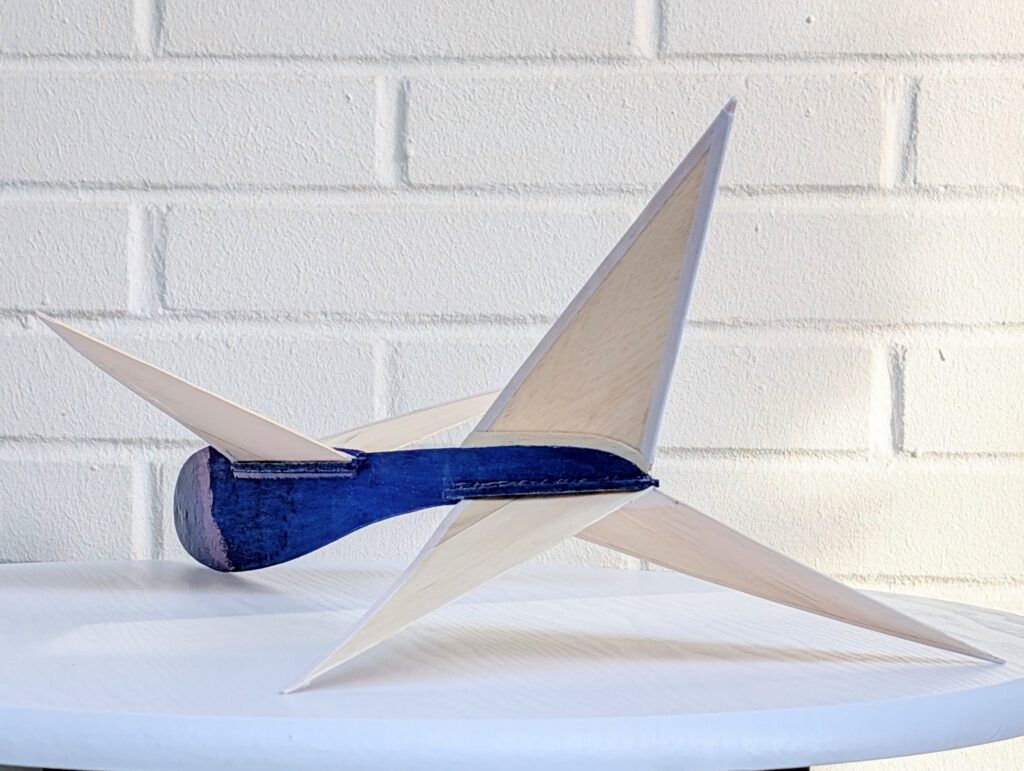
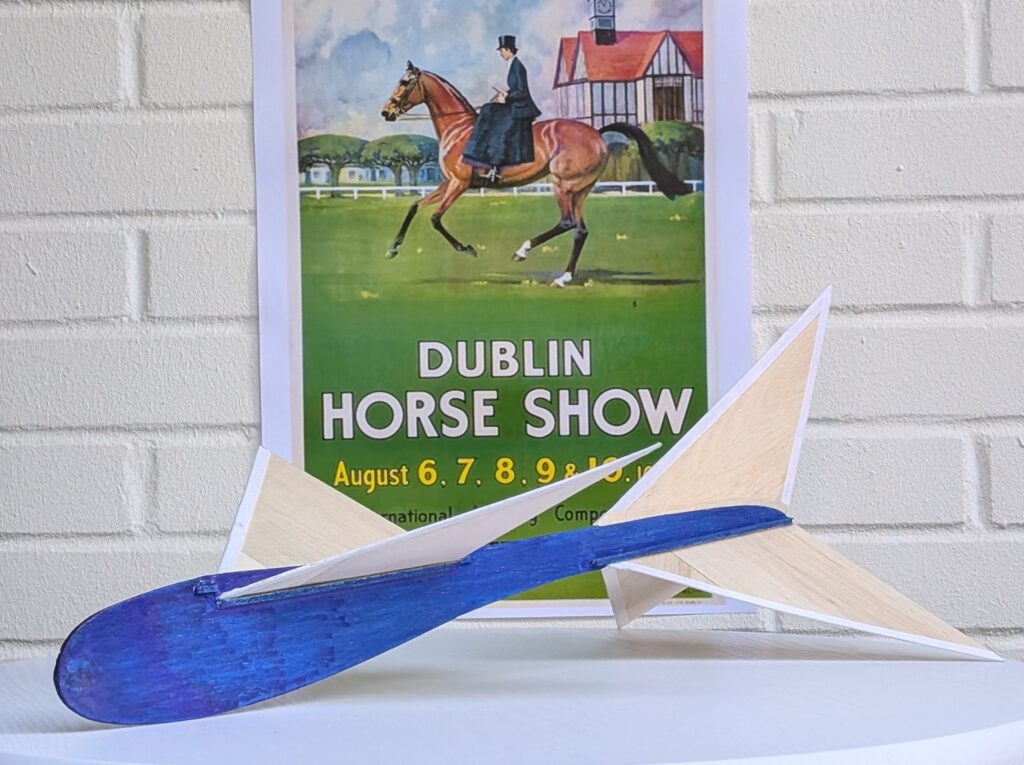
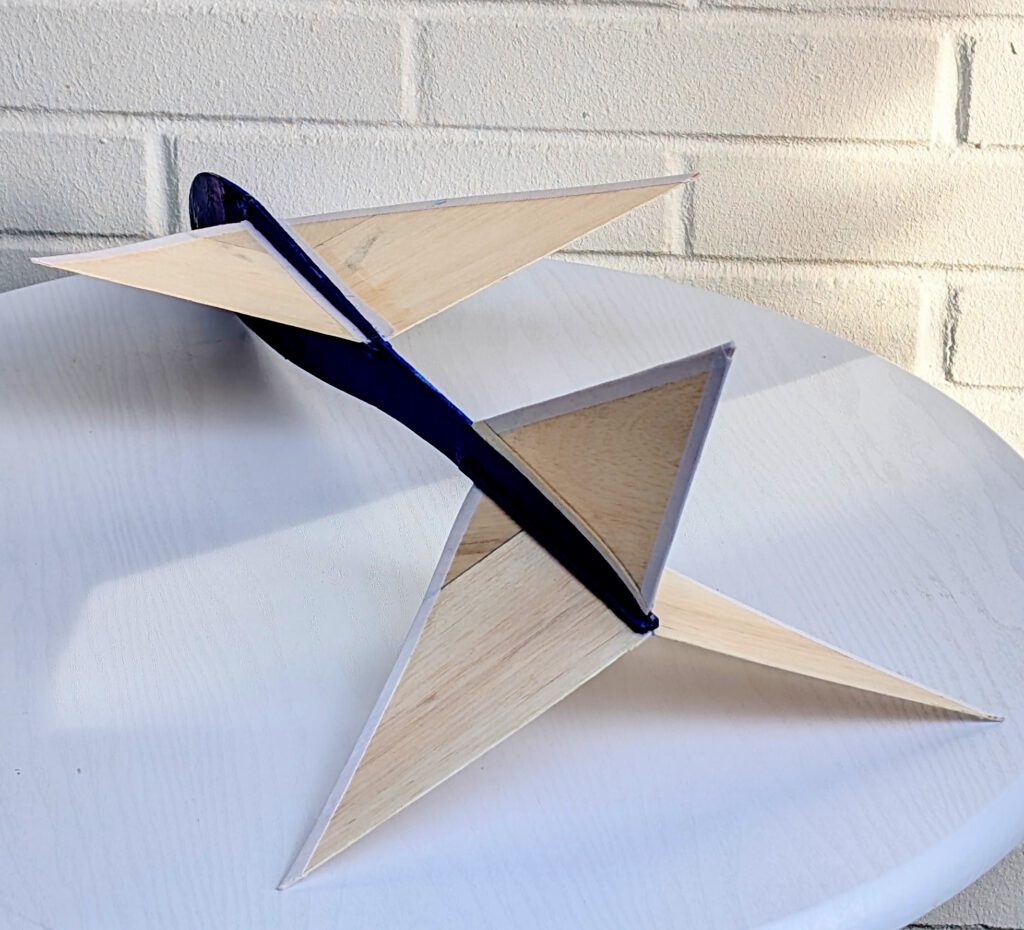
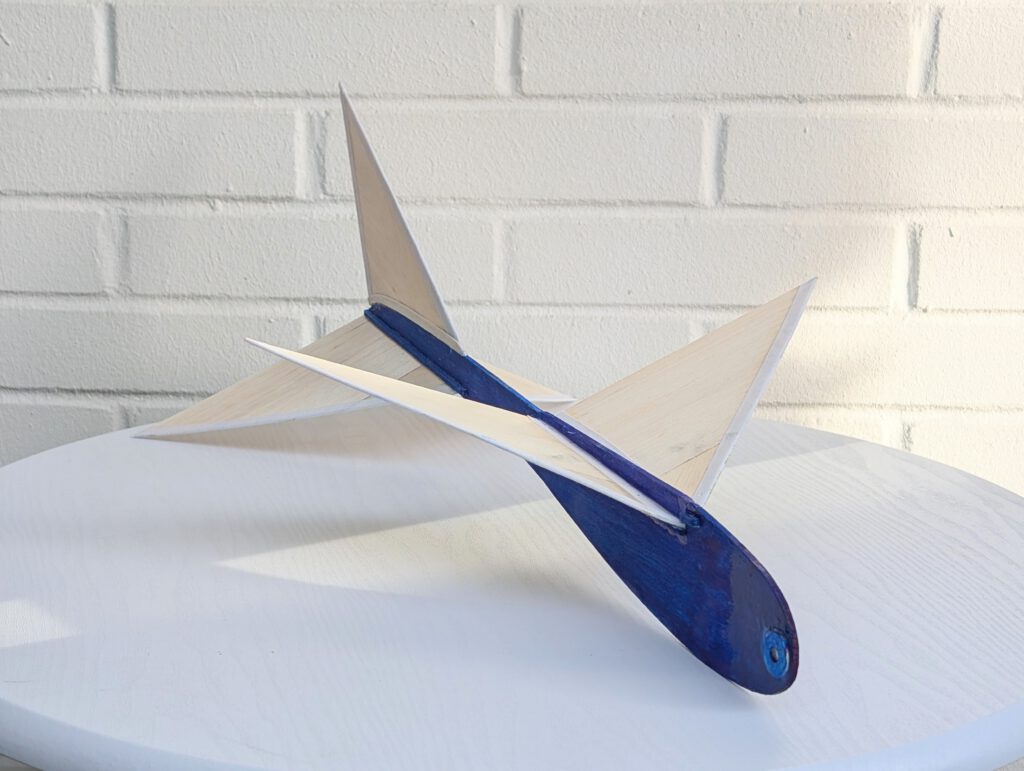
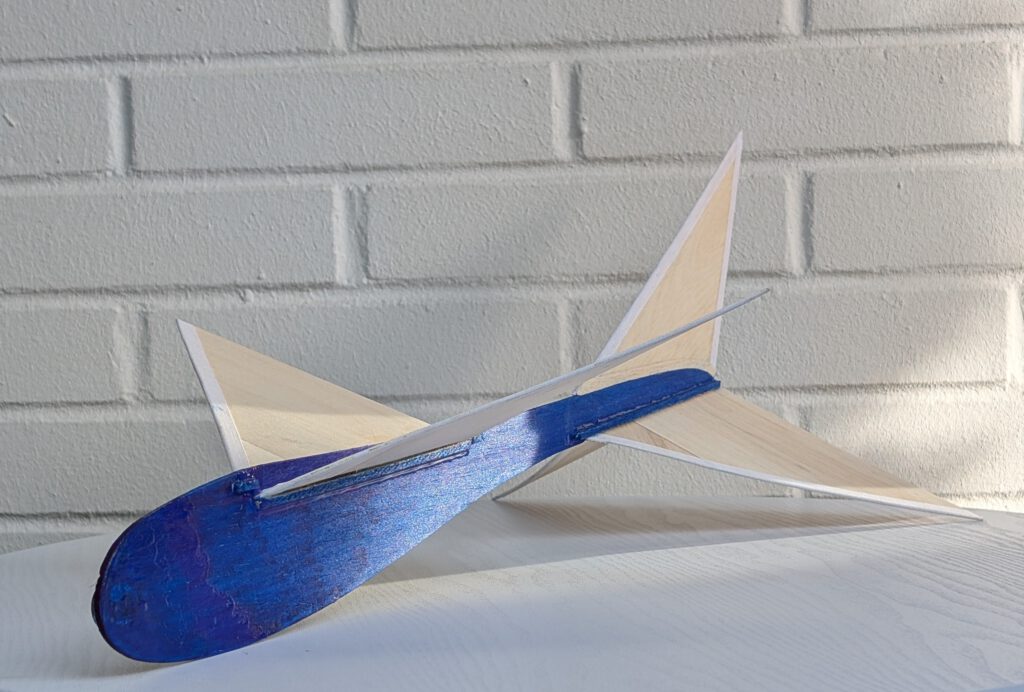
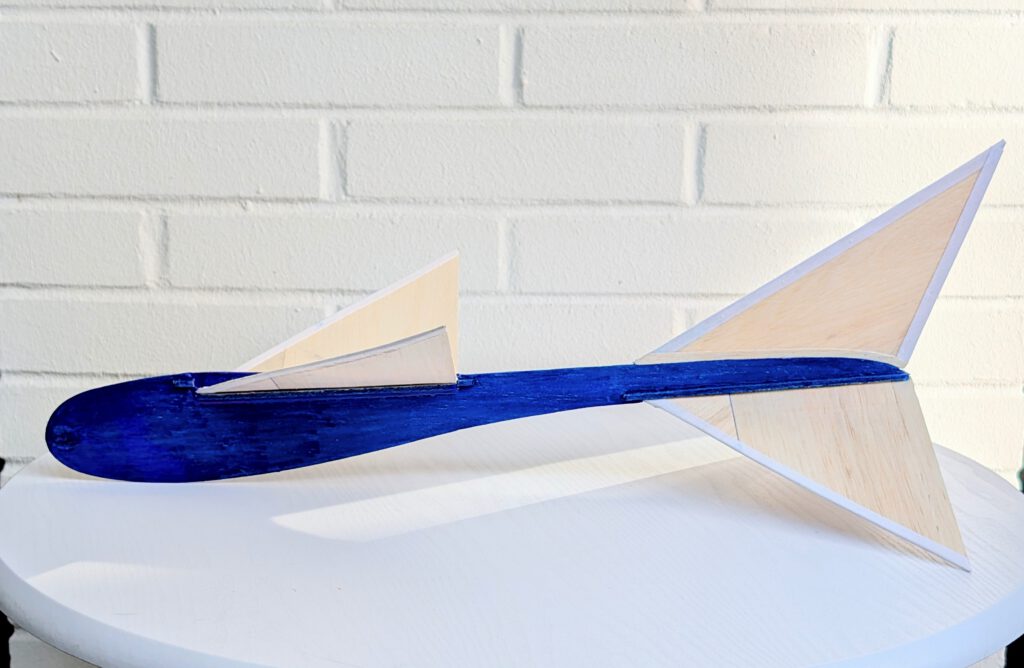
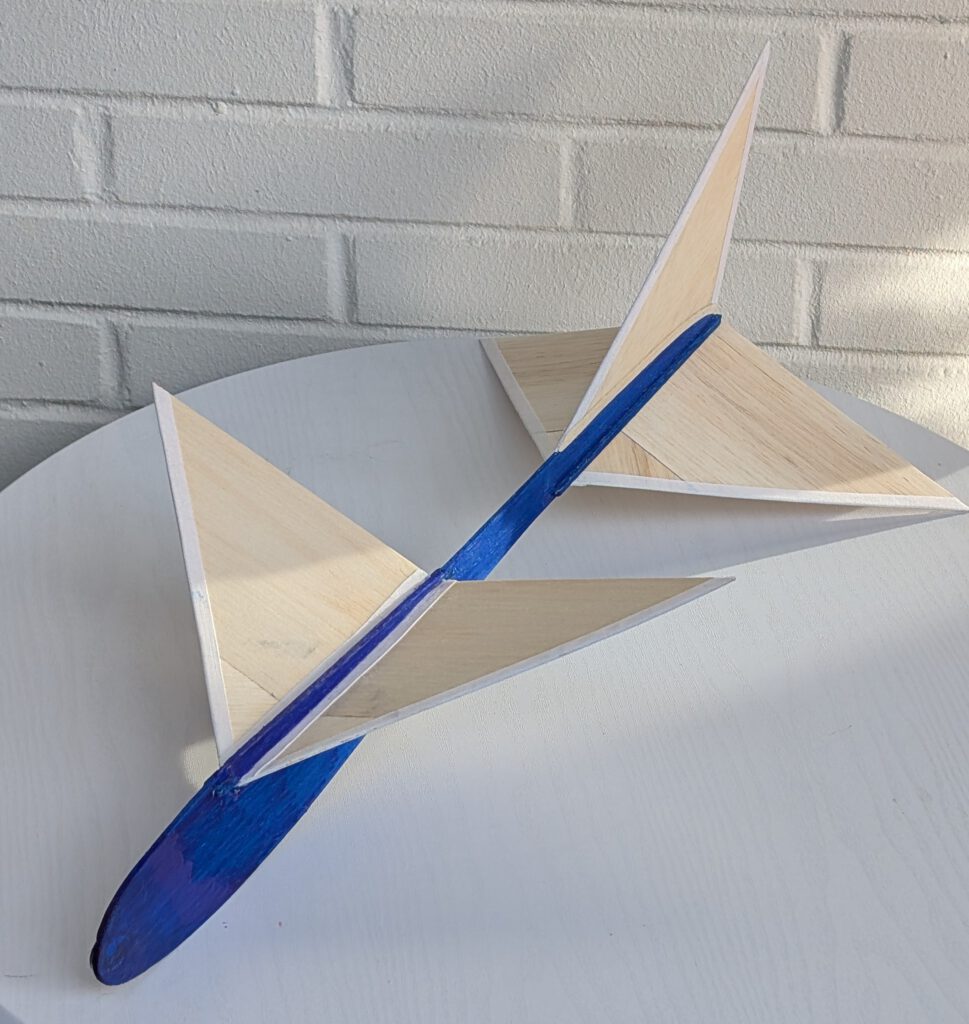
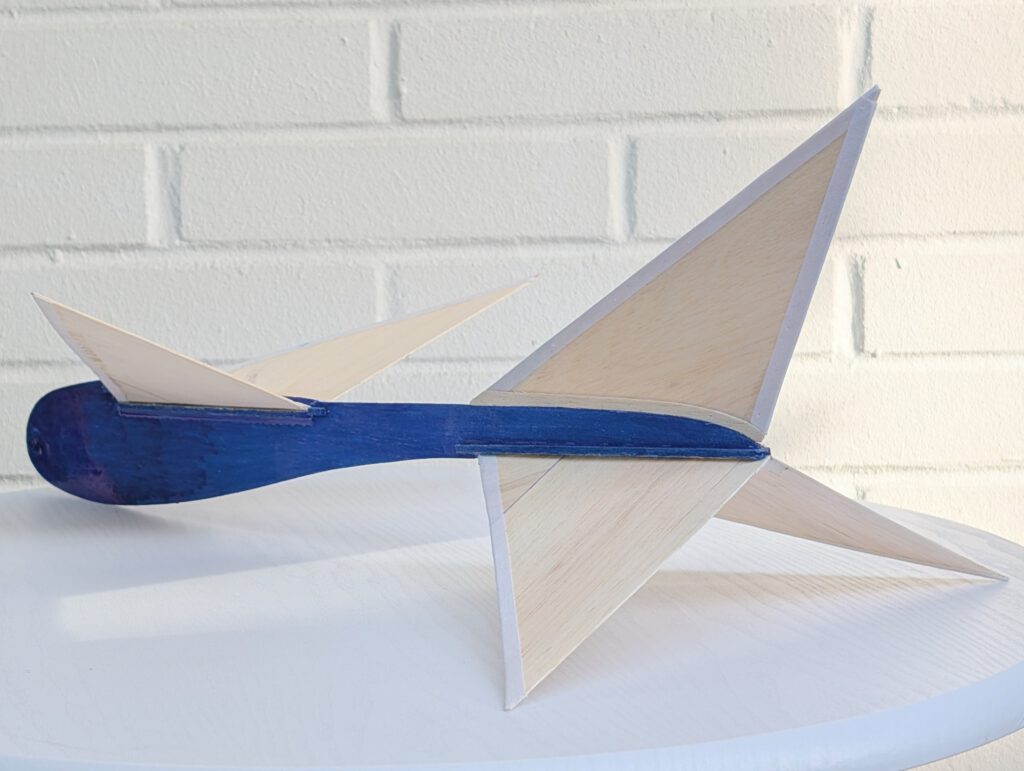
Specifics:
• More sport utensil than model
• Enlarged Tandem Dart One (# 1044)
• Double dart design
• Easy to build
• Not too many parts
• Ballistic flight characteristics
A passing-by physician told me, if I regularly throw this model more than a hundred times full power in the air and run after it I have good chances to lose some weight.
Building the balsa sheet experimental glider Tandem Dart Two
Materials
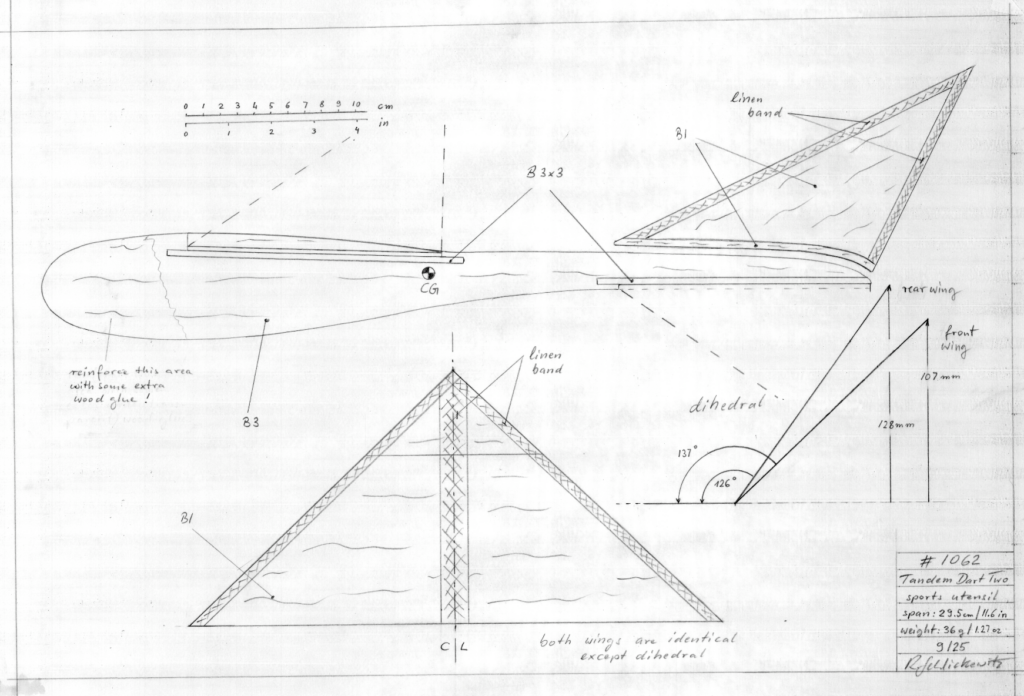
Fuselage: B 3; wings: B 1; wing supports: B 3 x 3; fin: B1; fin base doublers: B1; linen/cotton band width ½ in = 12 mm; ballast: piece of steel or lead.
Assembly
Cut out balsa parts according to plan. Sand meticulously. If desired paint fuselage and/or wings now.
Fuselage.
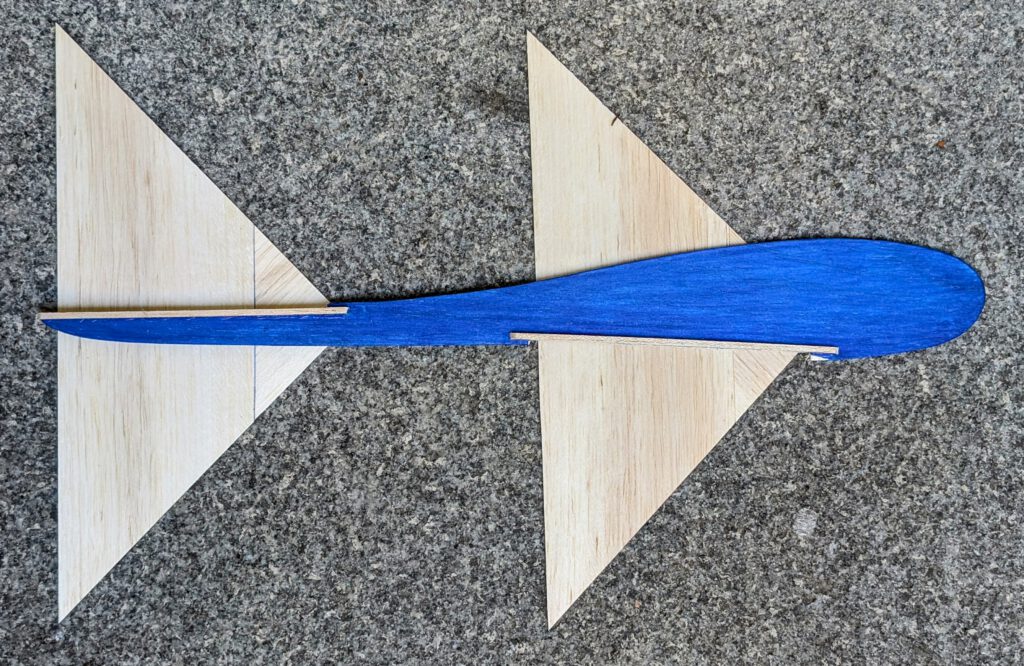
Make cutouts for both wings.
Cement wing supports in place.
Wings.
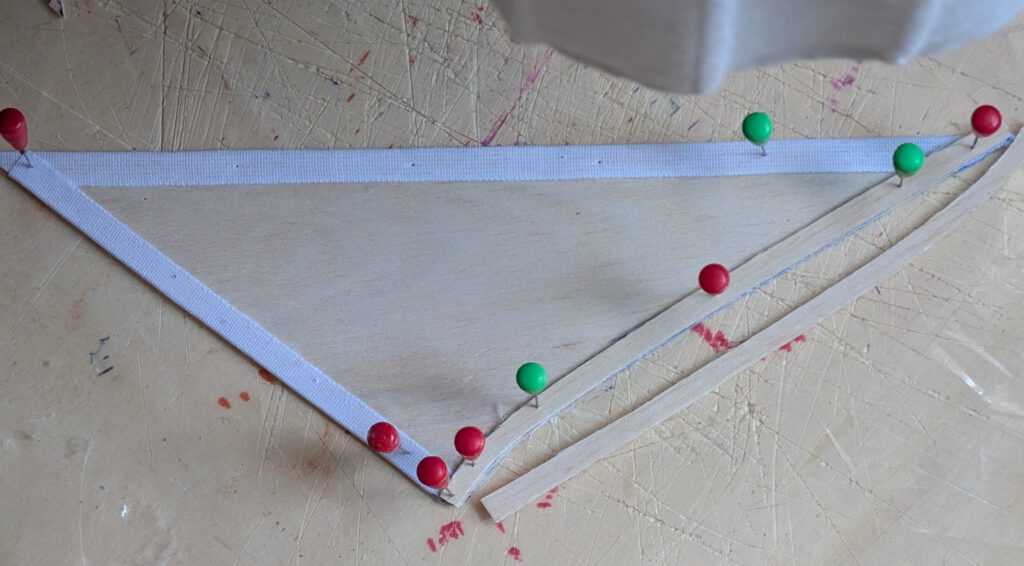
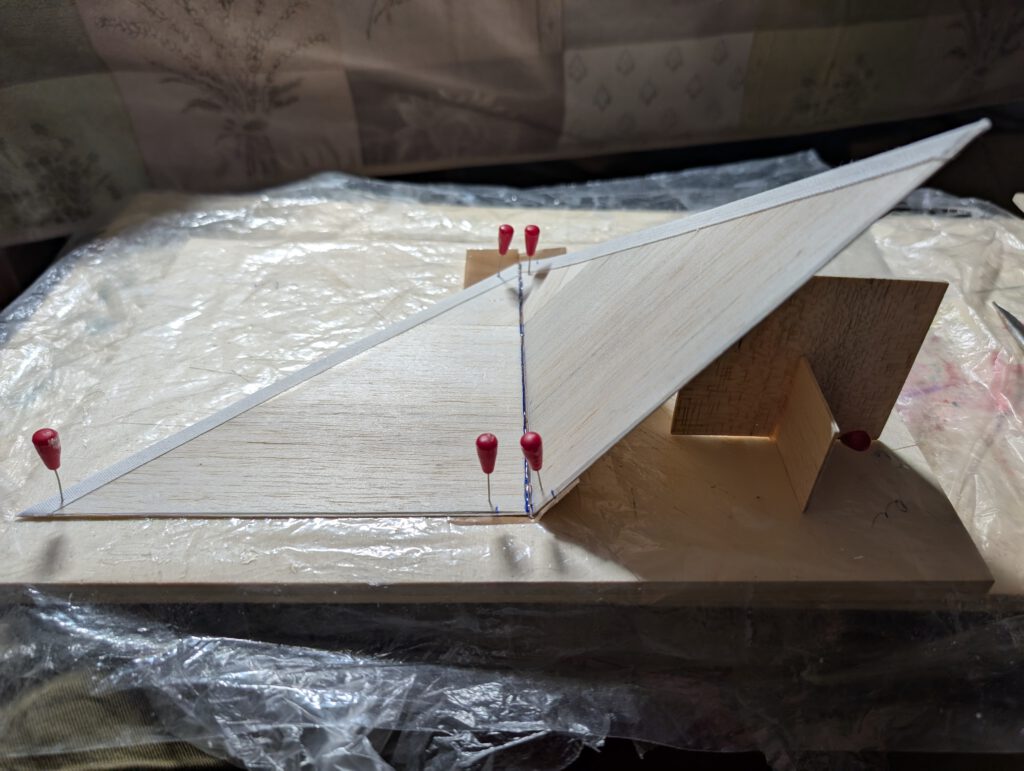
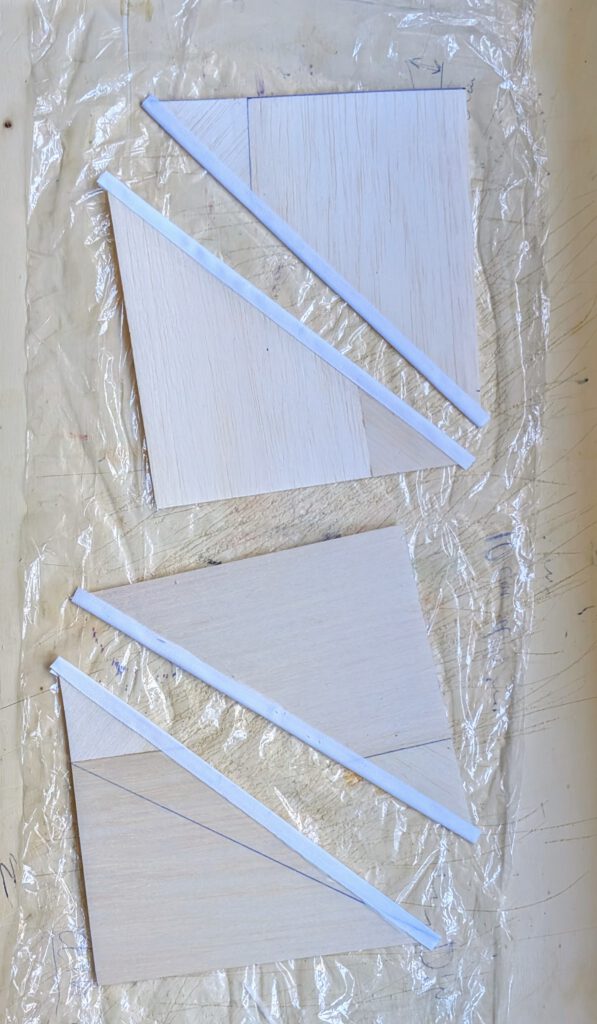
Cement linen band along leading edge as shown on plan. Note that both wing pairs have different dihedral angles. Make two templates from B 5 material to obtain best results, when joining the wing halves. Visual check for best possible symmetry. Repeat procedure for rear wing. Use linen/cotton band for reinforcing wing half joints on top and on bottom (photo).
Fin.
Cement fin base doublers in place one after the other. Let dry.
Final assembly.
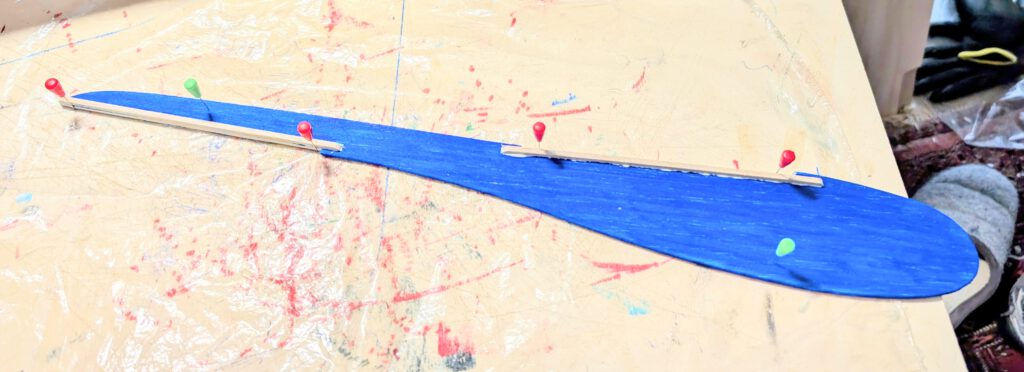
Cement fin on fuselage. Pay attention to symmetry – check from all sides. Put fuselage upside down on a so called „third hand“. Glue rear wing into its given position using needles to hold in place (photo). Remember to double check symmetry. When dry turn fuselage around and fix it again on “third hand” (photo). Repeat same procedure for front wing. Let dry.
Balance at given C/G.
Να έχετε ευχάριστες πτήσεις! (Have pleasant flights!)



Leave a Reply