
Simple, elegant, and purely powered by the air, Series 1000 gliders offer a perfect introduction to model aviation. Designed with a lightweight sheet wing and profile fuselage, these models require no propulsion—just a gentle launch to watch them soar gracefully. Ideal for beginners and seasoned hobbyists alike, they provide an enjoyable way to explore aerodynamics and hand-launch techniques.
-
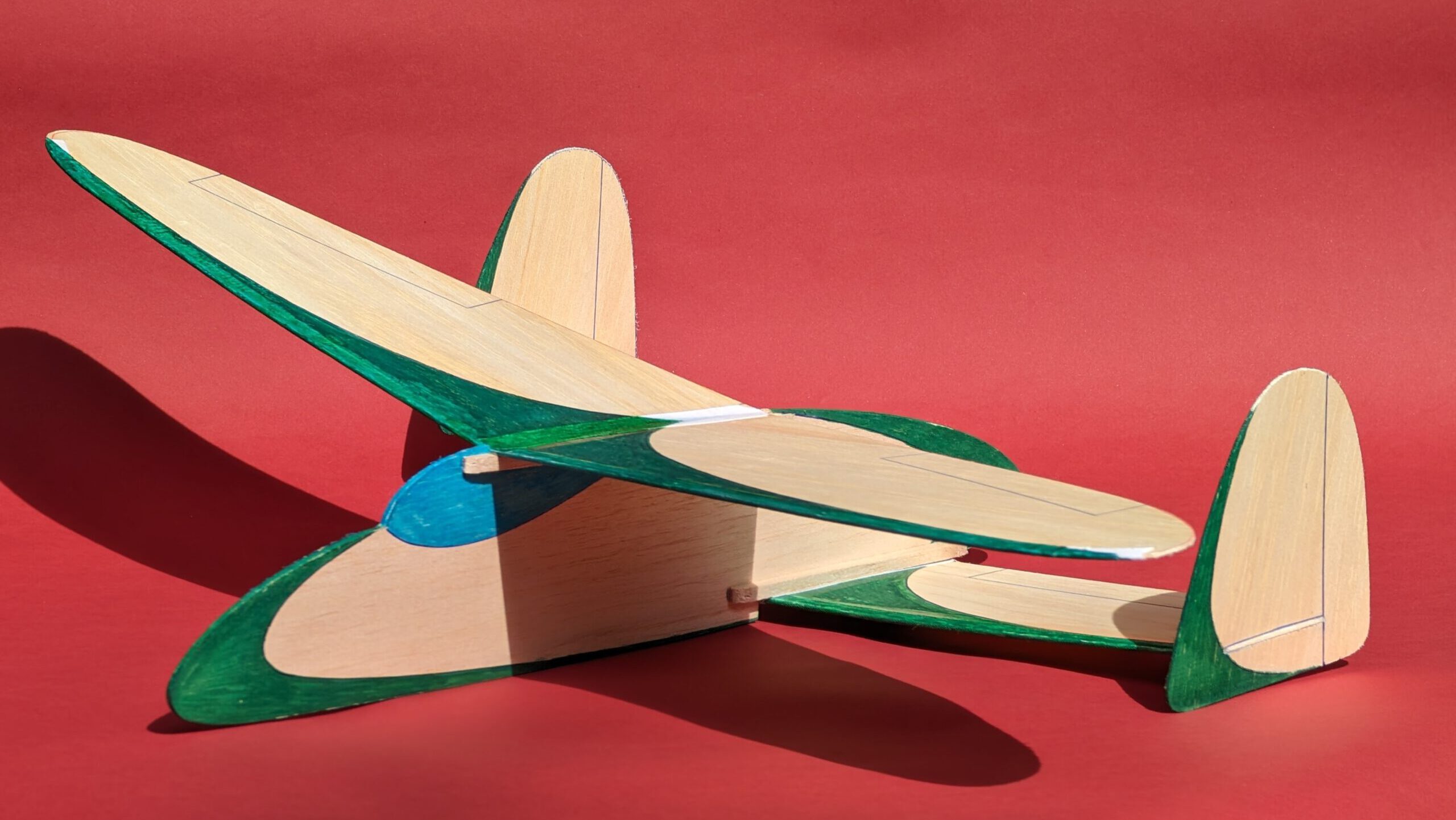
1021 Duo mono mod.
The original Duo Monoplane was a Jetex (rocket) powered model by designer Bill Dean published in the 1952 January issue of Aeromodeller magazine. I liked its appearance and its concept as a tandem wing model. So I altered only a little the distance between both wings, the planform of the main wing and I draw…
-
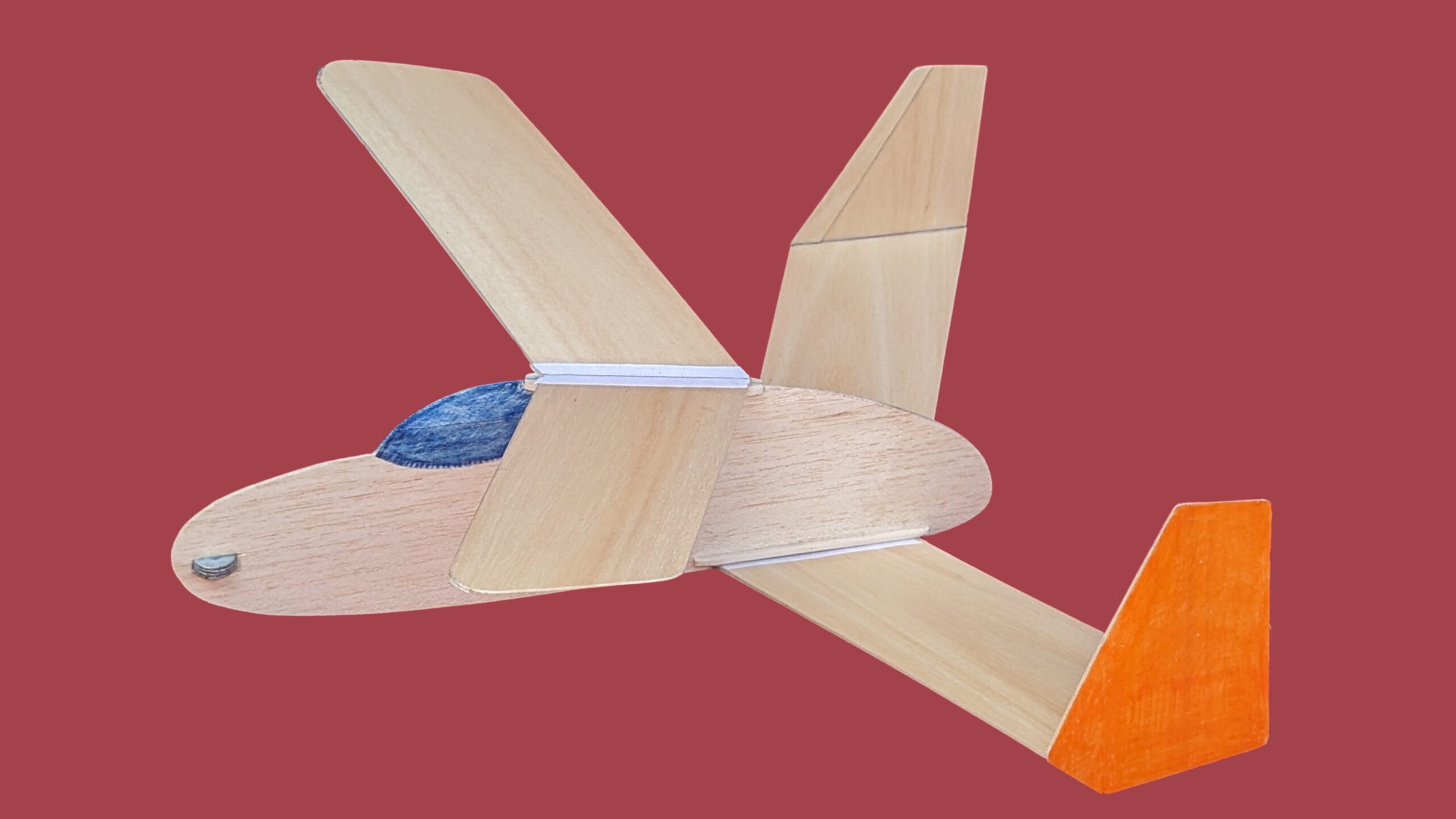
1022 Mitey Atom mod.
The original Mitey Atom was a free flight model for the diminutive Cox Glo nitro engine, it was designed by Eric Clutton and published in the 1961 December issue of the magazine Aeromodeller. I especially liked its wing arrangement which seen from above or from below looks like an X as the front wing is…
-
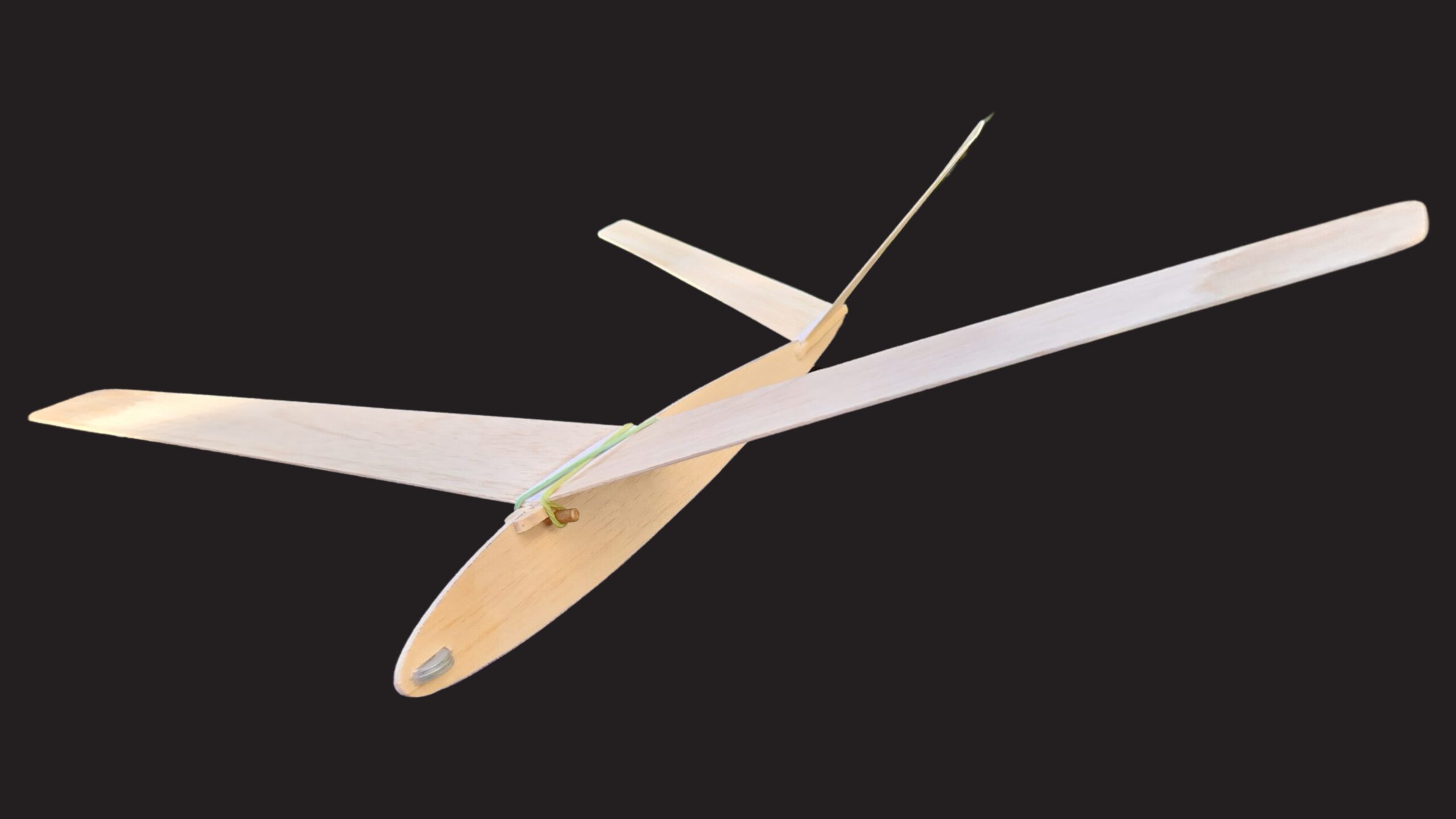
1023 Lomir gejn tanzn!
Designed for easy building with few parts: detachable wing, V-tail, and basic materials like balsa, bamboo, and linen. Reinforced for durability. Rubber rings secure the wing and tail. Center of gravity is key for smooth flights. “Lomir gejn tanzn” means “Shall we dance!” in Yiddish.
-
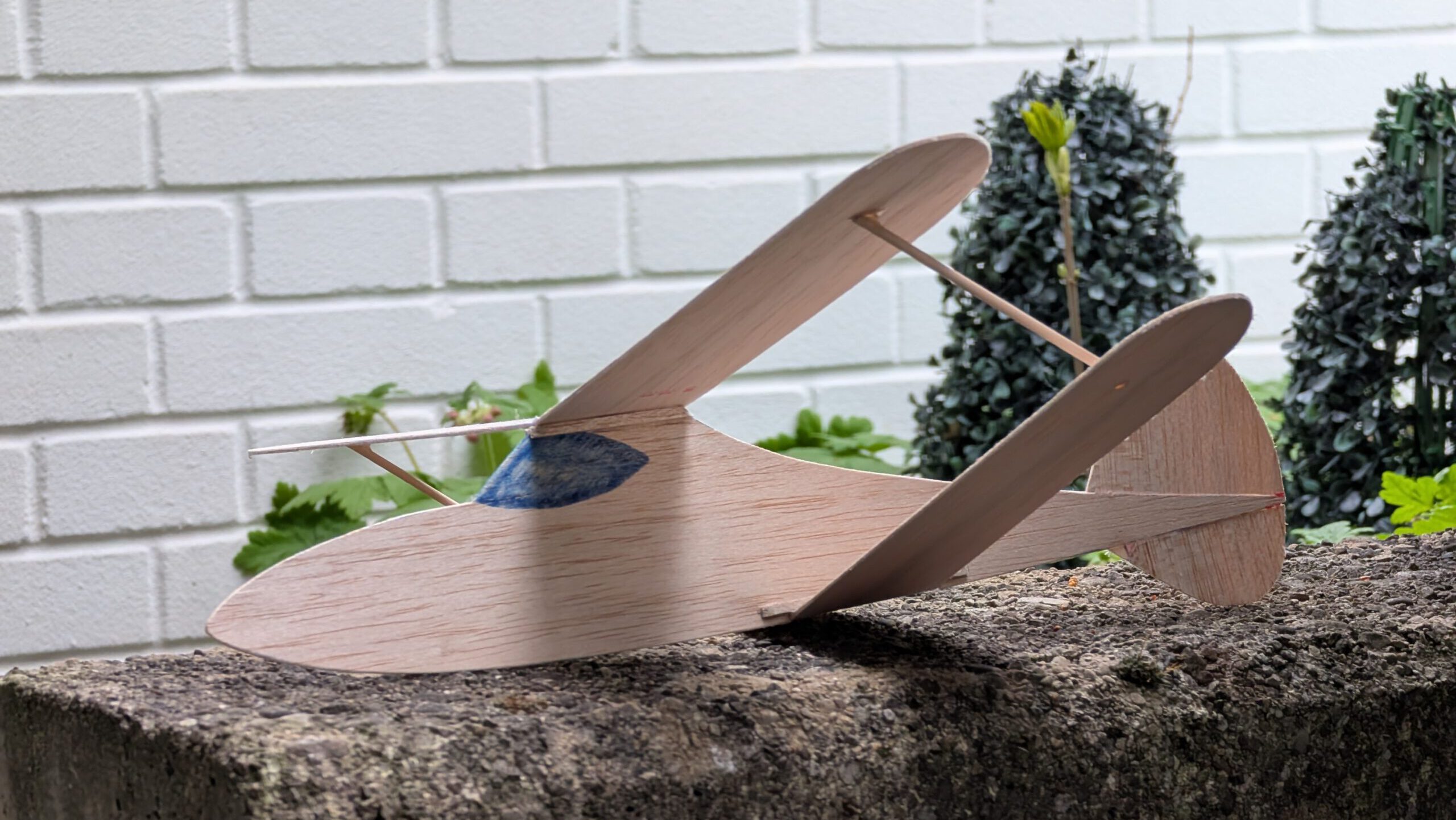
1024 Whatsit Glider
The original Whatsit was a model by Frank Ehling (1914-2001) published in the 1/1942 issue of Airplane News. – What made the Whatsit so distinctive and unique was that no one could tell for sure what it really was. — Was it a biplane without a horizontal stab? Was it a twin flying wing? Was…
-
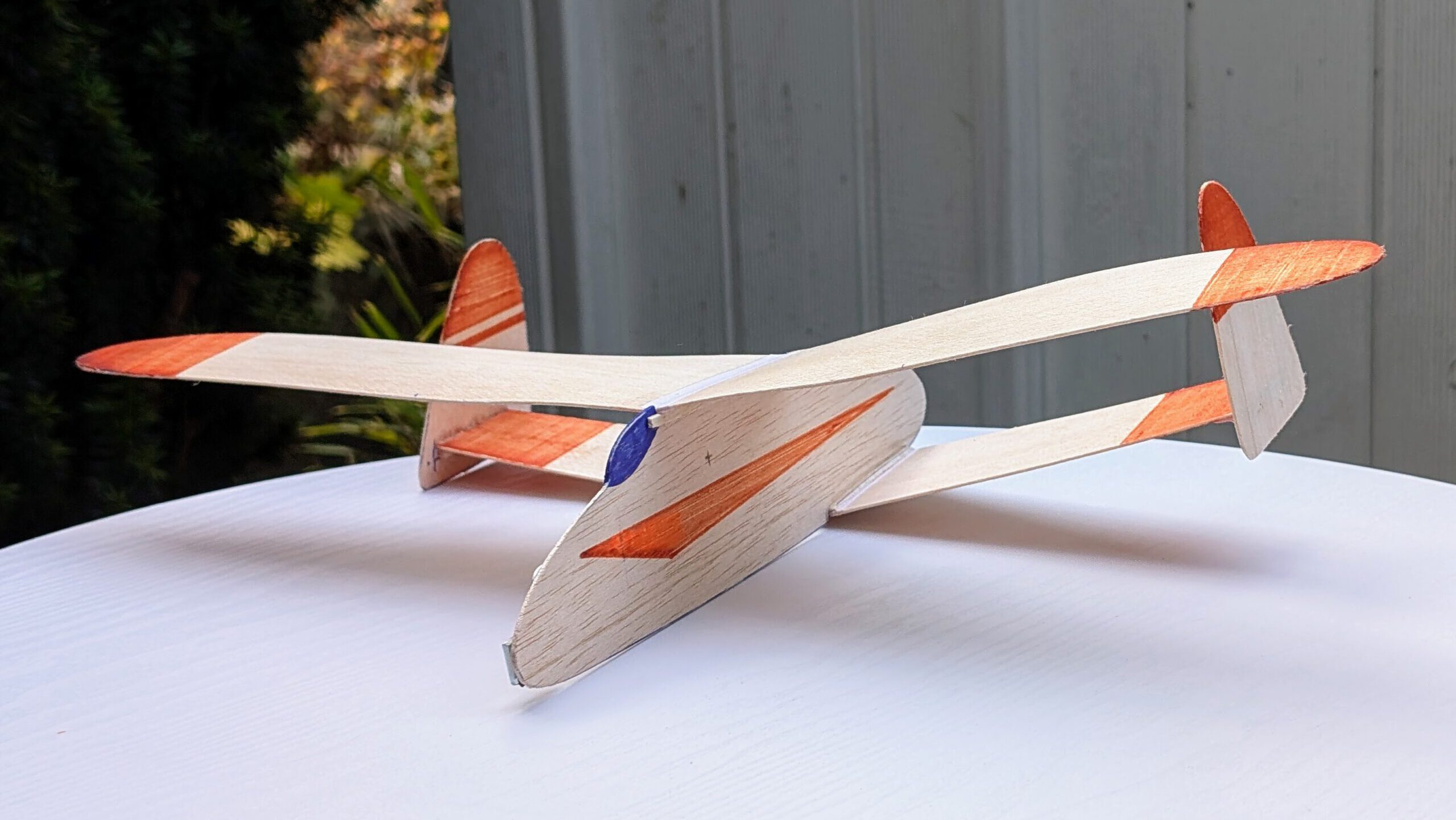
1025 Duo mono mod. MINI
The original Duo Monoplane was a Jetex (rocket) powered model by Bill Dean published in 1952 January issue of Aeromodeller magazine. I liked its appearance and its concept as a tandem wing model. So I only altered a bit the distance between both wings, the planform of the main wing and draw the bottom line…
-
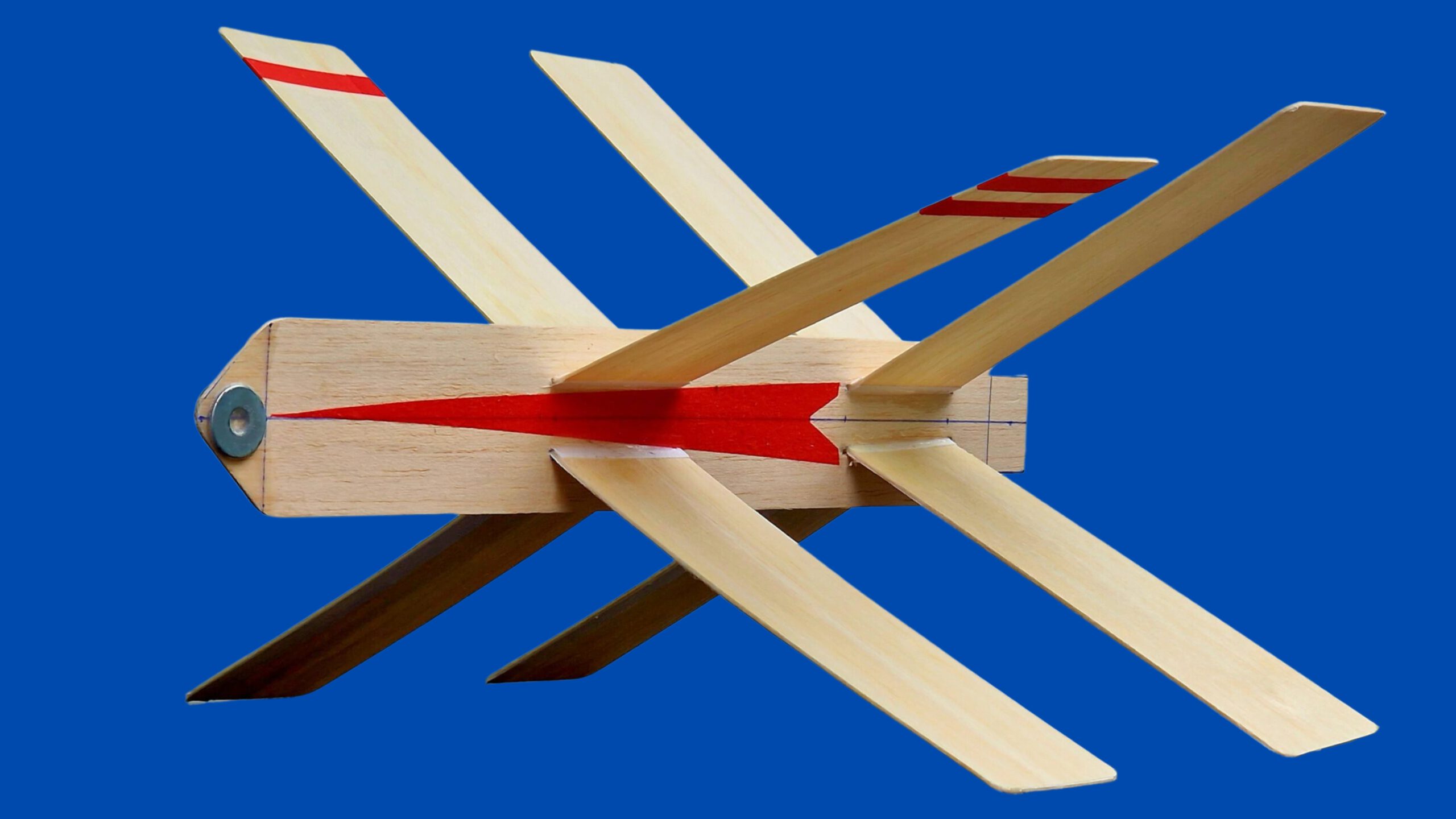
1026 Double X’er glider (X-wing)
Regularly going through various defence reports one certain design caught my attention, that of the Russian kamikaze drone Lancet. A sleek fuselage and eight wings – this would be quite a challenge!
-
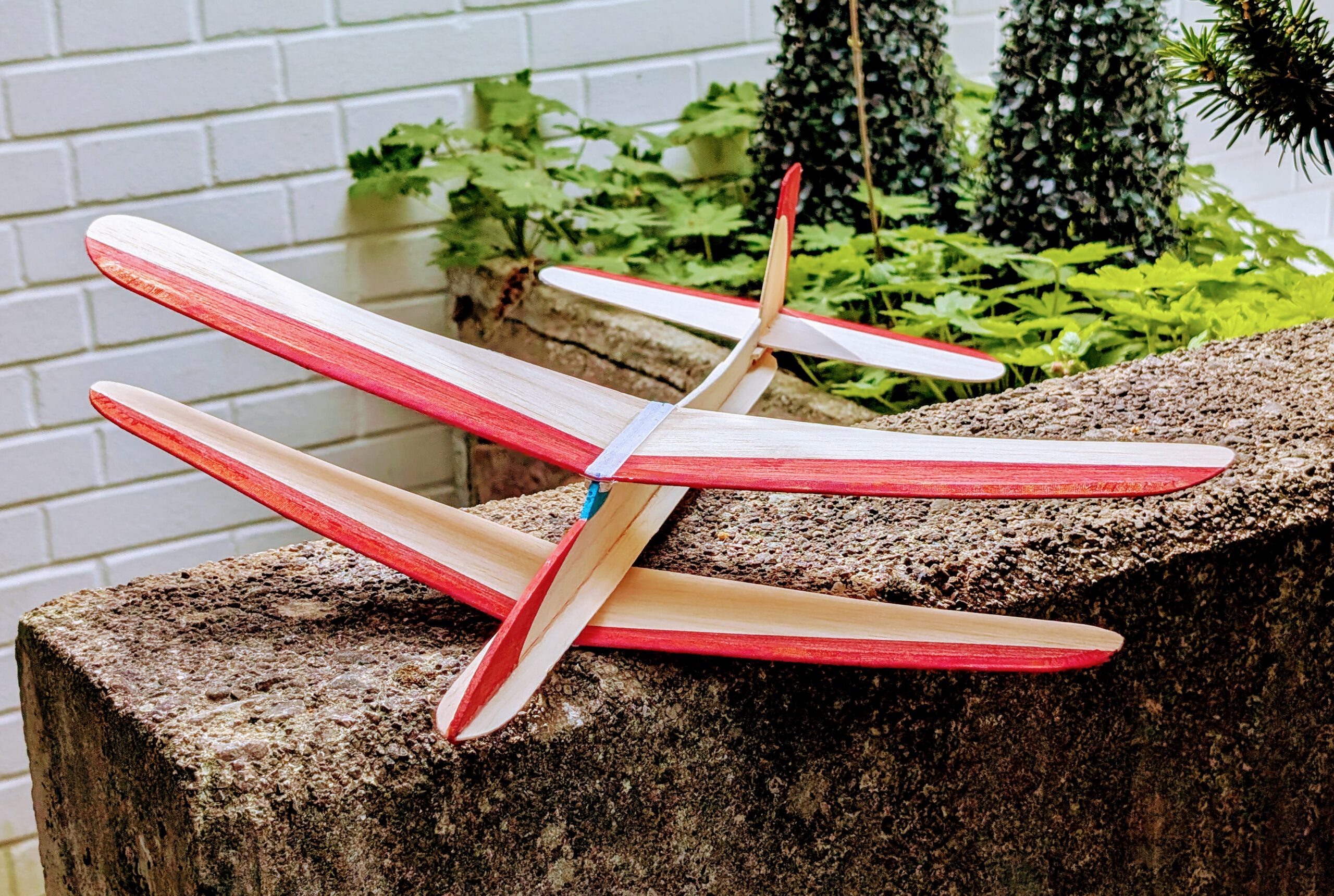
1028 Bi-Baby mod. XL
The original Bi-Baby was published in the September 1956 issue of “Flying Models”. It had a span of 9 in and was intended as a simple small chuck glider. The plan has been enlarged and the design was adjusted to optimally fit the new size. Bi-Baby preserves the classic lines of its era and can…
-
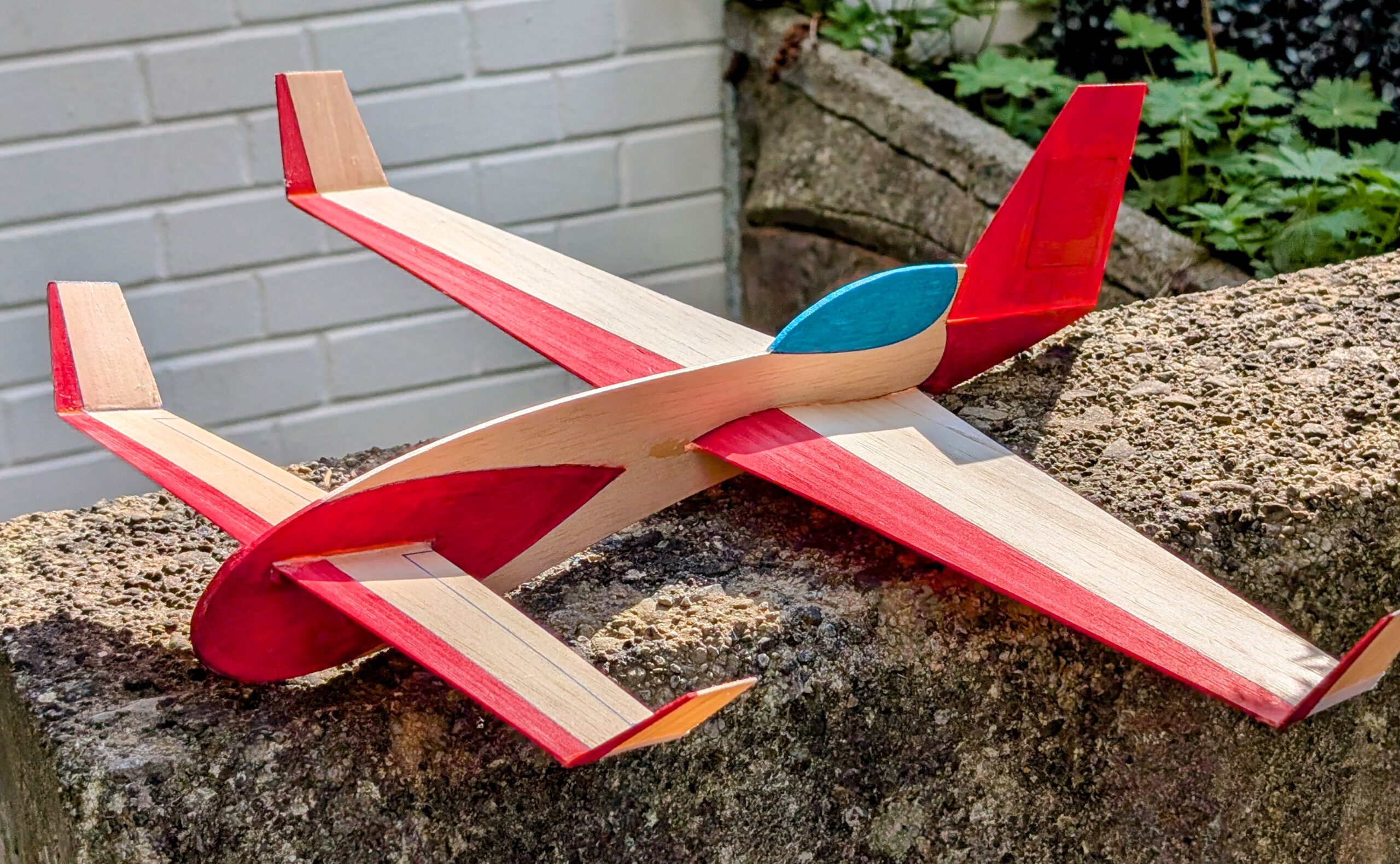
1029 Uccellone
The 1029 Uccellone is a mid-size canard glider with a 48 cm wingspan and a super-light 27 g weight. Designed by Robert Schlickewitz as part of the Series 1000, this model boasts stable flight, easy construction, and a unique S-shaped main wing profile with no dihedral except on the outer wing sections.
-
1030 Babbuino
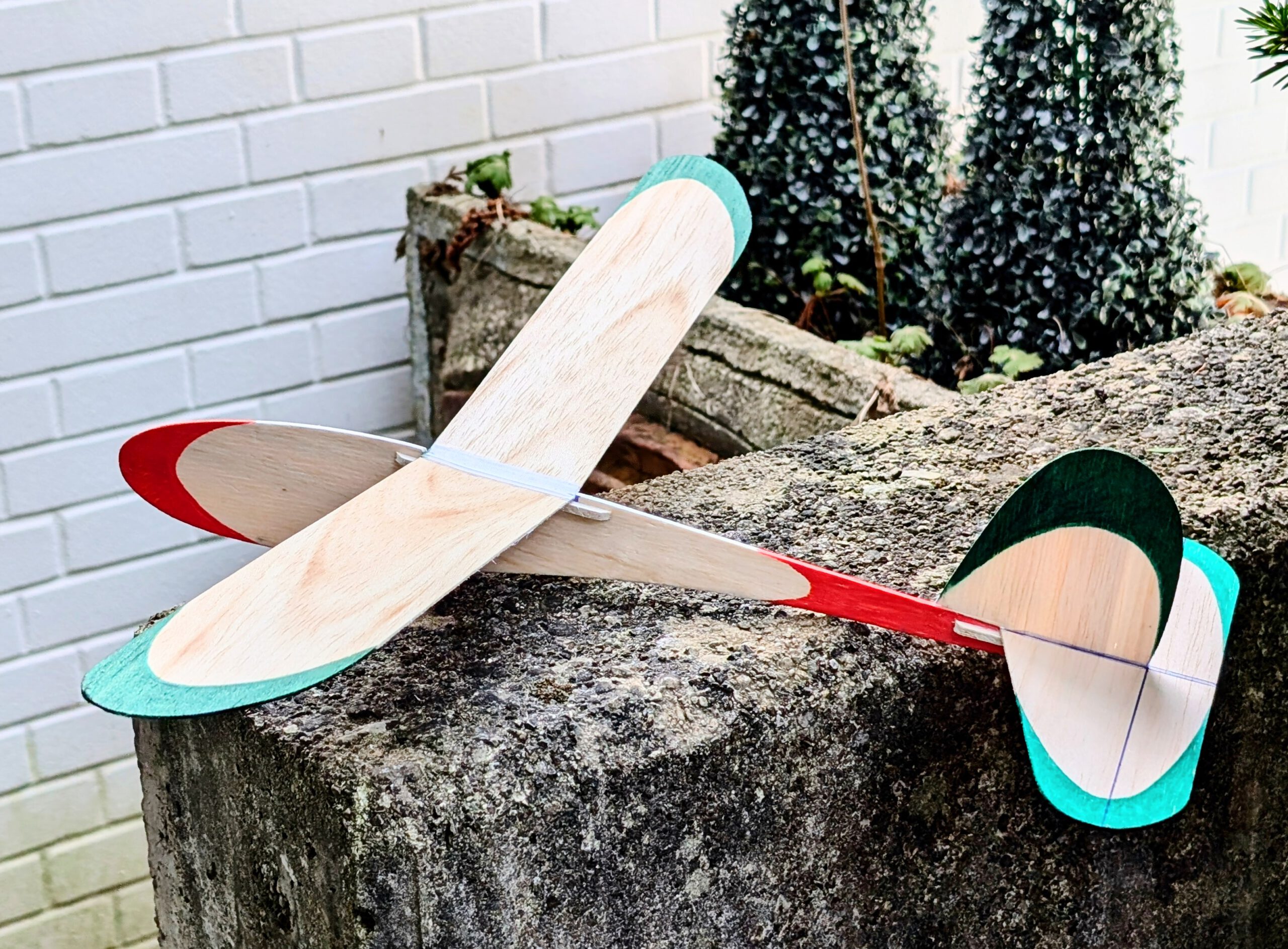
Span 18.5 cm / 7.3 in Weight 18 g / 0.65 oz The concept: • Slope soarer • Light weight yet stable for good performance • Easy to build • Few parts Name is Italian naturally and means baboon. Baboons by themselves are interesting creatures but there is more in the name, for example a 16th-century sculpture in Rome is known…
-
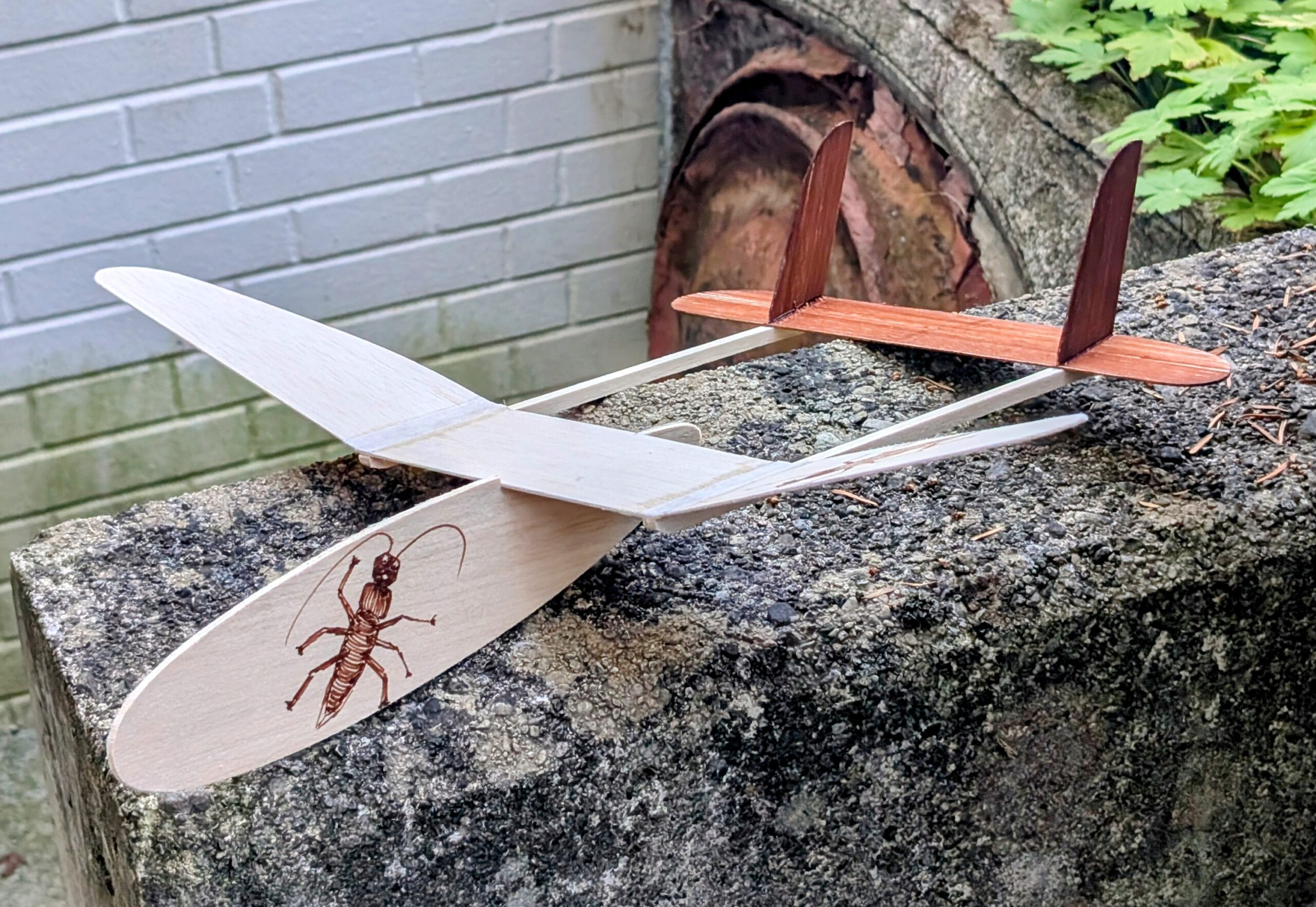
1031 Gokiburi
Span 51 cm / 20 in Weight 26 g / 0.92 oz The concept: • Twinboom layout • Easy to build • Good flight characteristics • Lightly built • Hand launched glider or slope soarer About the Name “Gokiburi” Many years ago, when I was studying Russian in the Soviet Union, cockroaches accompanied me in my daily and nightly life, sometimes by the hundreds. Locally they were called “Tarakany” or “Prussians.” They were everywhere, and since…