
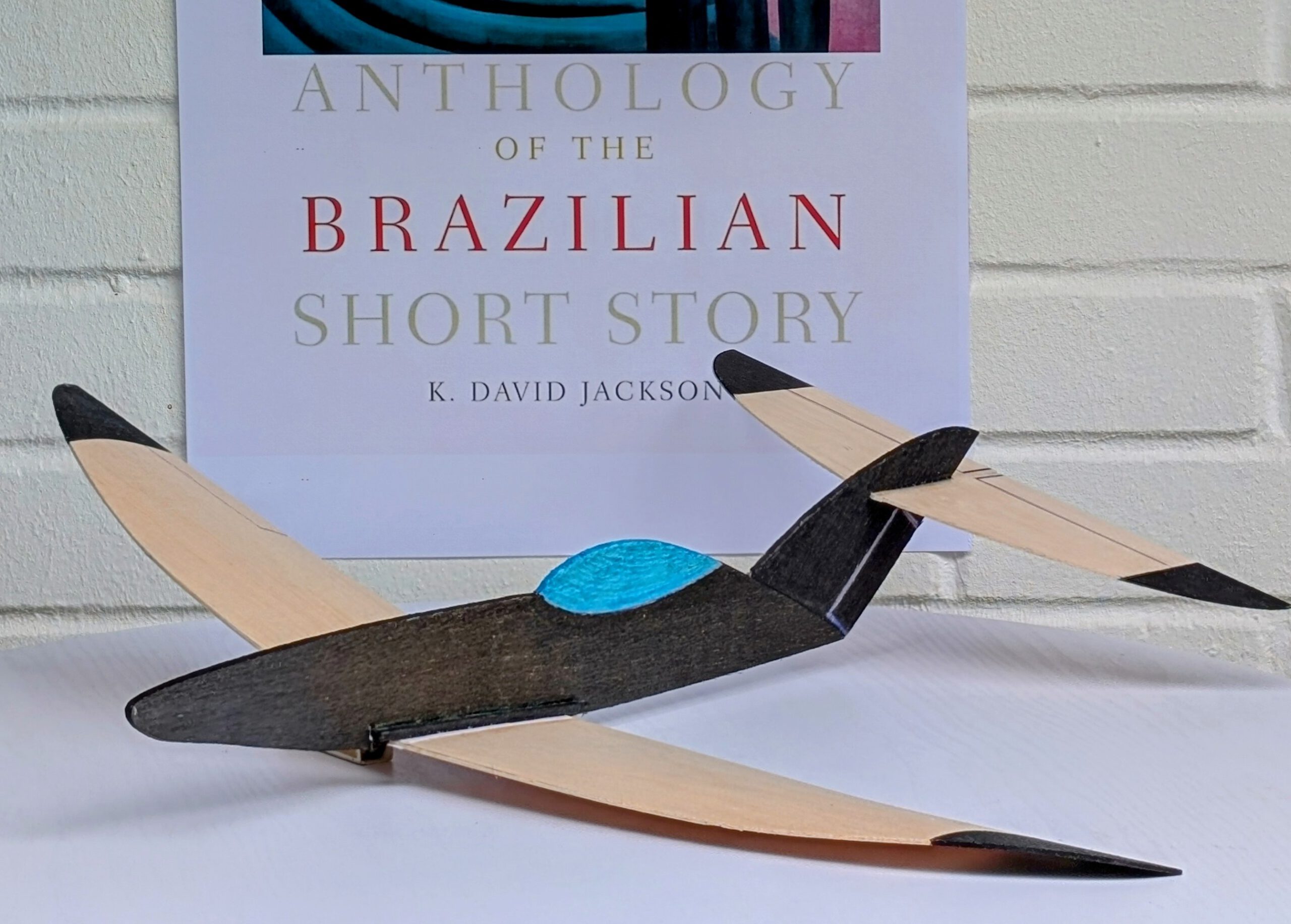
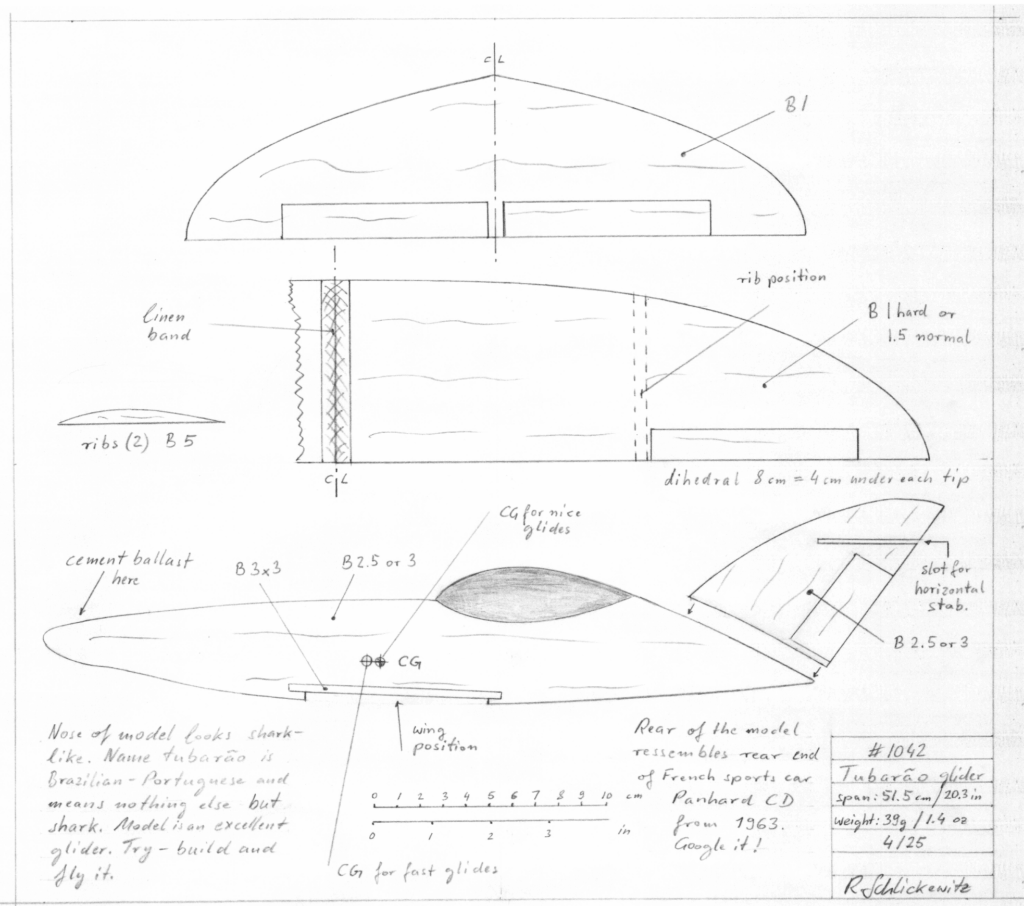
Span 51.5 cm / 20.3 in
Weight 39 g / 1.4 oz




The concept:
- Shark like unique appearance
- Low-wing monoplane
- Intermediate size
- Easy to build
- Good flight characteristics
- Few parts
- Slope glider
Name is Portuguese (Brazilian) and means: SHARK
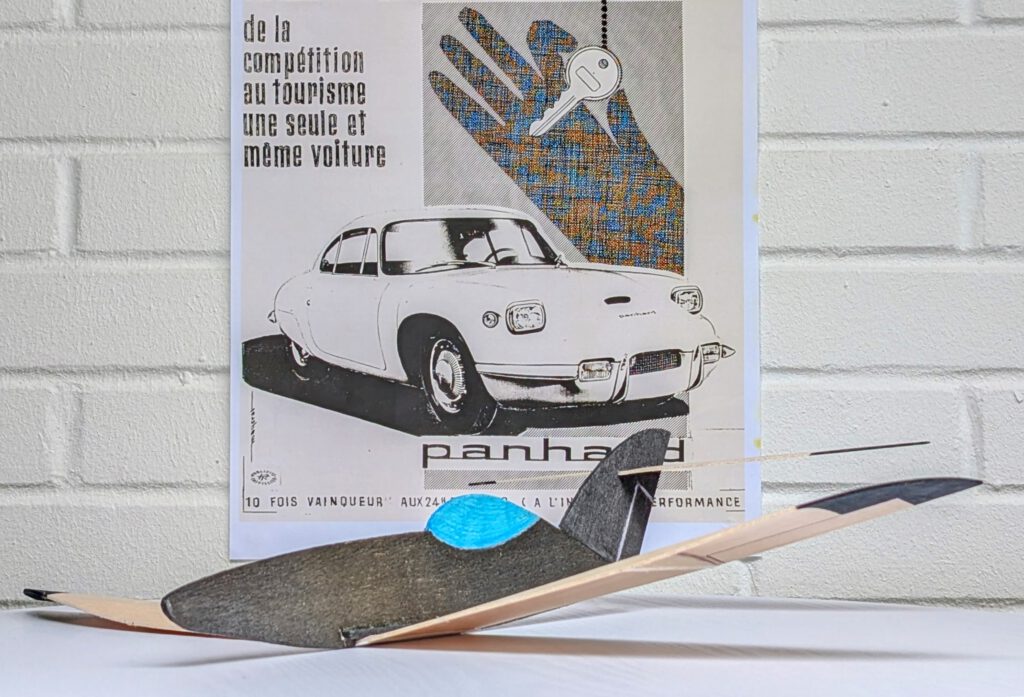
Rear end of the Tubarão was drawn up in accordance with the rear of the famous French sport coupé Panhard CD from 1963. This being probably one of the best sport cars ever considering weight, speed and miles per gallon.
First Tubarão model #2020 Tubarão rubb. was a pleasing success and led to other similar designs as for example to this glider. See ‘Coming Soon’ section of this website for more Tubarões to come. (tubarão – singular, tubarões – plural)
Building the balsa model Tubarão Glider I
Materials
Fuselage: B 3; wings: stiff B 1 or B 1.5; wing supports: B strips 3 x 3; wing ribs B 5; horizontal stabilizer: stiff B 1; fin: B 2.5 or 3; linen band width 12 mm / ½ in; ballast: small piece of scrap metal or lead.
Assembly
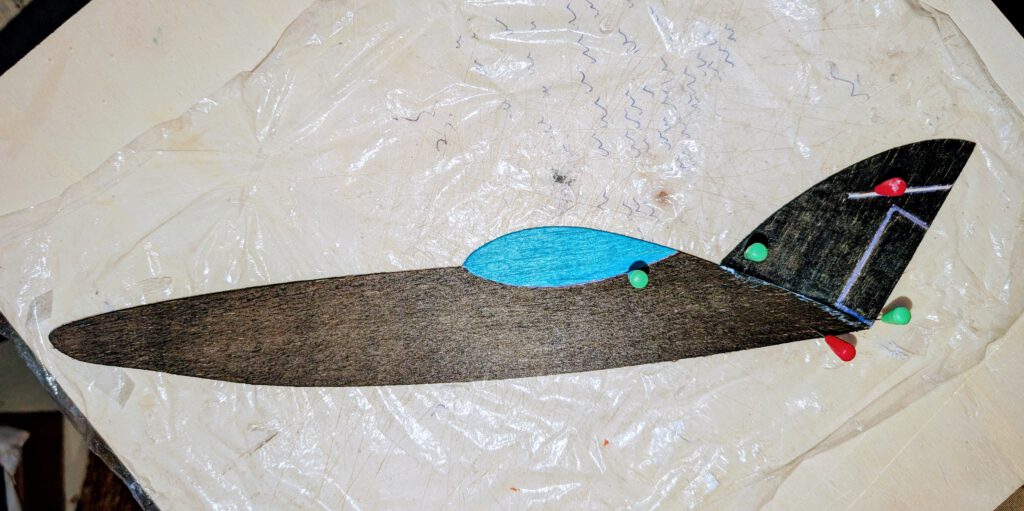
Cut out balsa parts in accordance to plan. Sand well (photo). Transfer outlines of cabin, rudders, elevators, ec. from paper to wood with pen. Cut out all necessary slots. Paint your model at this stage (photo).
Wing:
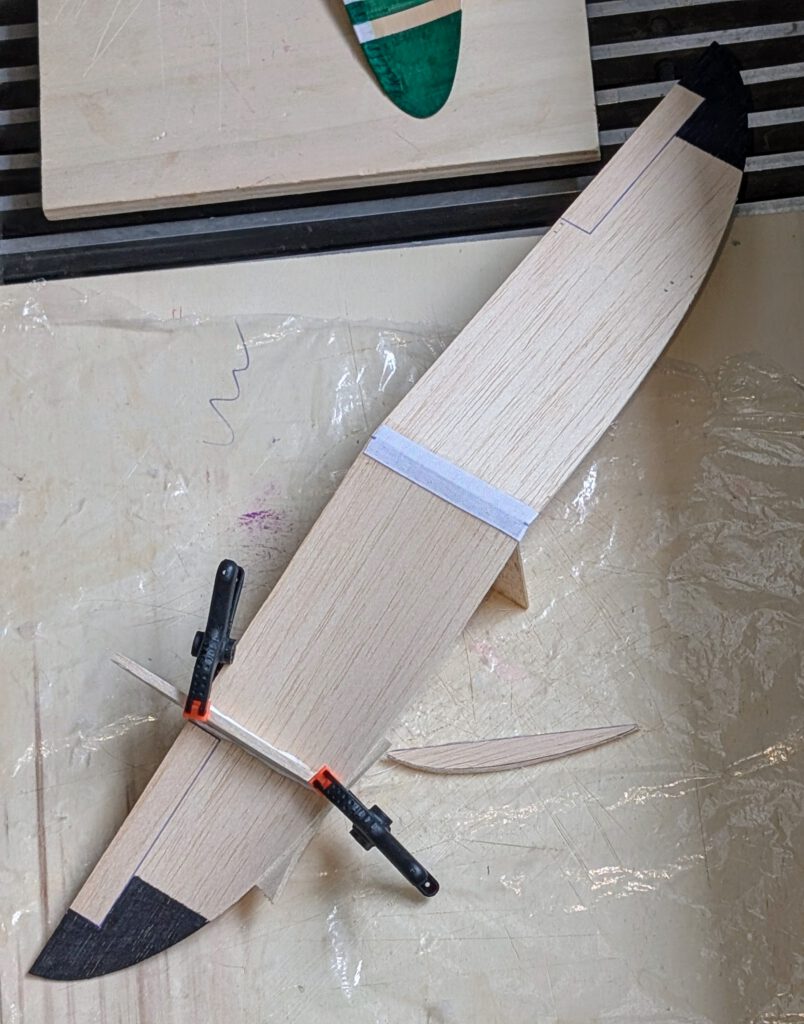
Wing consists of a right and a left wing half. Fix one half on building board with needles. Cement corresponding half by paying attention to dihedral given in plan. When dry reinforce center area with linen band (photo) and again let dry.
If wing has the tendency to rest only on one side, then it is too heavy on this side. To compensate the imbalance, disperse a small amount of white wood glue on the opposite wing tip area and let dry. Do it, if necessary, twice until balance is obtained.
Cement both ribs to wing at indicated place and let dry.
Fuselage:
Cement fin on fuselage using needles to hold in place (photo). Always visual check twice that symmetry is obtained.
Cement wing support strips into their given places. Hold with clamps or clothespins or with needles.
Empennage:
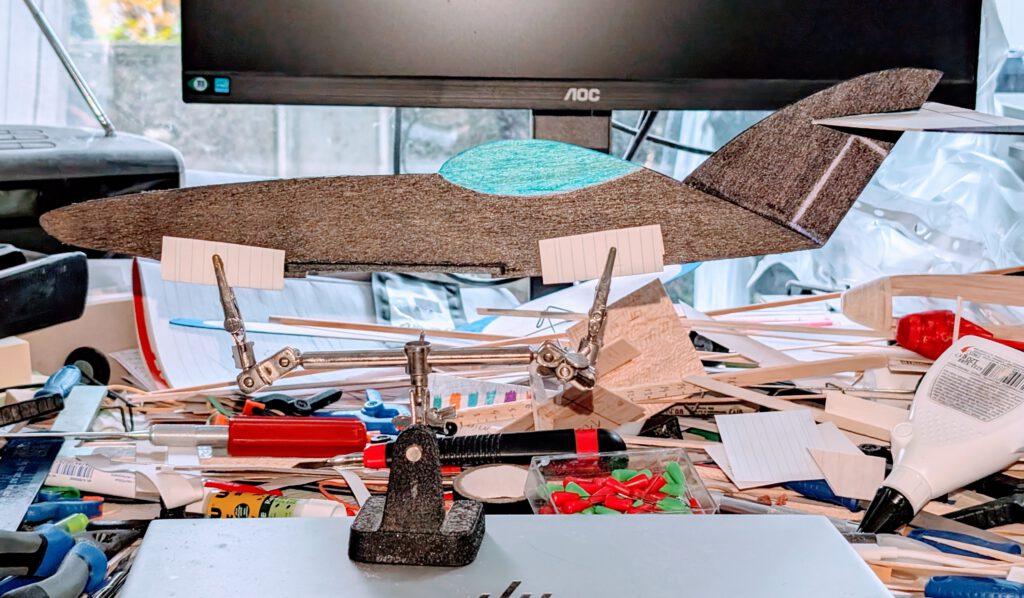
Fix fuselage on so called ‘third hand’ (photo). Cement horizontal stabilizer into its place using needles to hold. Visual check symmetry from all sides. Let dry.
Final Assembly:
Turn fuselage upside down and fix it on ‘third hand’. Cement wing on wing supports using needles to hold in place. Doublecheck visually symmetry. Let dry.
A piece of lead or scrap metal may be used to balance model if necessary.
Remember correct center of gravity (CG) is essential for successful flights.
Make your first test glides over tall grass only.
Palju edukaid lende! (Molts vols d’èxit!)



Leave a Reply