

Span 76 cm / 30 in
Weight 90 g / 3.2 oz

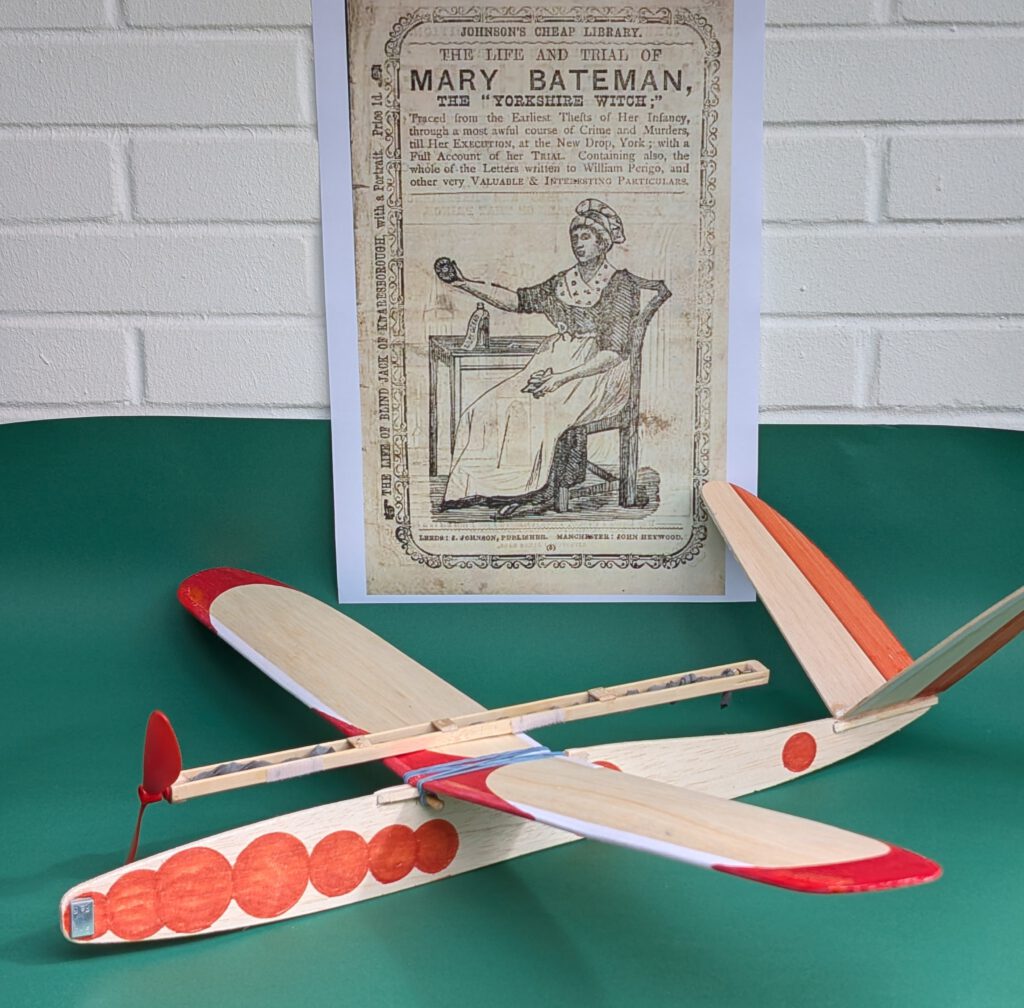
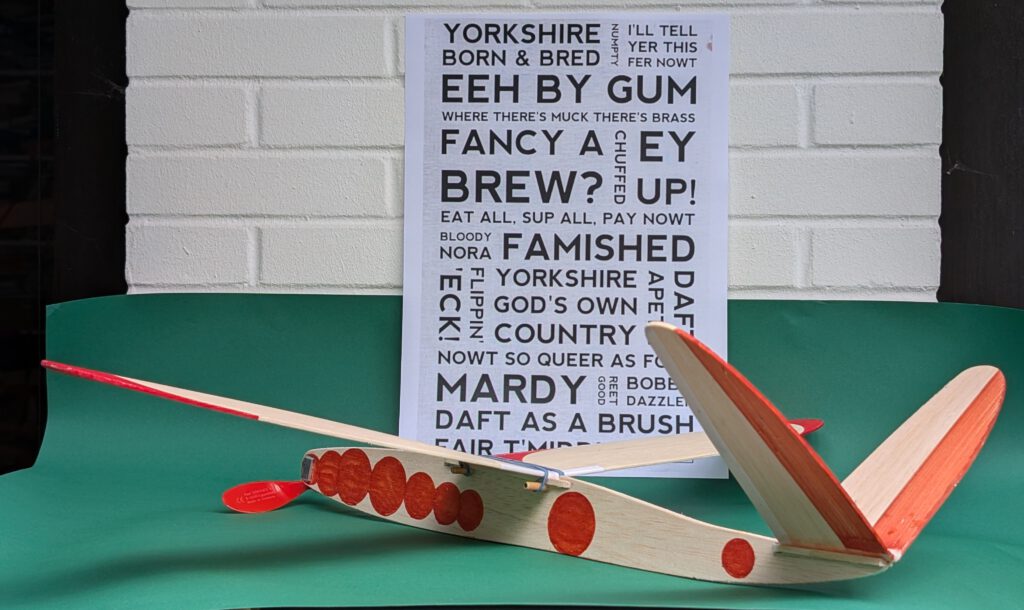
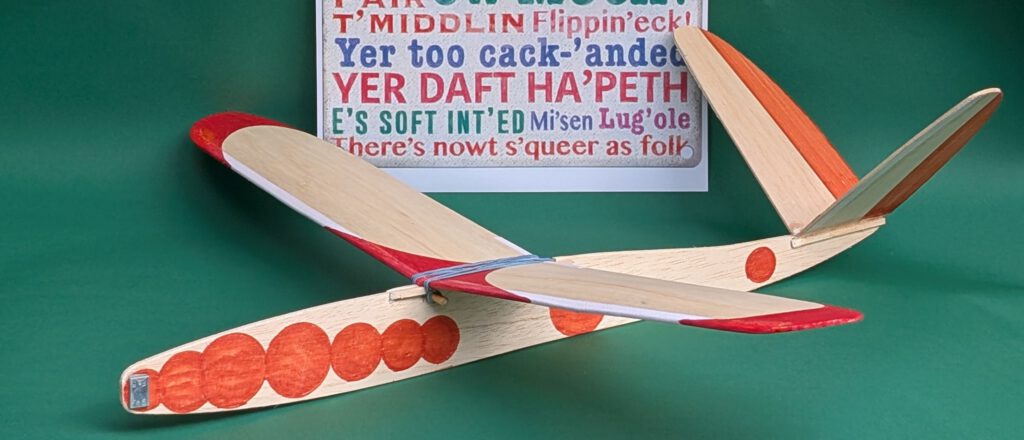
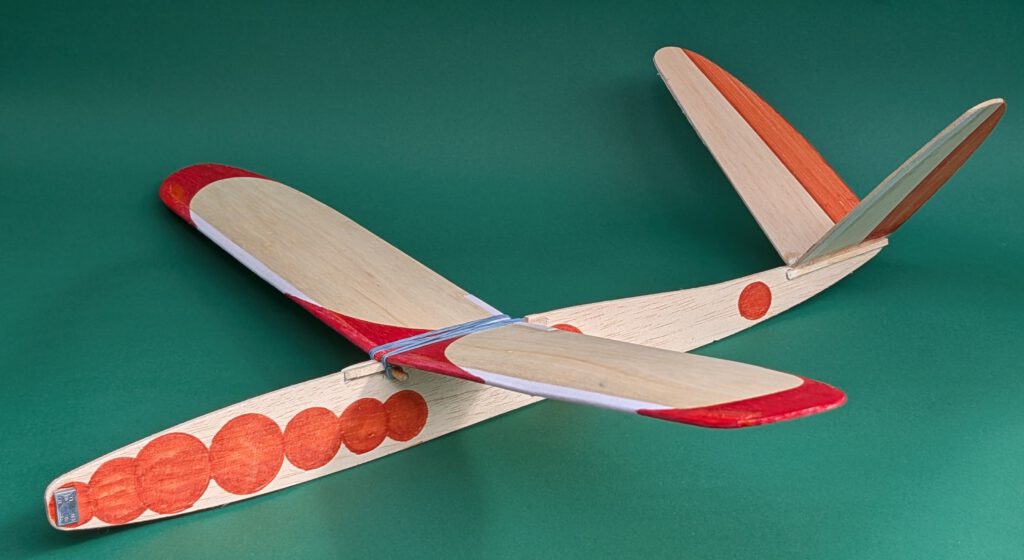
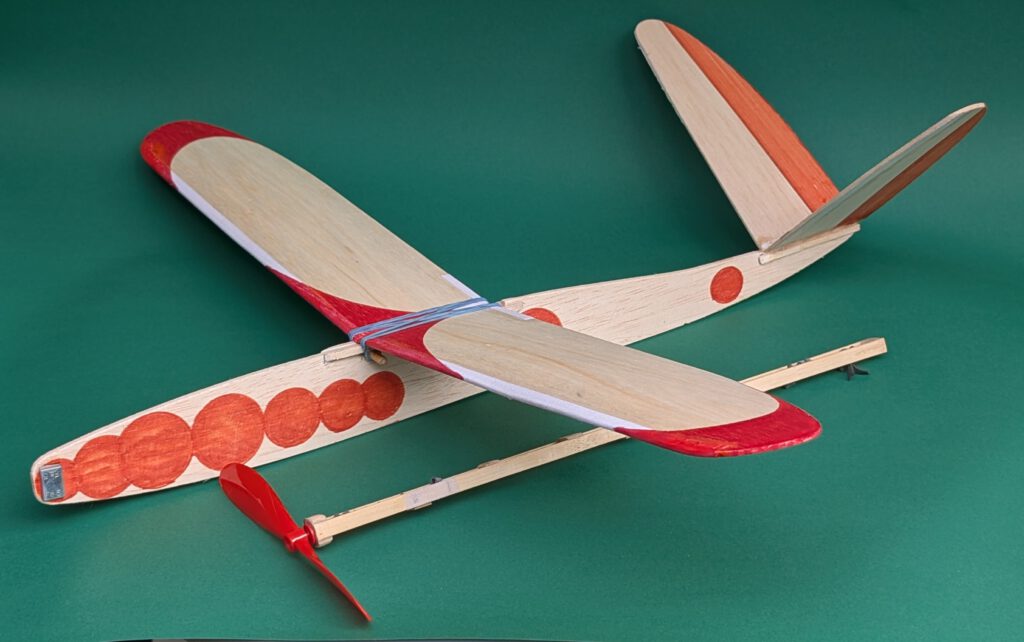
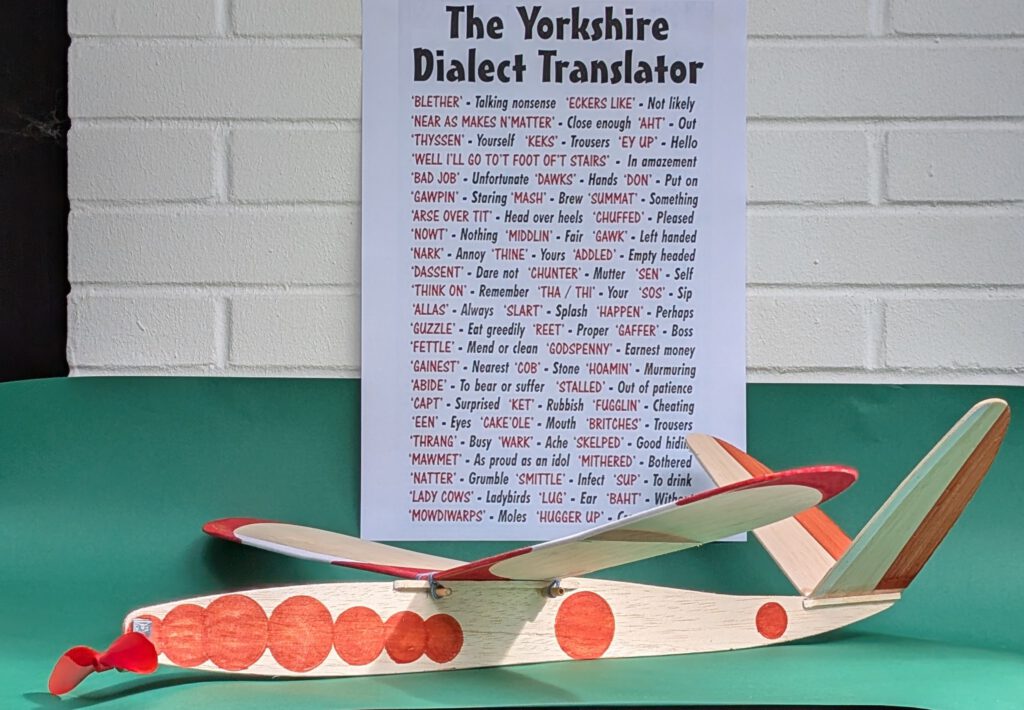
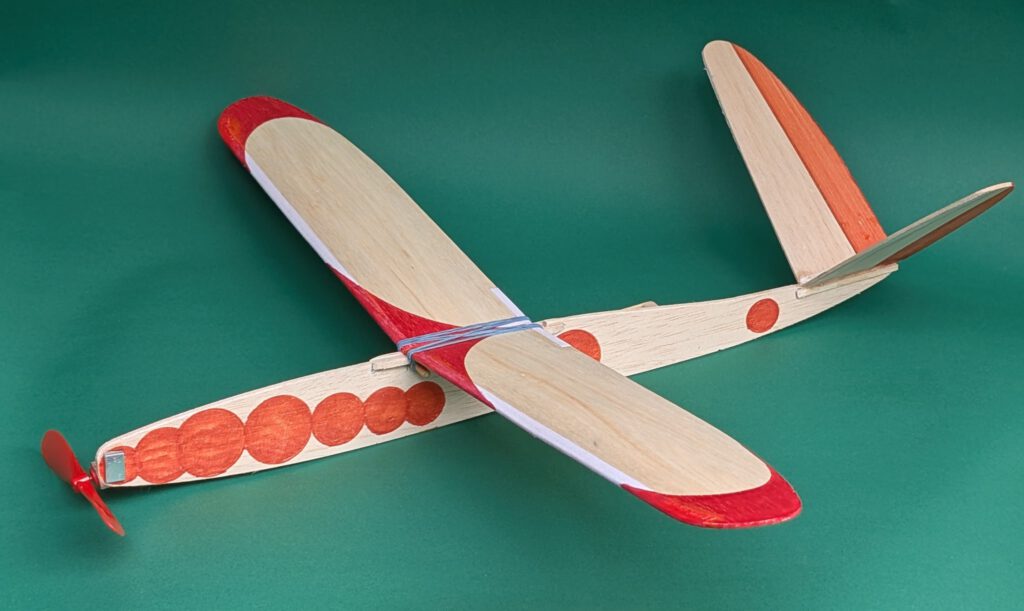
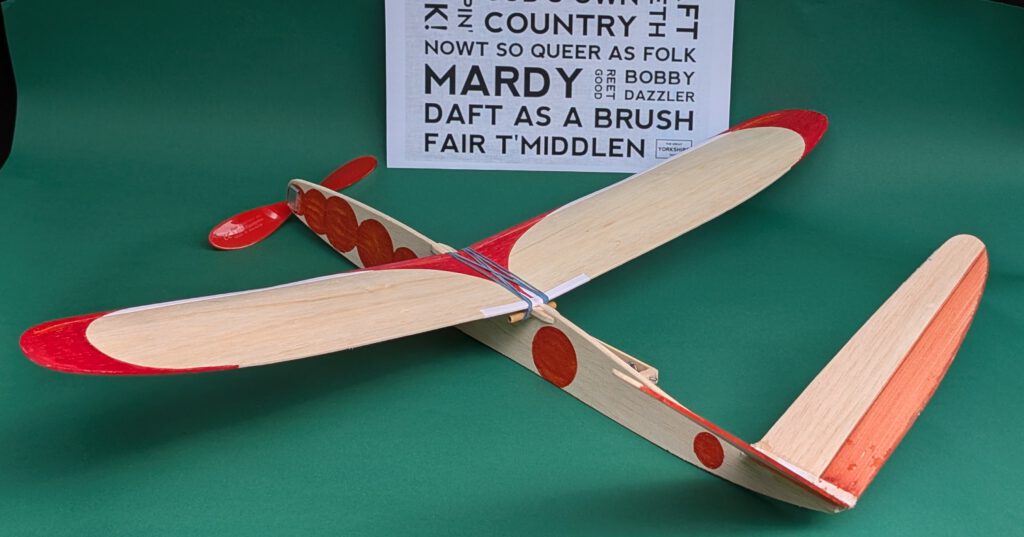
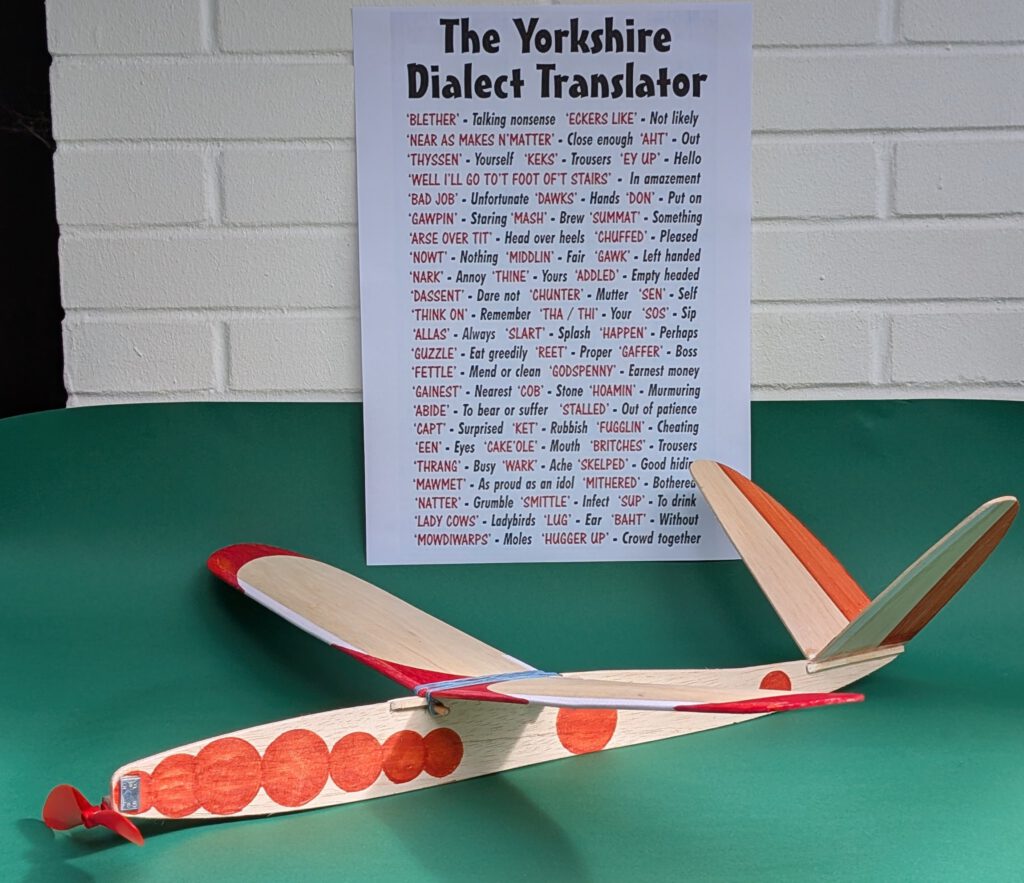


The concept:
- rather big
- vee-tail
- forgiving flight characteristics
- easy to build
- detachable/interchangeable wings
- easy to build
- can be converted into a R/C model
Named after someone who lives in a part of Britain, where a very special kind of English is spoken, an English that endlessly puzzles visitors from abroad. No, that is by far not all for what I feel great affection for my beloved Yorkshire. It’s here and not elsewhere where to find the best Bengali food at private homes and in restaurants. Furthermore, ever heard of the Brontë sisters or of Mary Bateman…?
What is RPU?
RPU stands for rubber power unit.
This is a device designed for the modelbuilder who likes to fly many models with one only powerunit. Main material of the RPU comes from the grocery store around the corner: four barbecue skewer chopsticks. Add to them scratch balsa, a hook made from piano wire, some black rubber and a commercial plastic airscrew. That’s all.
The unit is attachable through two pieces of Velcro tape and can thus be used for example first on a little Hurricane five minutes later on a Zero and ten minutes later on a Reggiane of the same configuration. You build only one RPU and use it on as many modelplanes as you wish.
Models with RPU use the same asymmetrical principle as is known from No-cal models. From the one side they look handsome as from the other the power unit disturbs the harmonic view considerably.
Generally there is no great difference between the flight performances of a balsa sheet profile model with built-in rubber motor and a model flying on a RPU.
Why not try both principles? Among the plans range of BEGINNERZONE you will find models of both categories. Sit down, build, fly, compare!
I developed and tested three different types of RPUs.
The one for small models of 30 cm / 11.8 in to 40 cm / 15.75 in wingspan is the RPU 20 (lenghth 20 cm / 7.9 in).
The one for medium sized models with a span of 40 cm / 15.75 in to 60 cm / 23.6 in is the RPU 30 (length 30 cm / 11.8 in).
The one for larger models of up to 80 cm / 31.5 in wingspan is the RPU 40 (length 40 cm / 15.75 in).
The RPU 40 is made a bit different from RPU 20 and 30. Instead of the four skewer chopsticks it uses two strips of bamboo wooden sticks (400 x 9 x 3 mm). The rest is identical.
Building the balsa sheet model Yorkie RPU 40.
Materials
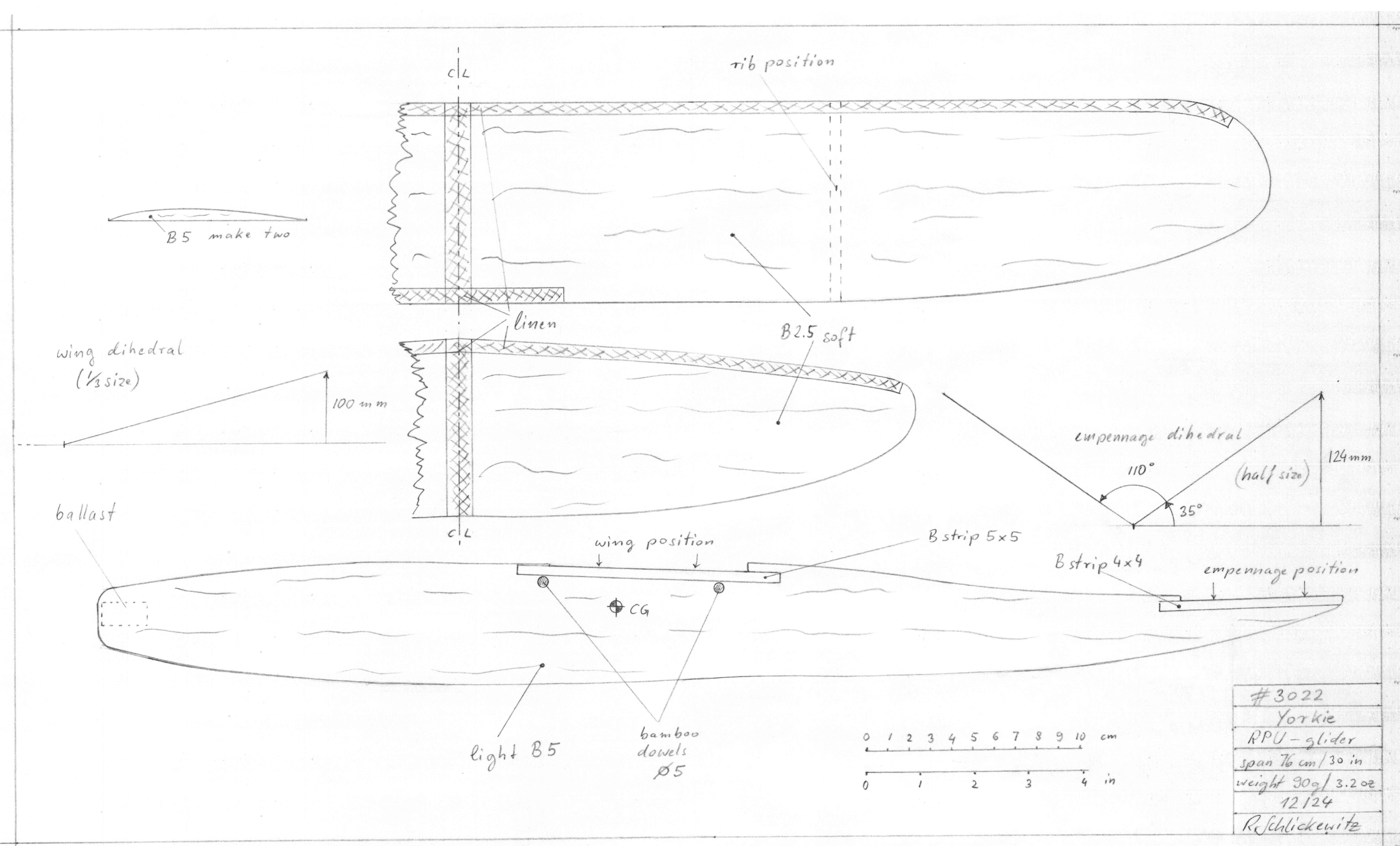
Fuselage: light B 5; wing: soft B 2.5 or harder B 2; wing ribs: B 5; wing support: B strips 5 x 5; dowels: bamboo 5 mm diameter; V-tail: soft B 2.5; V-tail support: B strips 4 x 4 or 5 x 5; linen band width 10-12 mm / ½ in; Velcro tape with adhesive backside; rubber rings; ballast: steel or lead.
Assembly
Cut out balsa parts in accordance to plan. Sand well. If colouring is desired do it now.
Fuselage:
Cement wing support strip and V-tail support strip into their respective places on one side and let dry. Repeat procedure on other side. Let dry.
Drill holes for dowels. Make sure they sit tight and epoxy ‘em into fuselage. Check symmetry from all sides!
Wing:
Wing consists of a right and a left wing half. Reinforce both wing half leading edges with linen band as to be seen on photos. Let dry. Fix right wing half on building board with needles. Underlay left wing half tip in accordance to required dihedral. Join both halves and cover wing center area with linen band. Let dry. Reinforce trailing edge at center section with linen band (length around 4 in / 10 cm). Mark position of wing ribs on wing underside and cement ribs in place. Using clamps which hold ribs tight to wing on both ends is recommended. If wing has the tendency to rest only on one side then it is too heavy on this side. To compensate the imbalance disperse an amount of white wood glue on the opposite wing half’s tip area. Do it if necessary twice until balance is obtained.
Vee-tail:
Reinforce leading edges with linen band and let dry. Fix one V-tail component on building board with needles. Use selfmade template to get the other component into given angle and cement. Visual check symmetry from all sides. Let dry.
Final Assembly:
Put fuselage on a so called “third hand”. Fix wing with rubber rings on wing supports and doublecheck visually symmetry. If there is a tendency of the wing to hang down on one side file or sand away material on the opposite side wing support.
Cement Vee-empennage on fuselage end. Once more check symmetry!
Stick two pieces of Velcro according to your RPU on right fuselage side.
For balancing your model properly install RPU with airscrew and start unpowered testgliding over tall grass. Add ballast according to your test results. Note given position of CG on plan.
Remember correct center of gravity (CG) is essential for successful flights.
שיהיו הרבה טיסות נעימות! (پروازهای دلپذیر زیادی داشته باشید!)
Leave a Reply