
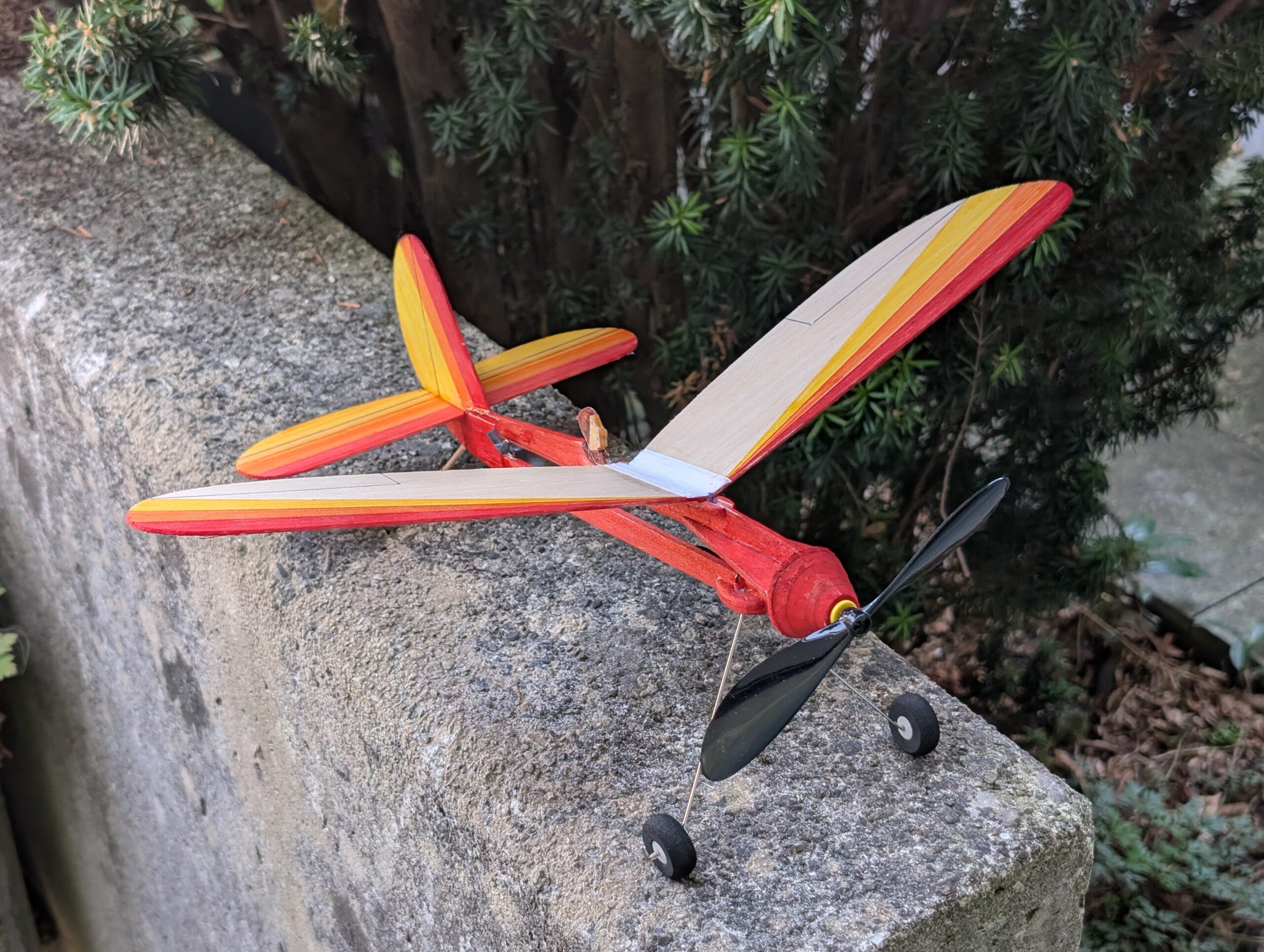
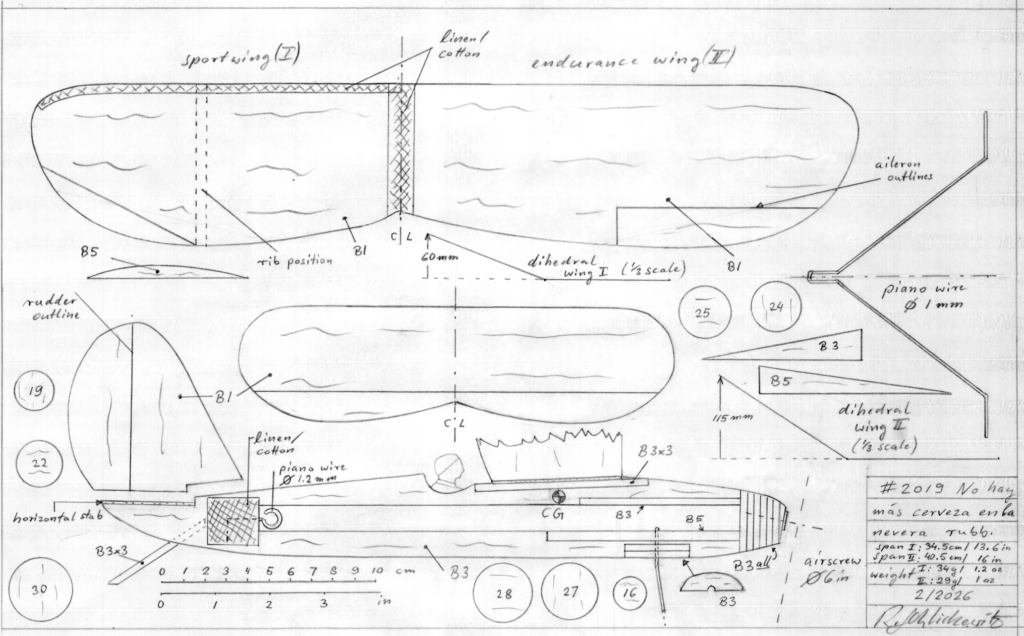
Short wing version: span 34.5 cm / 13.6 in and weight 34 g / 1.2 oz
Long wing version: span 40.5 cm / 16 in and weight 29 g / 1 oz
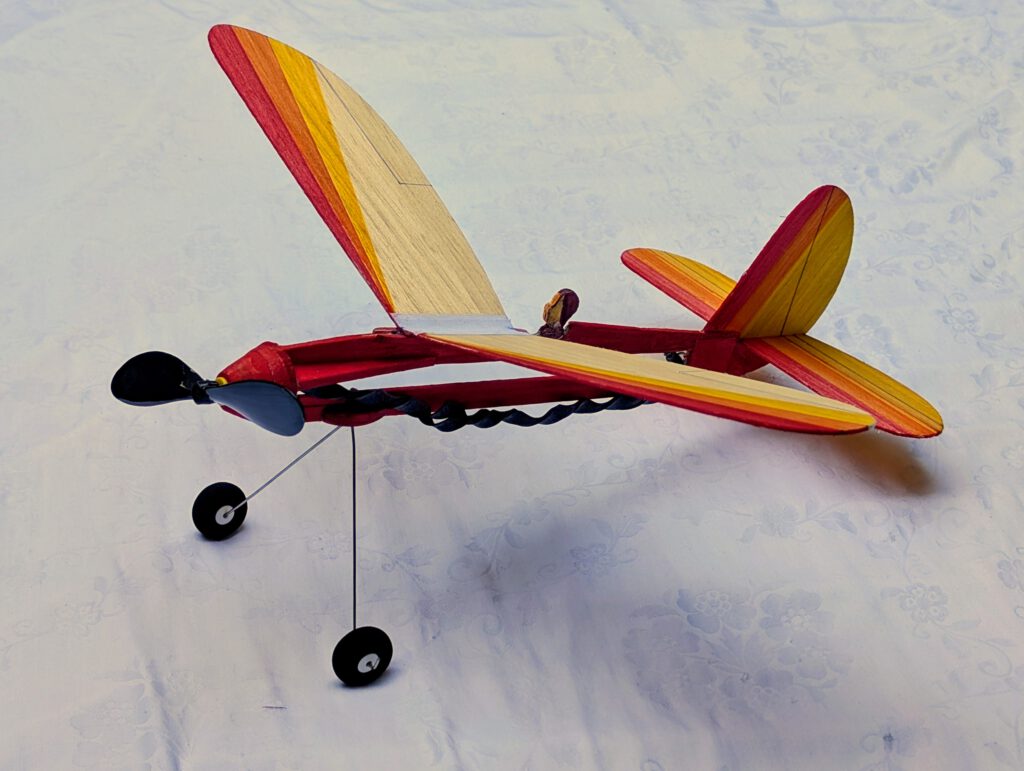
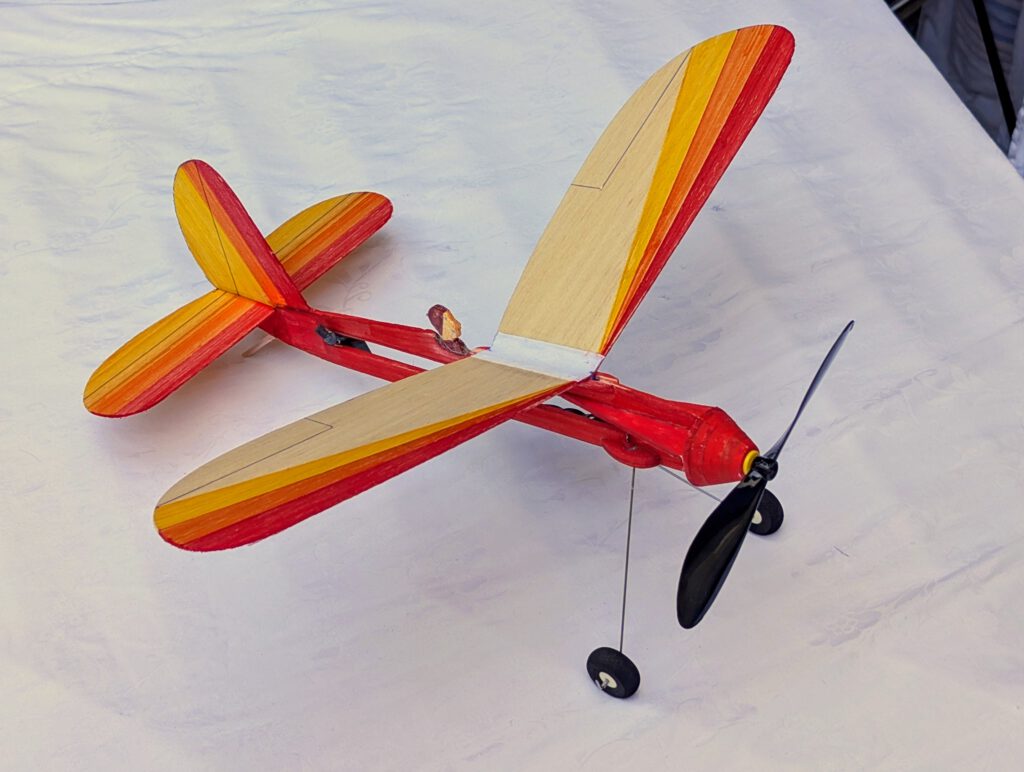
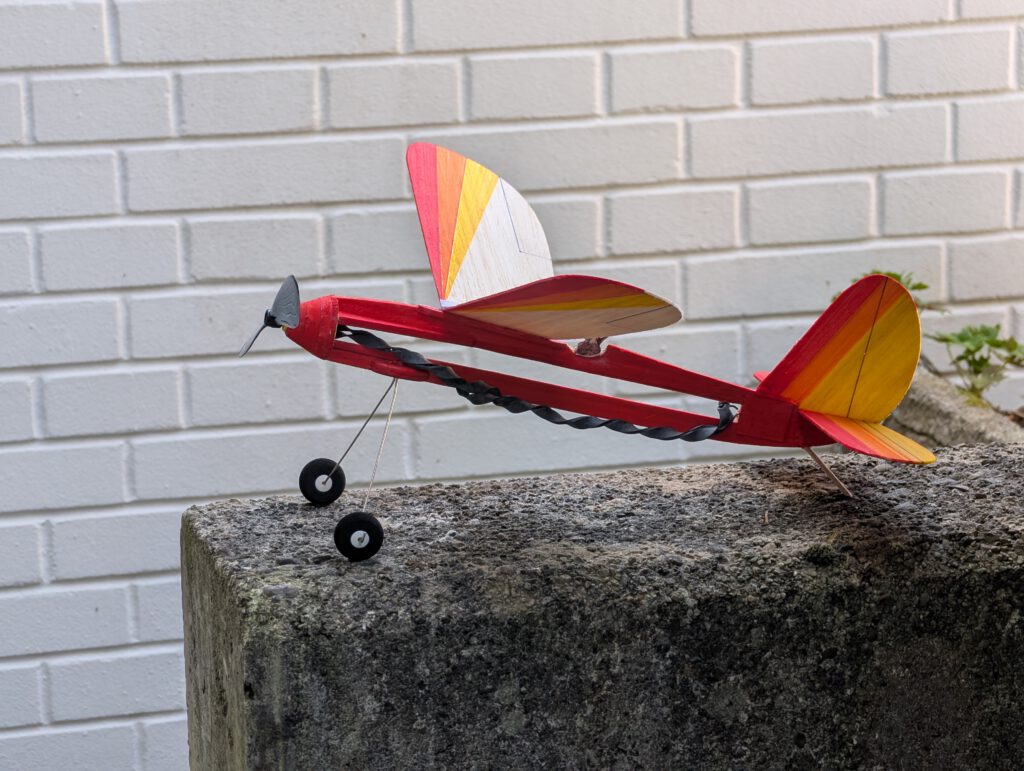
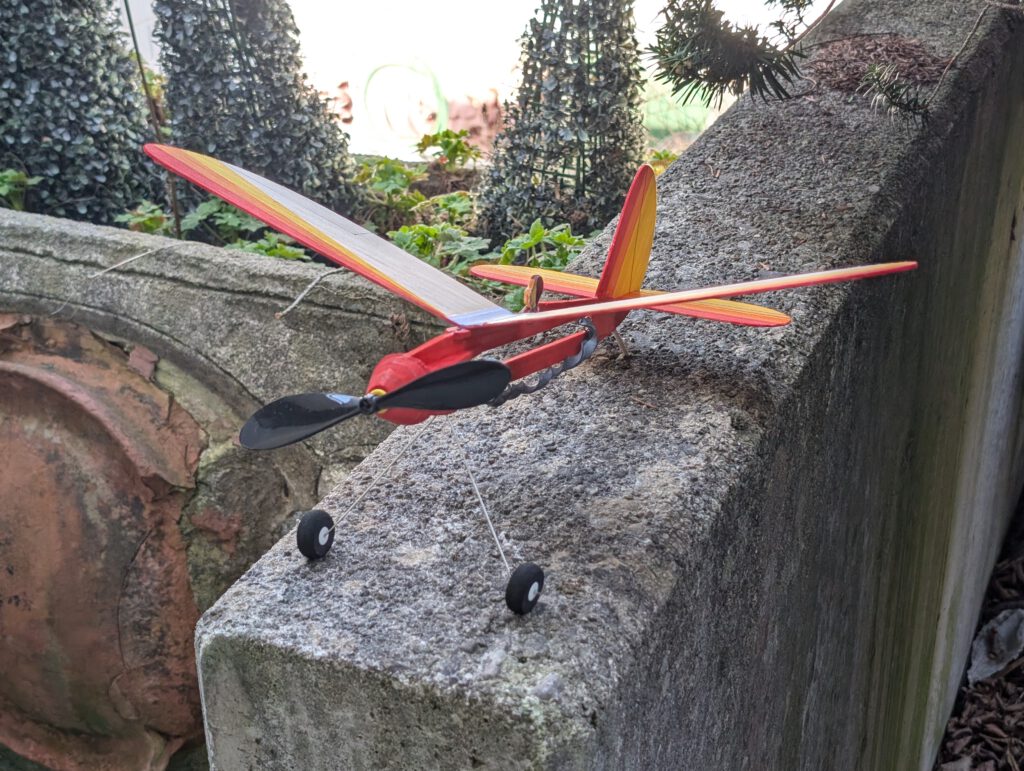
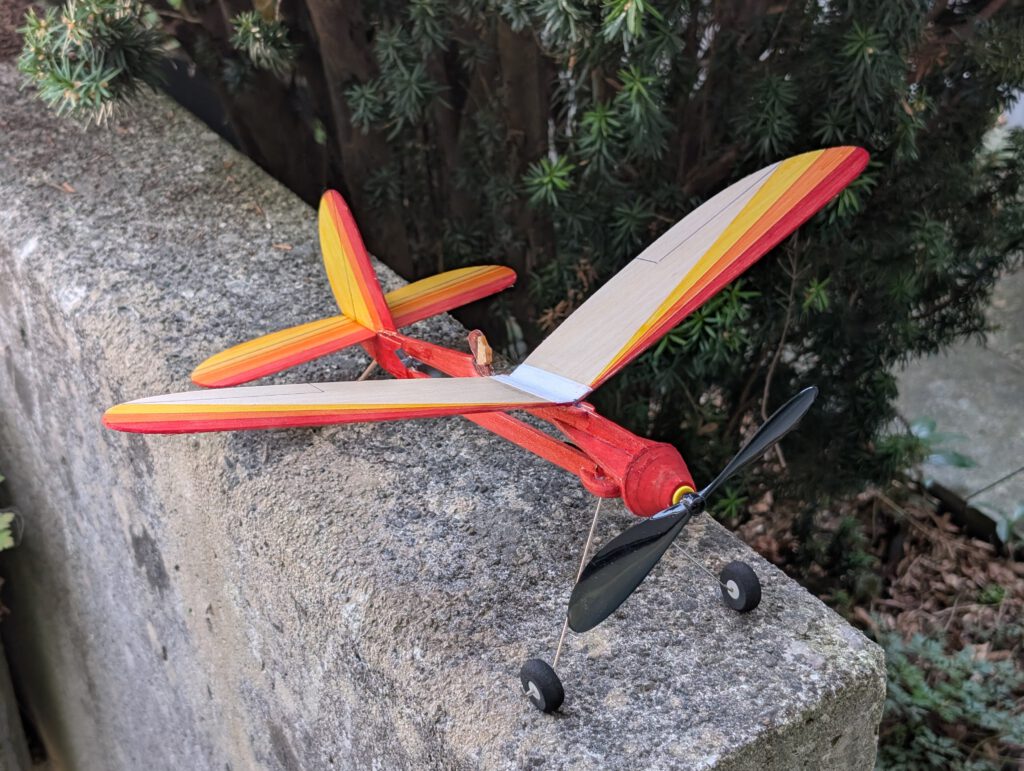
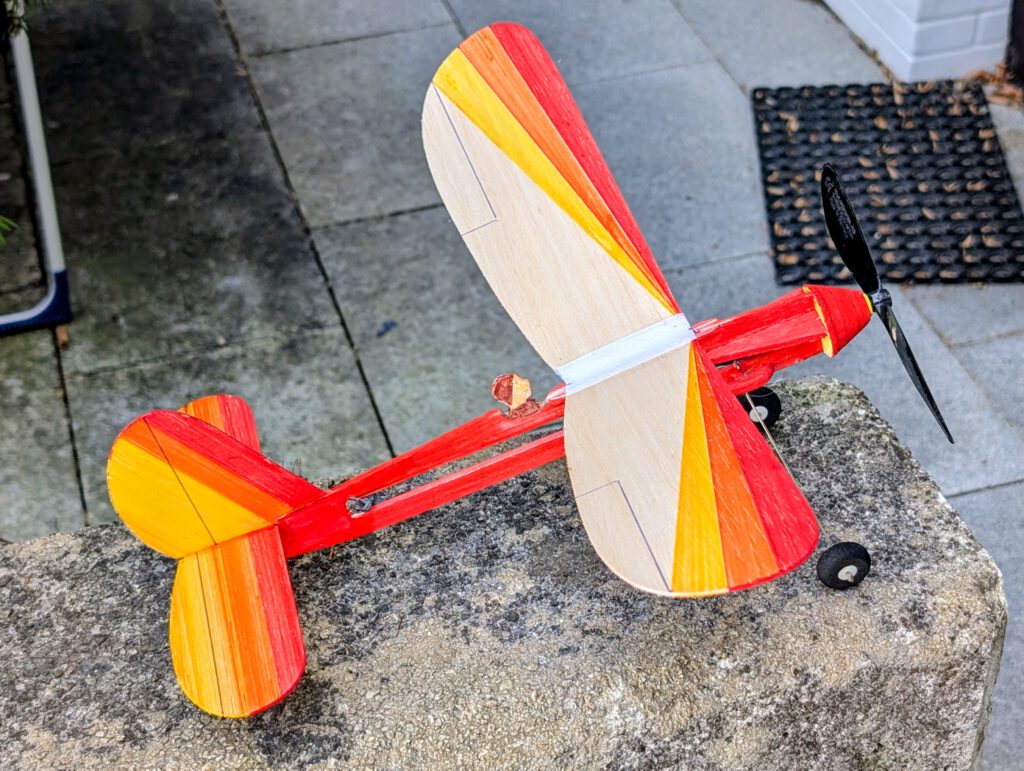
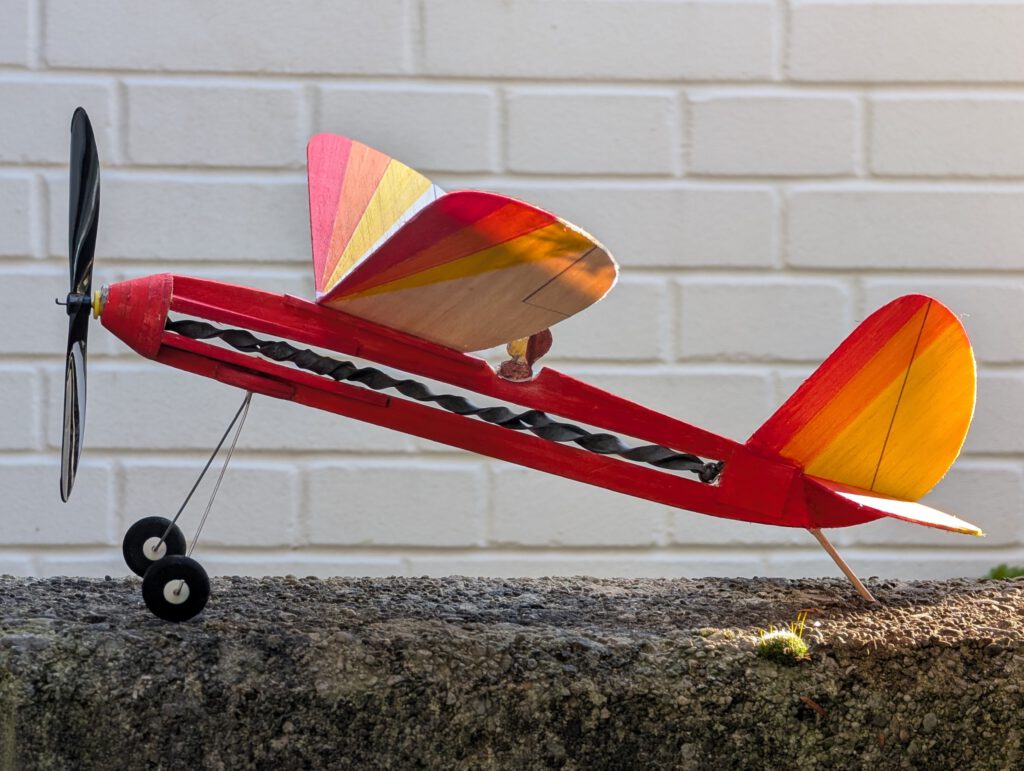
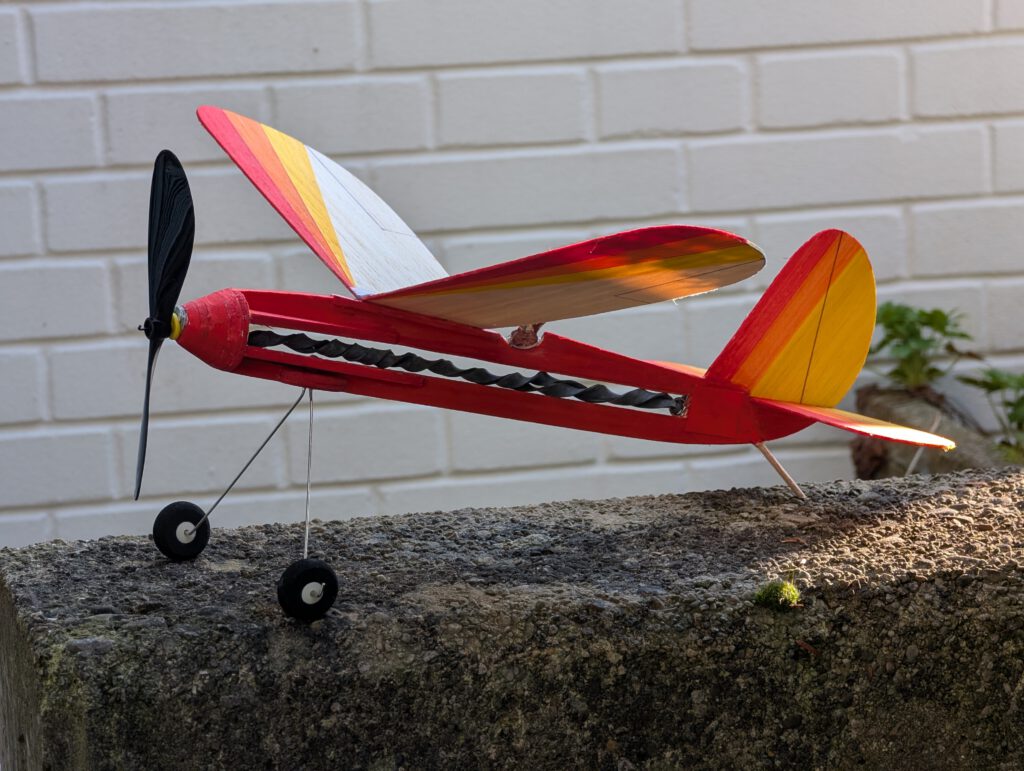
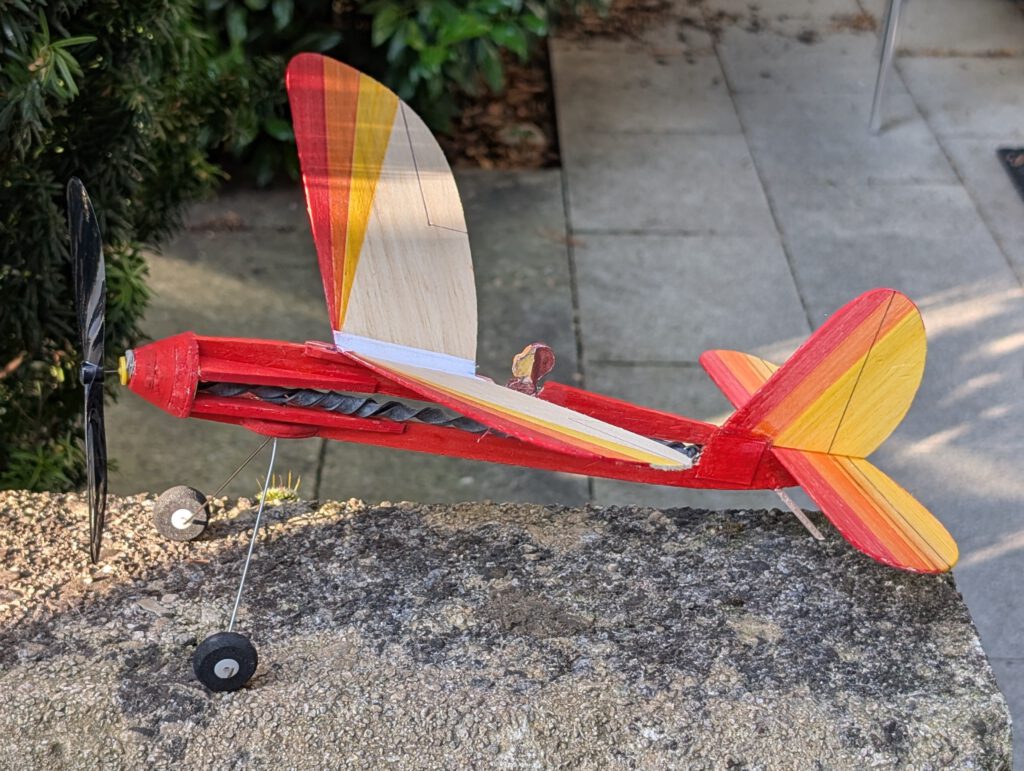
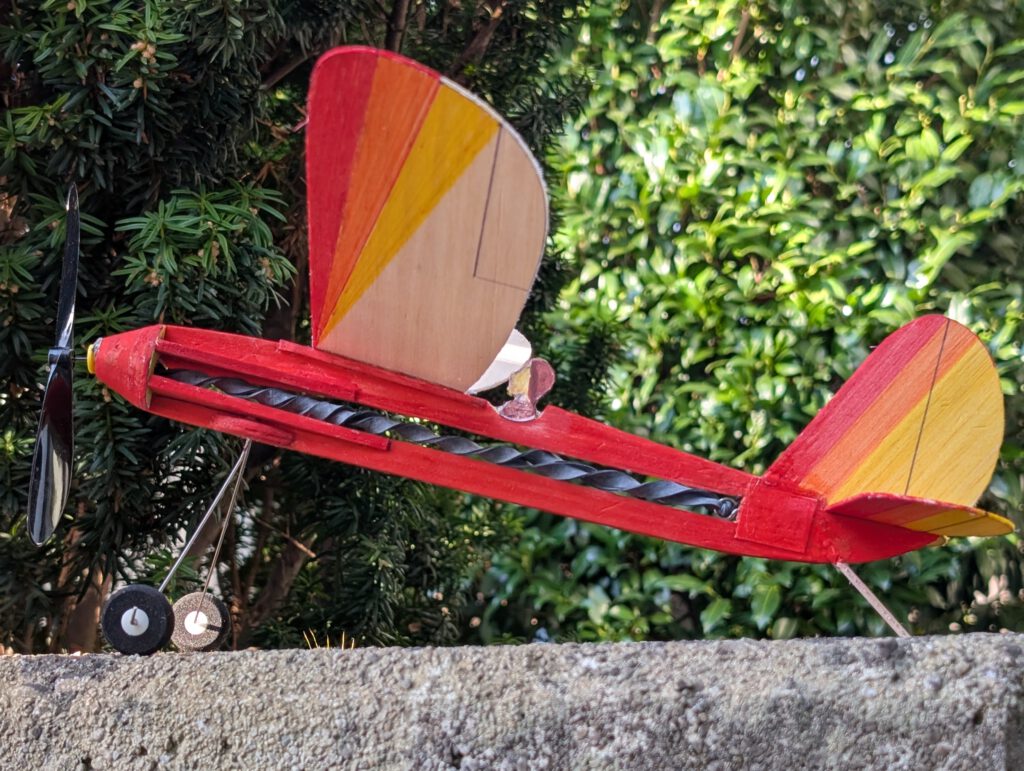
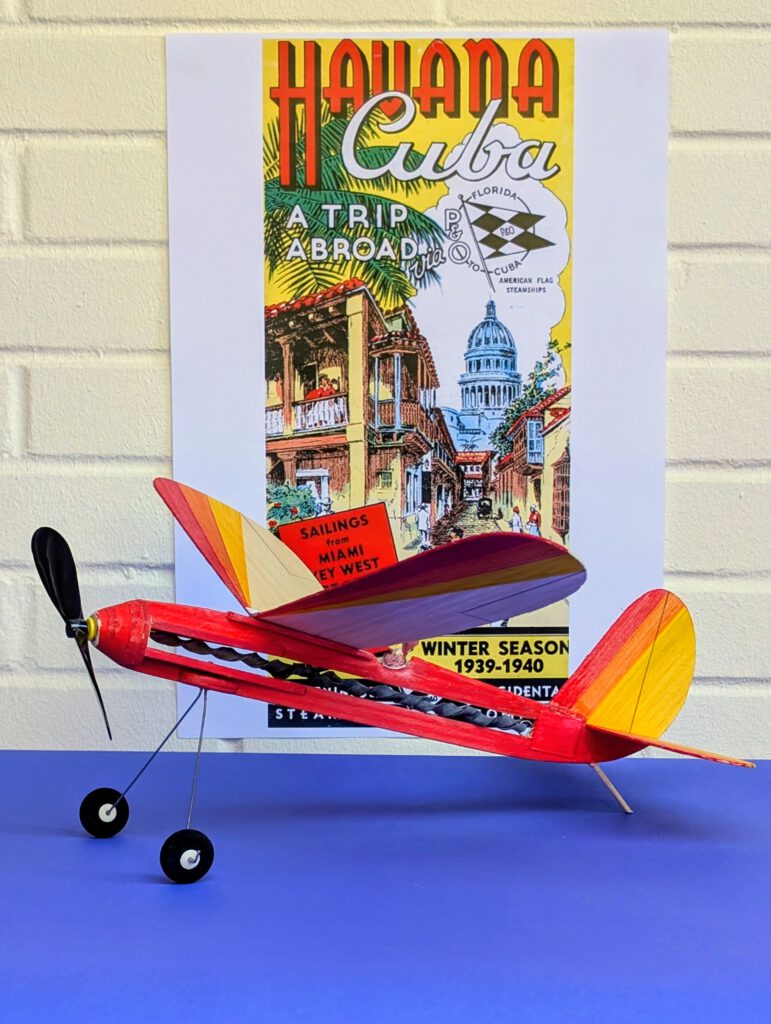
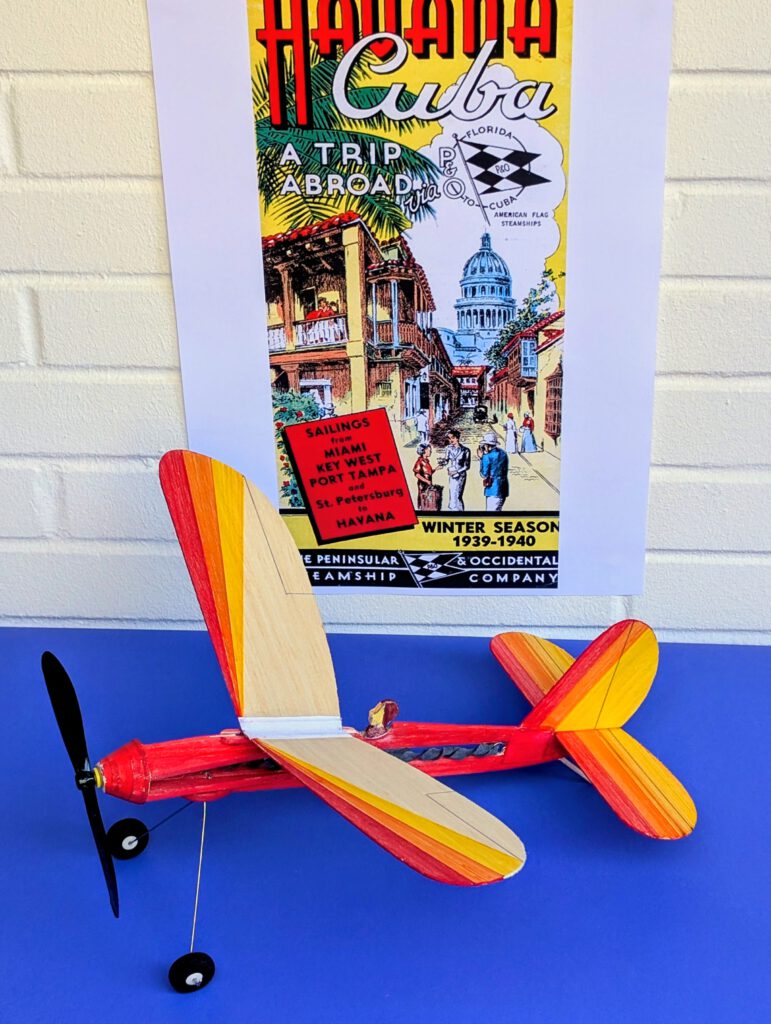
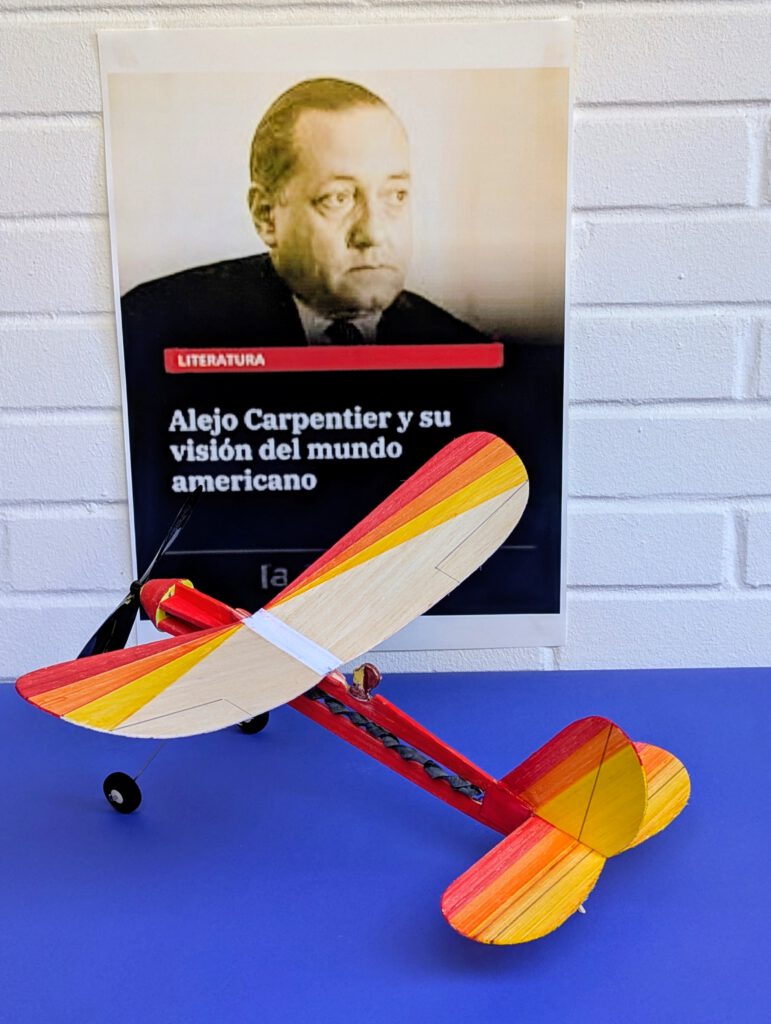
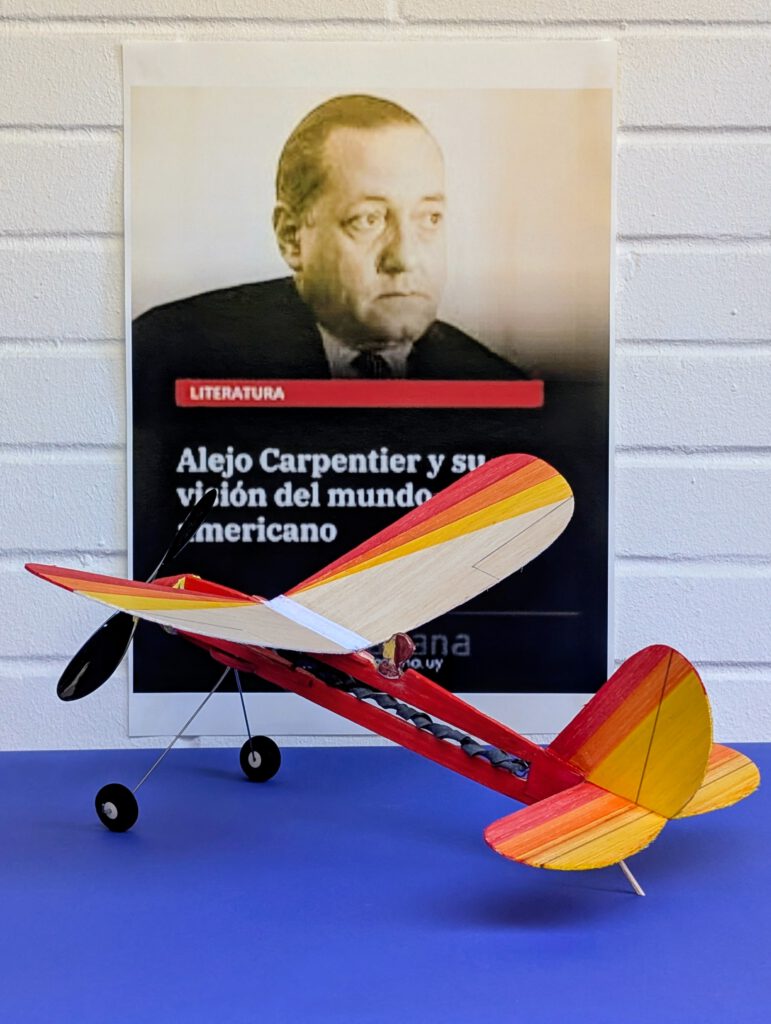
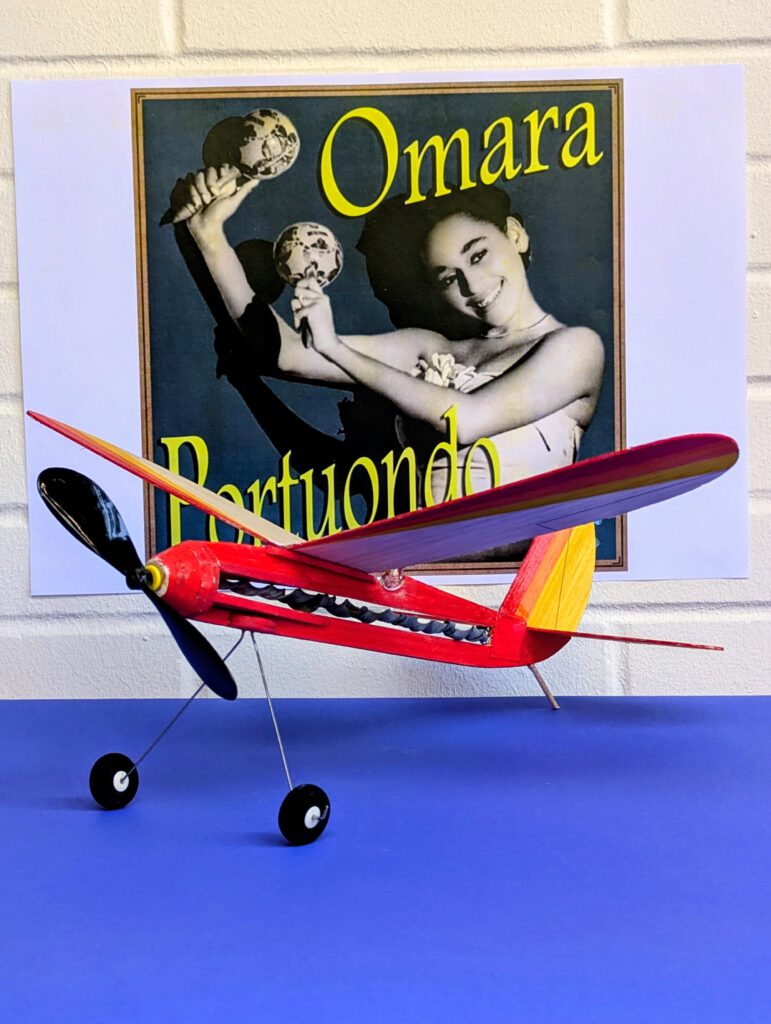
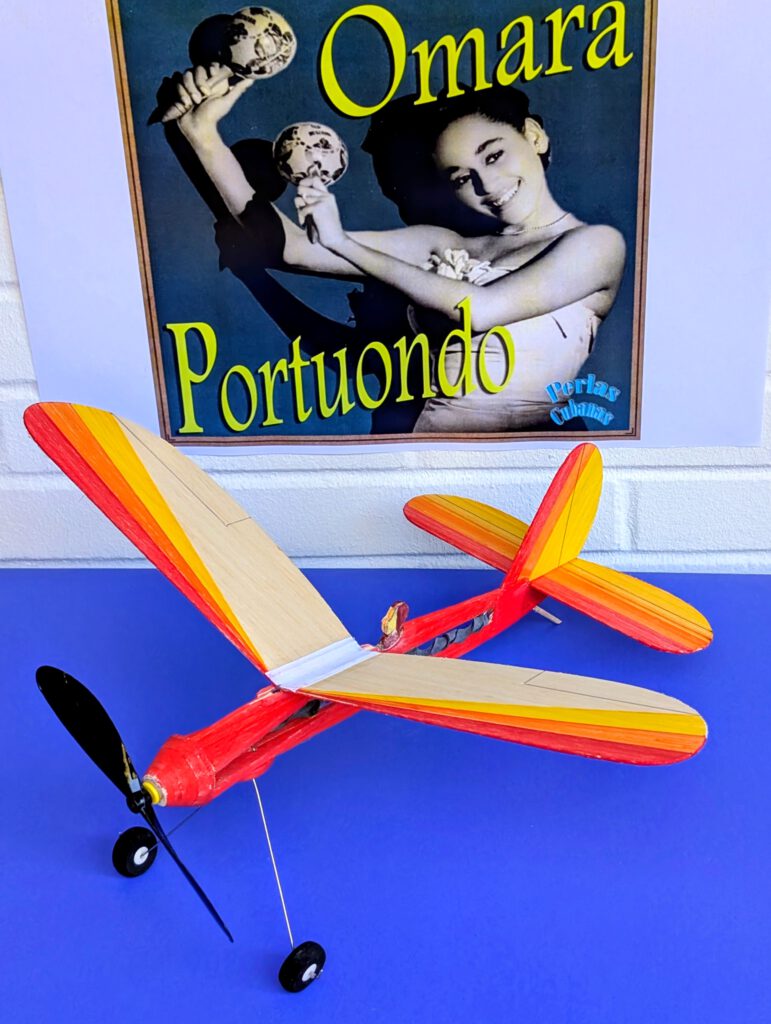
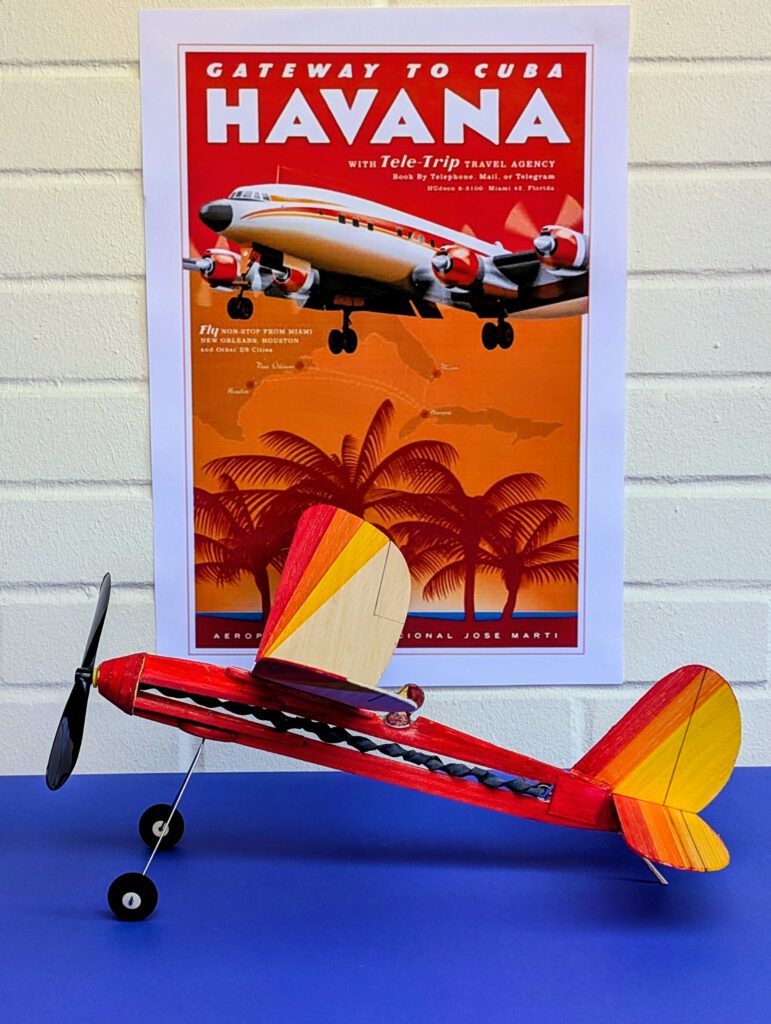
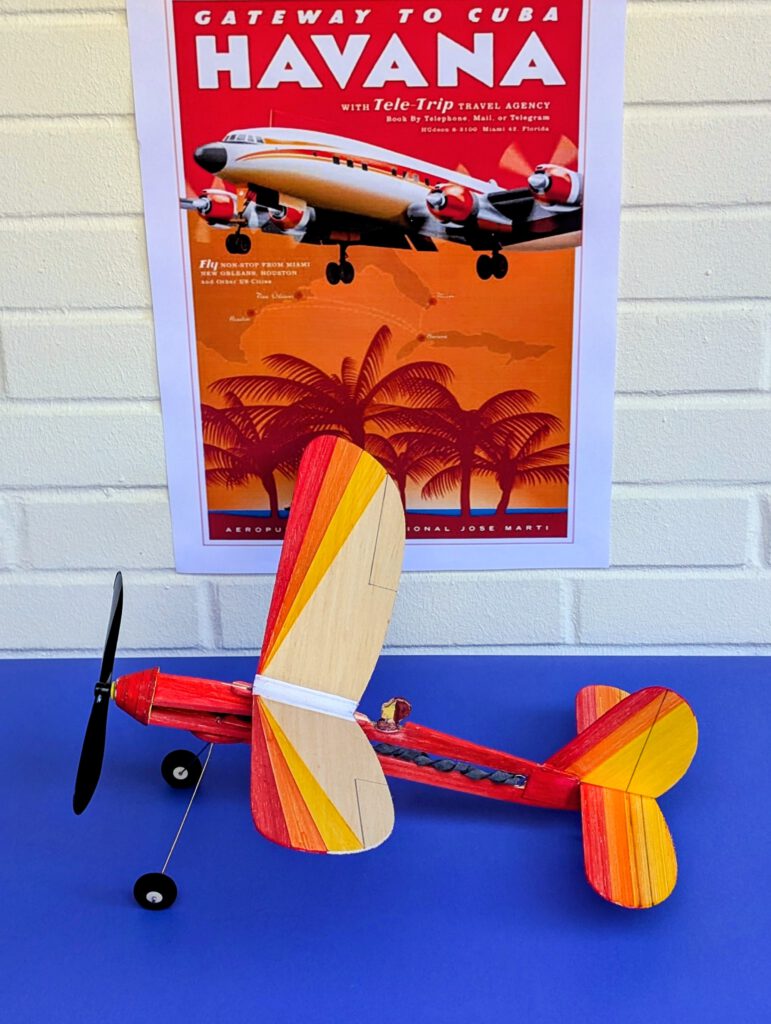
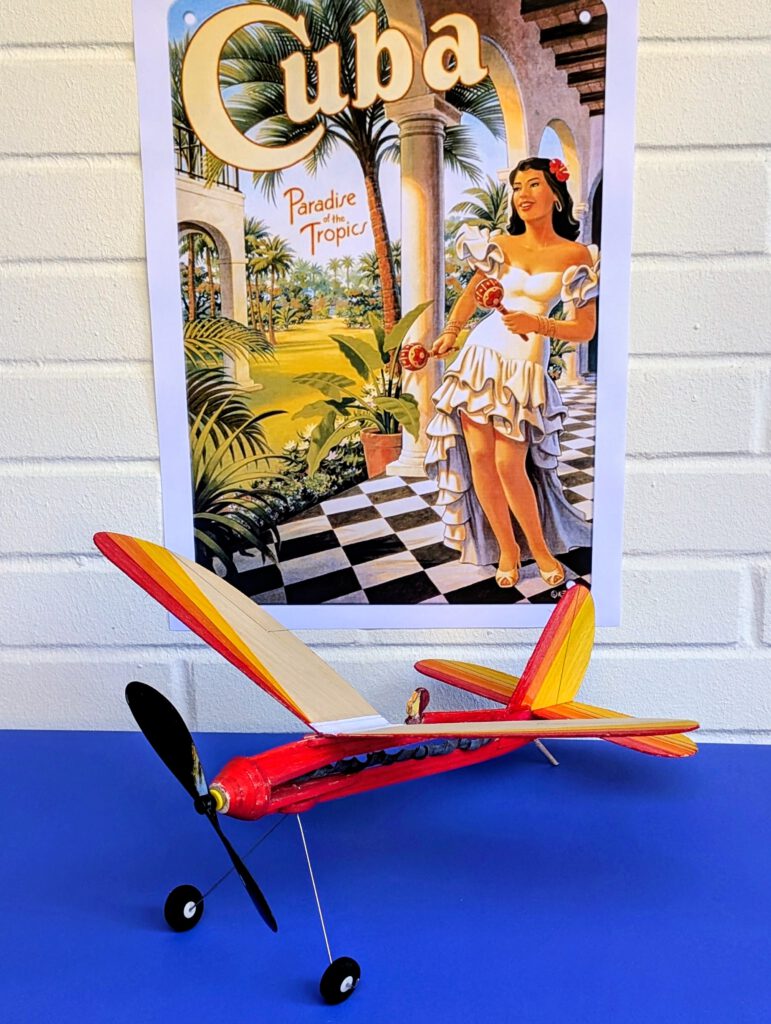
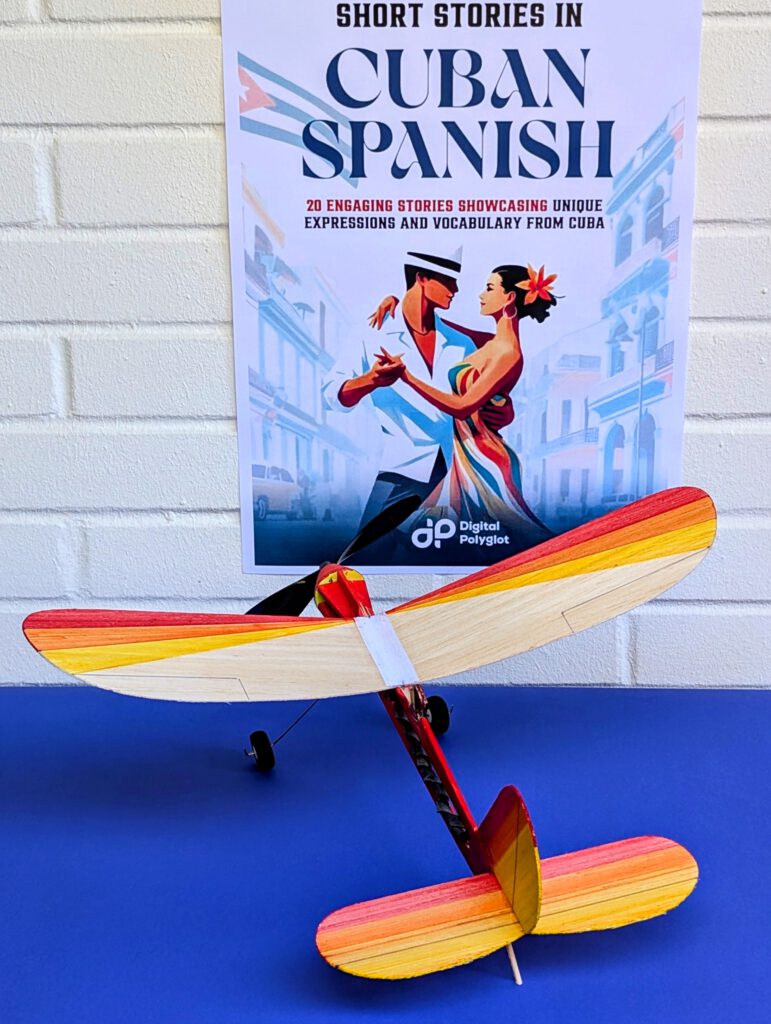
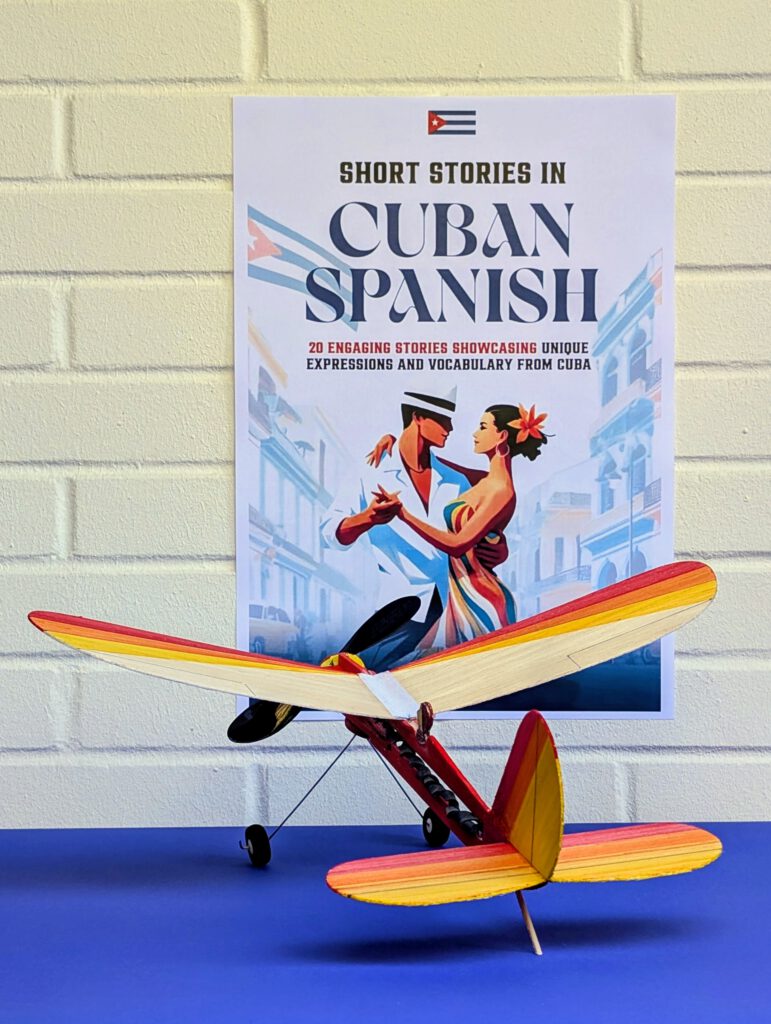
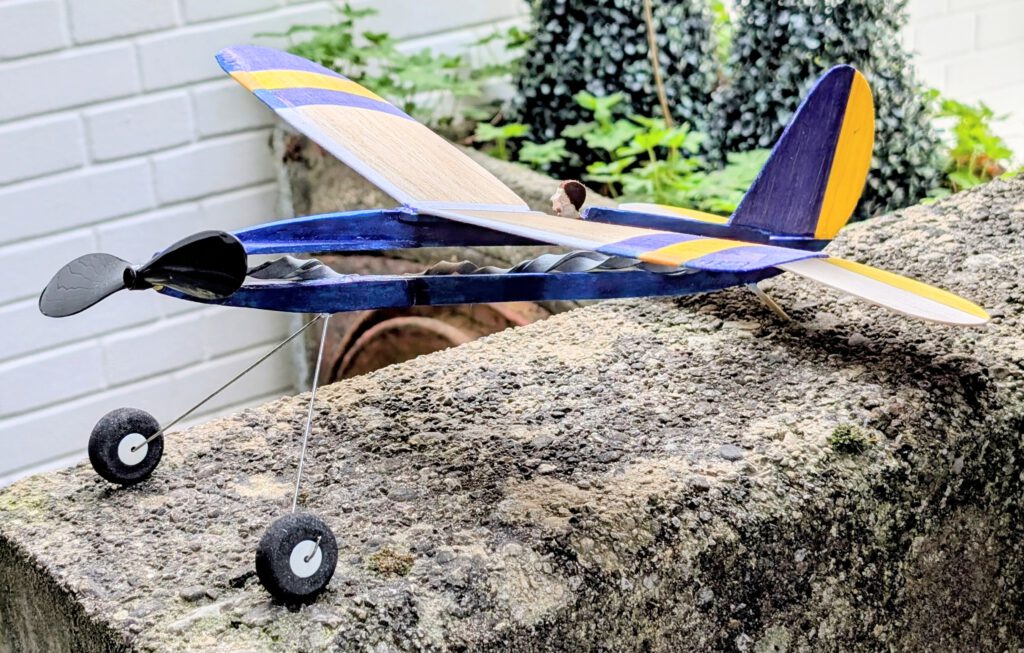
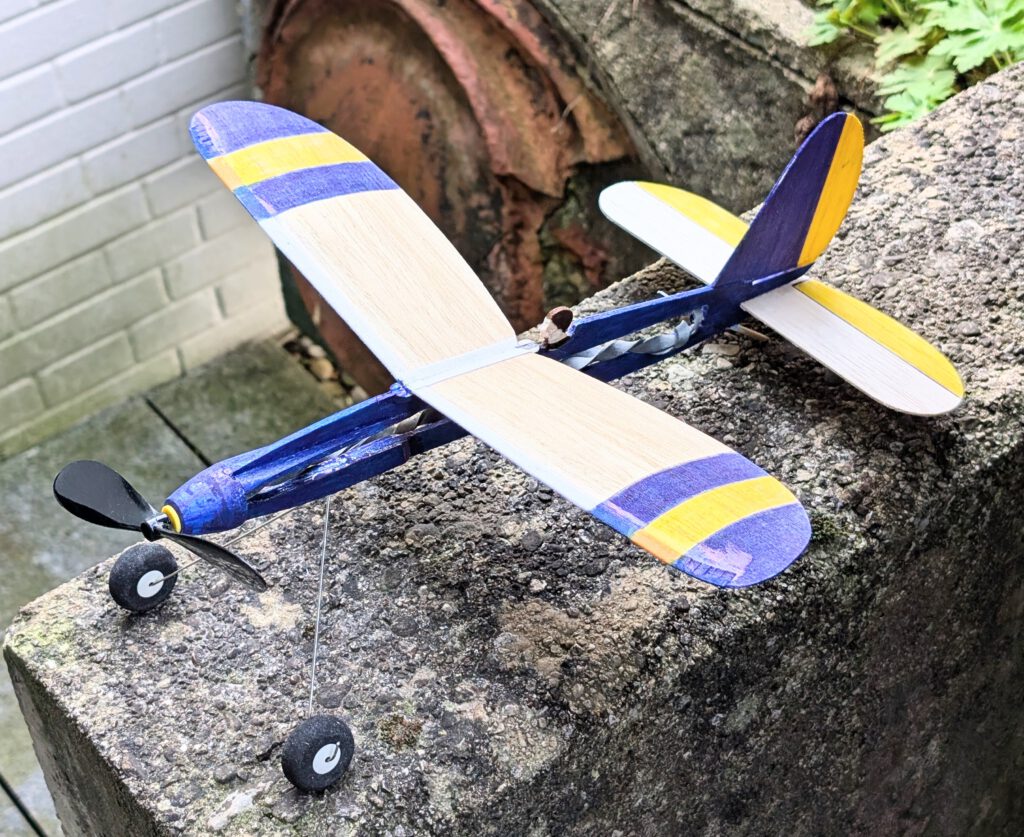
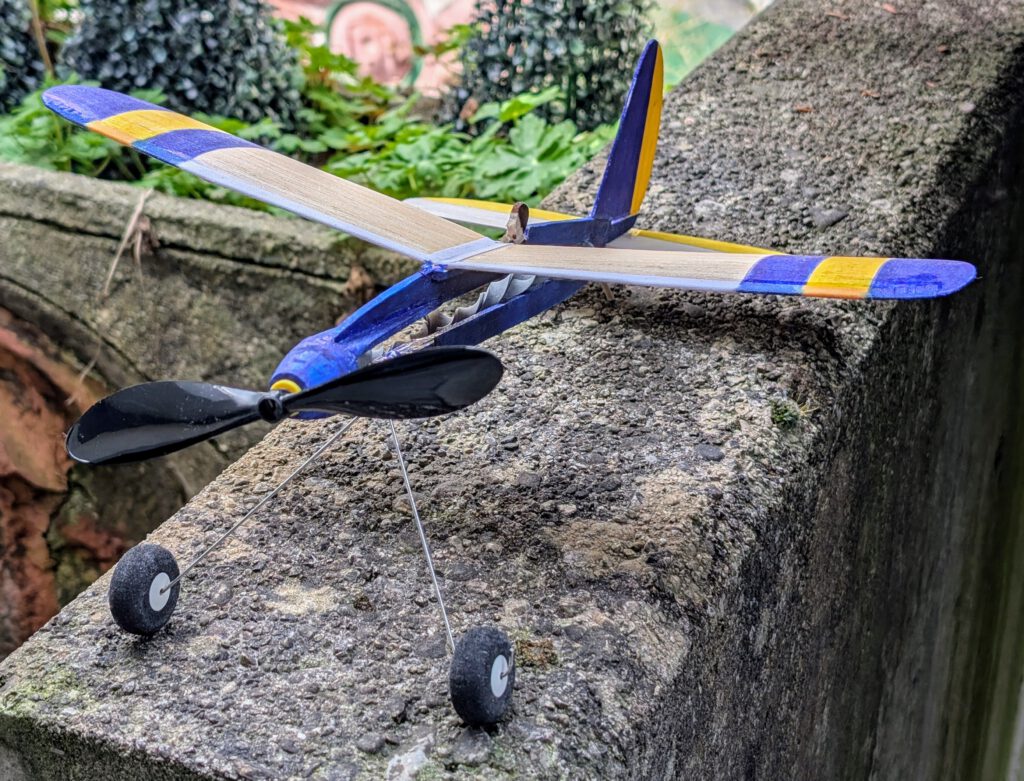
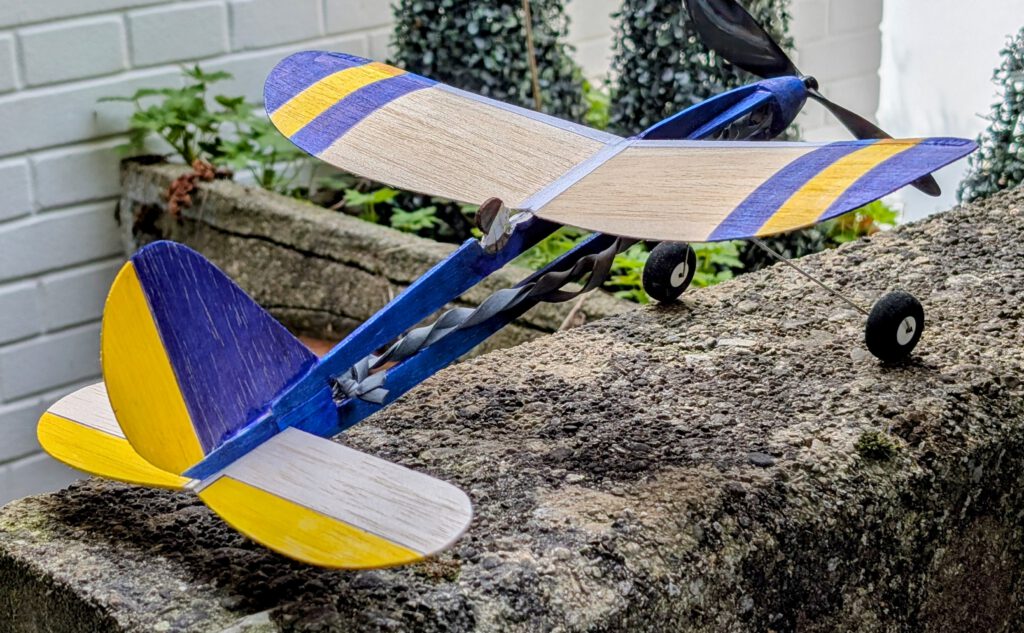
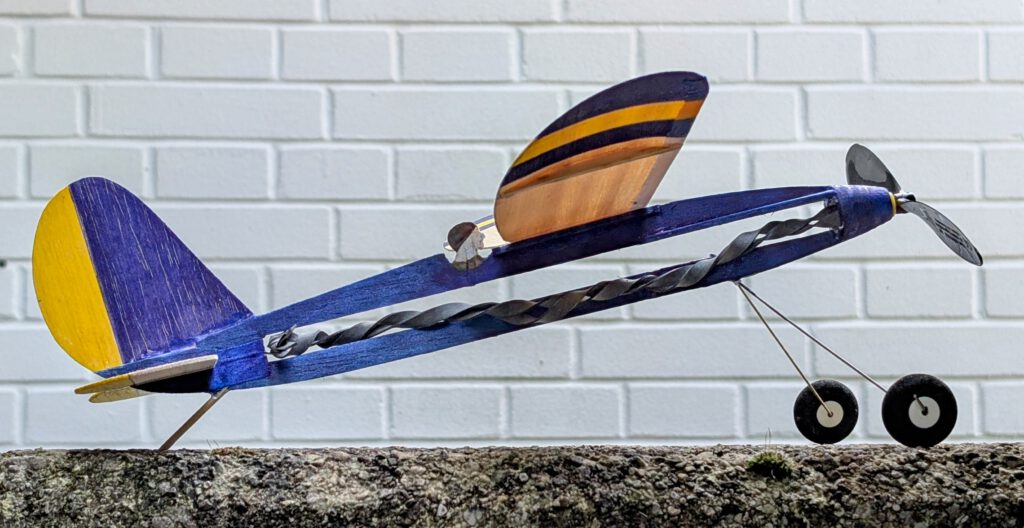
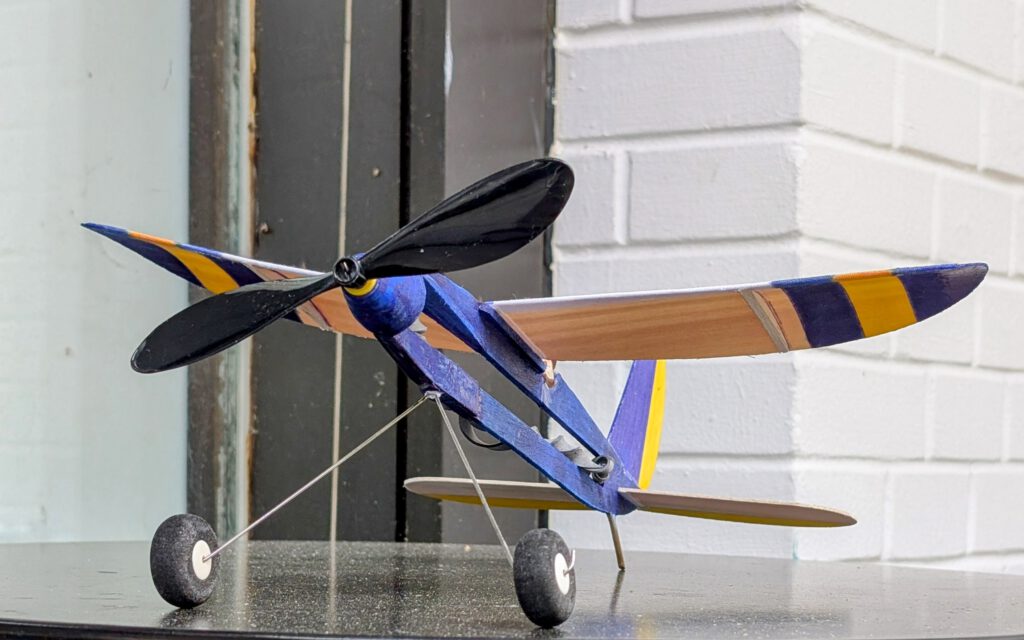
The concept:
- Classic vintage outlines with pilot in open cockpit
- Optional two wings – one for speed and one for endurance
- Good flight characteristics
- Shoulder-wing monoplane
- Landing gear (ROG)
- For straight forward building
- Not suitable as first model
The Spanish name of this model translates into: There is no more beer in the fridge.
Cuban-Spanish is a bit different in comparison to Spanish-Spanish. In Cuba people would say: “Ya no queda fría en la refri” or “No queda lagarto en el frio” or “No hay más láguer en el frio”. Note that Cubans often drop the end-s. So “más” becomes “má”.
Cuban in general has a big bunch of phantastic slang expressions. And Cuban music is phantastic as well…
Building the rubber powered balsa profile-fuselage model No hay más cerveza en la nevera MINI rubb.
Materials
Fuselage: B 3; fuselage nose parts: B 3 and B 5; rubber hook: piano wire 1.2 mm diameter; landing gear: piano wire 1 mm diameter plus commercial light weight wheels diameter 25 mm; tail skid: B stick 3 x 3 or bamboo; wings: B 1; wing ribs: B 5; wing supports: B 3 x 3; horizontal stabilizer: B 1; fin: B 1; solid tailor’s thread; linen band width 12 mm / ½ in; ballast: small piece of scrap metal or lead; one commercial plastic airscrew 6 in diameter or self-made from wood; black rubber.
Assembly
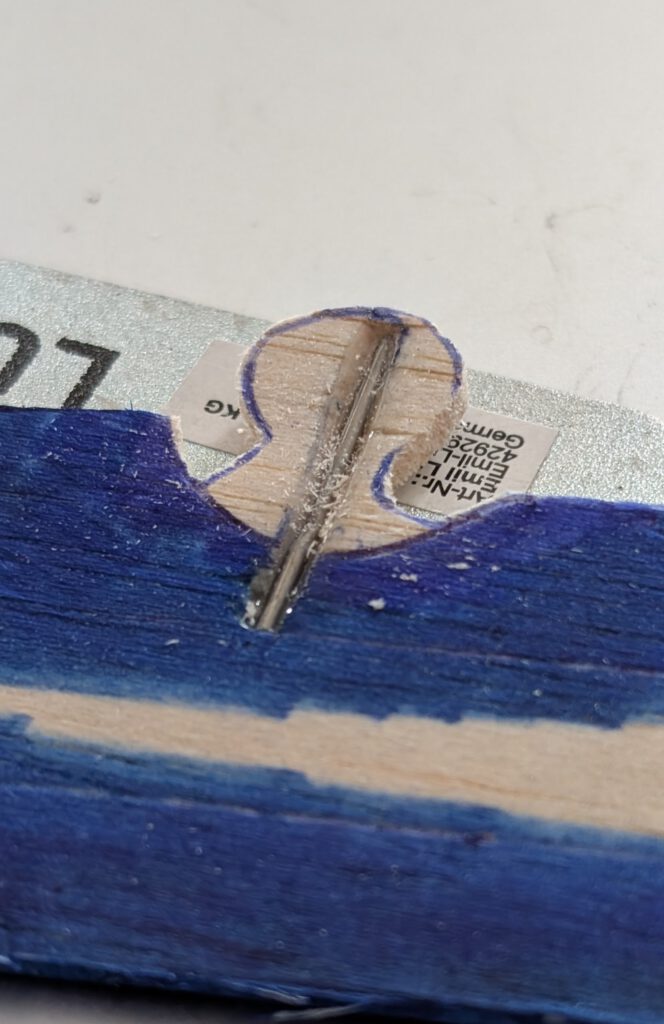
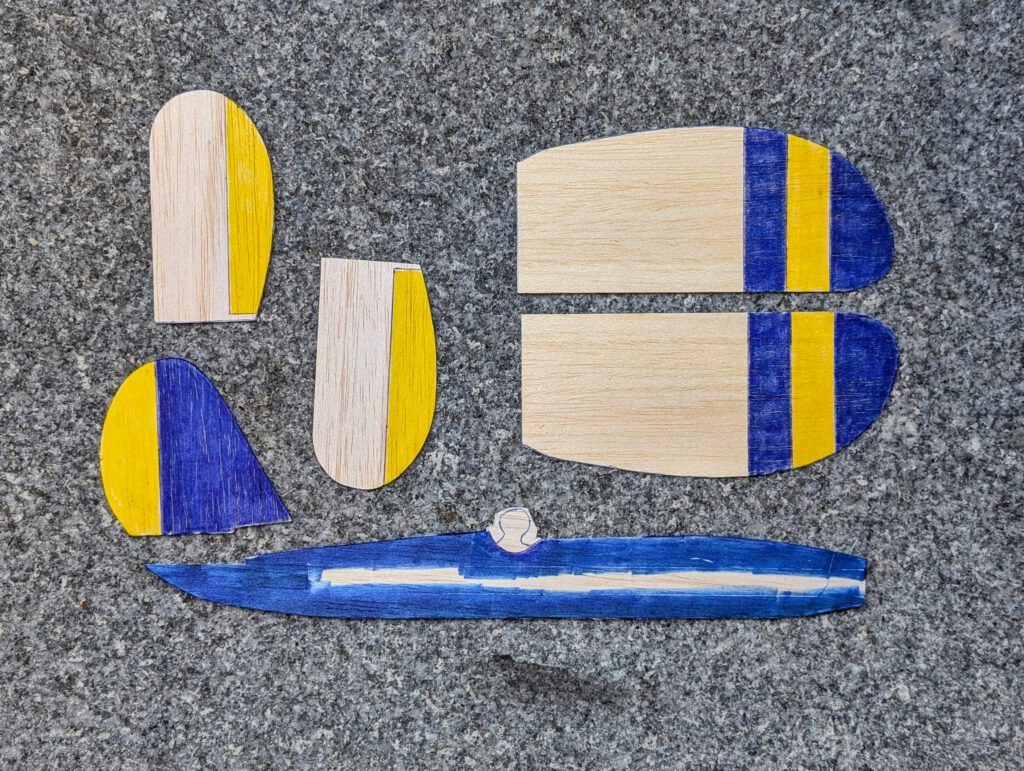
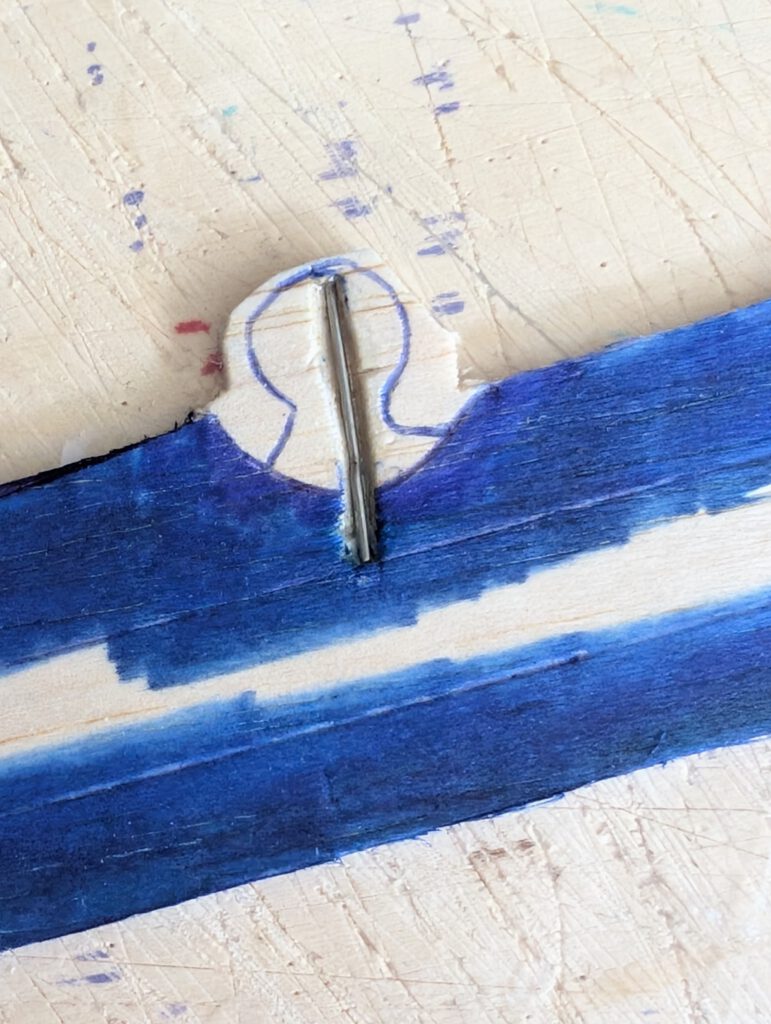
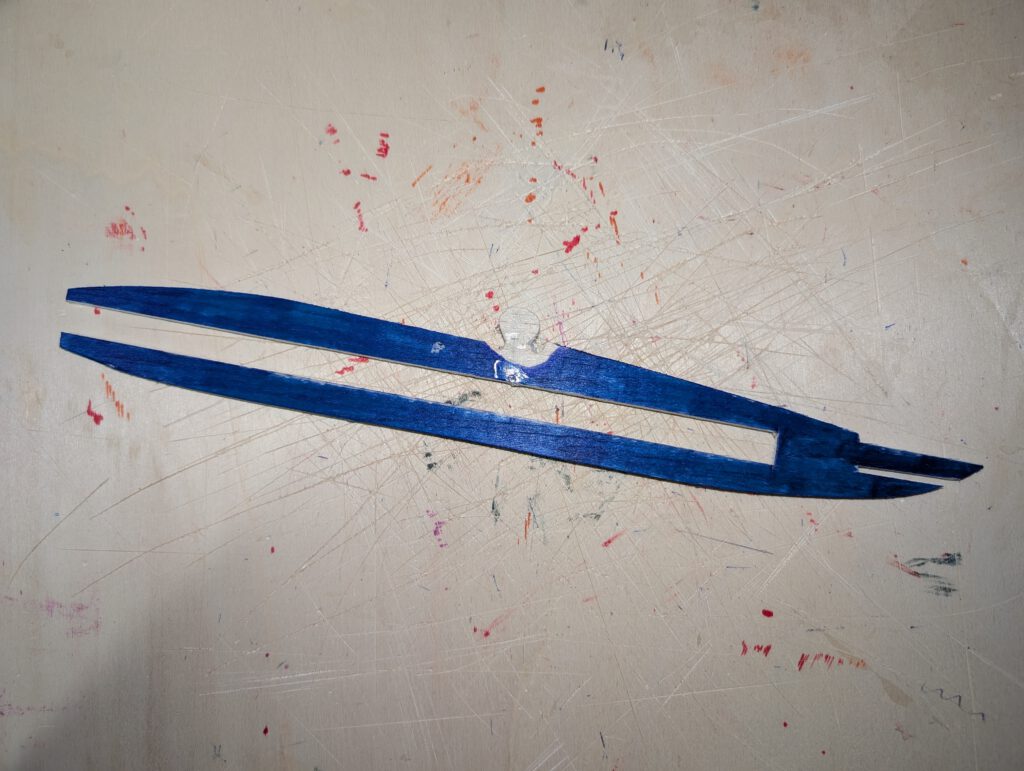
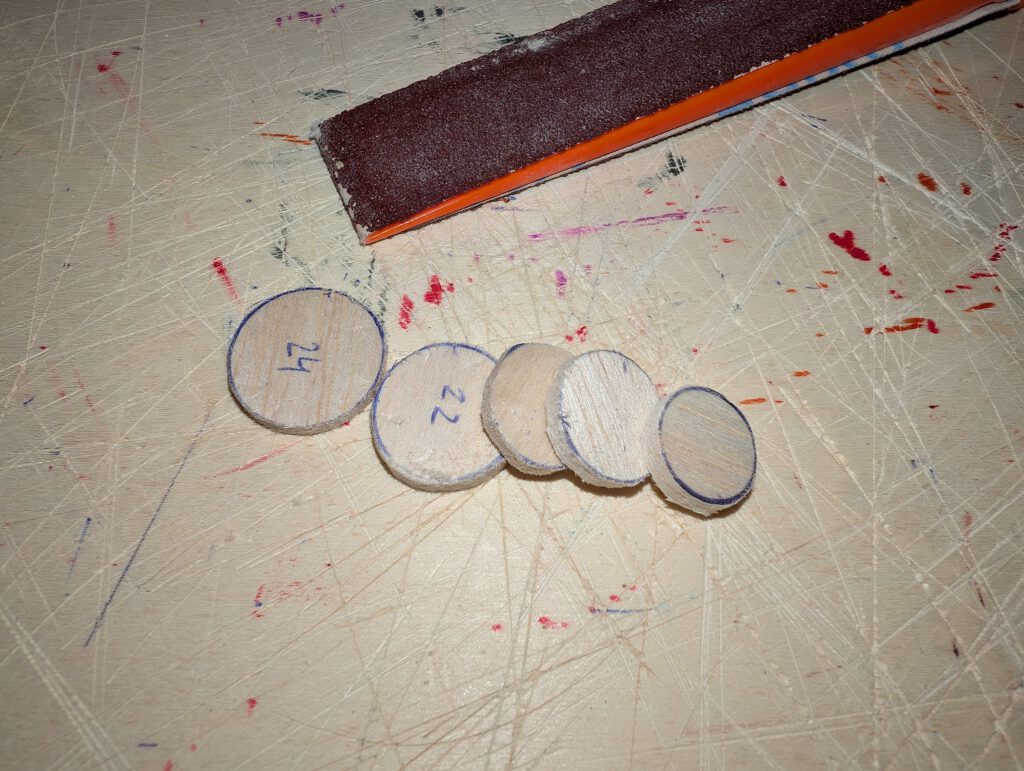
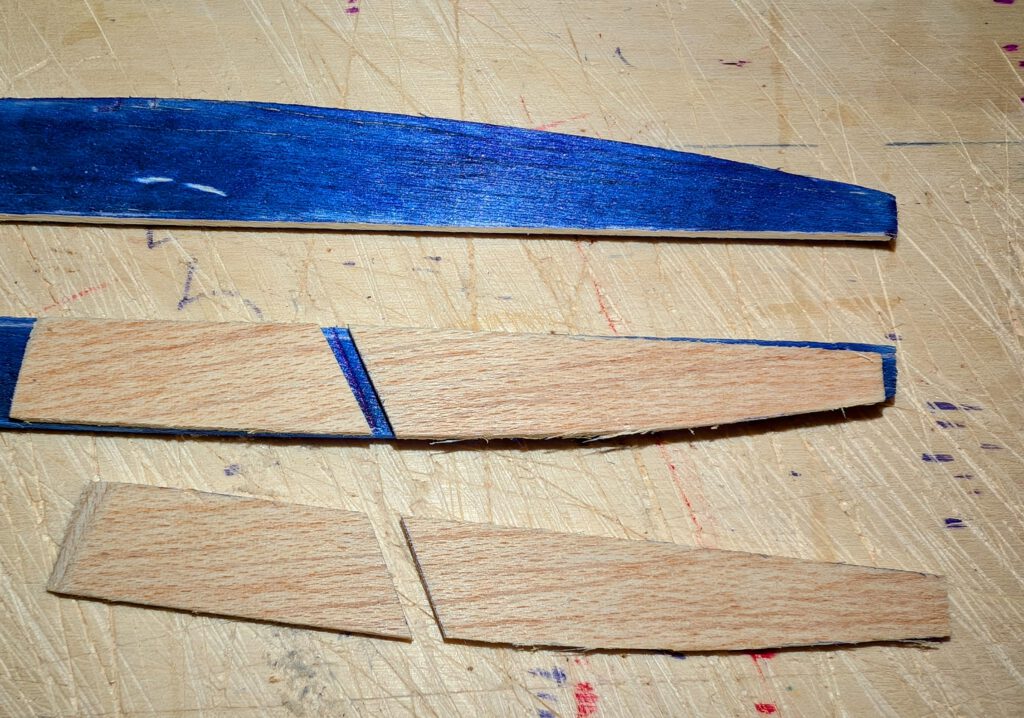
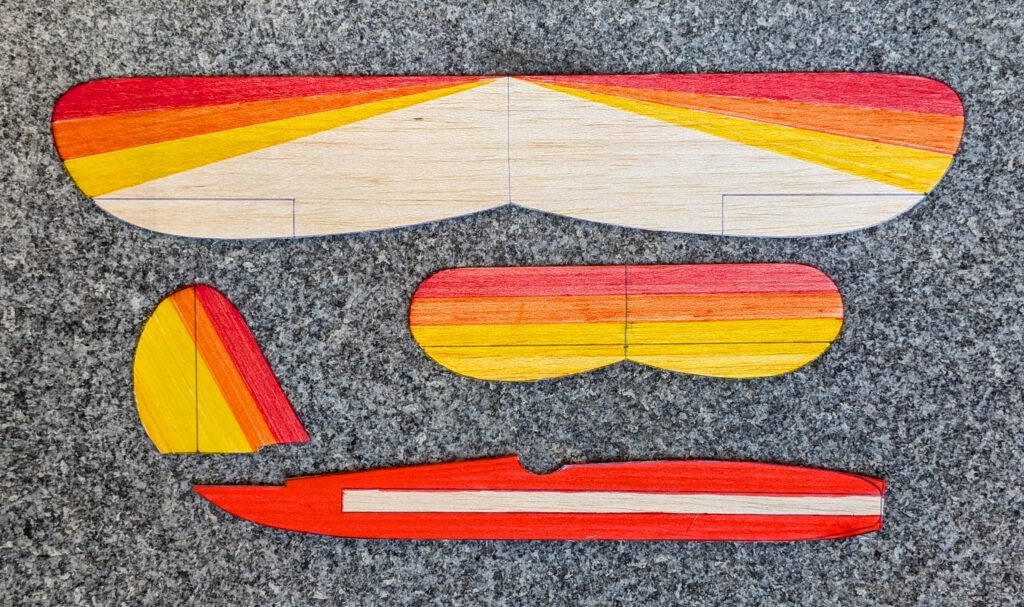
Cut out balsa parts in accordance to plan. Sand well (photo). Transfer outlines of rudders, elevators, etc. from paper to wood with pen. If desired paint model parts now.
Wing:
Wing consists of a right and a left wing-half.
If you intend to fly over rough terrain reinforce wing leading edges as shown on plan with linen band.
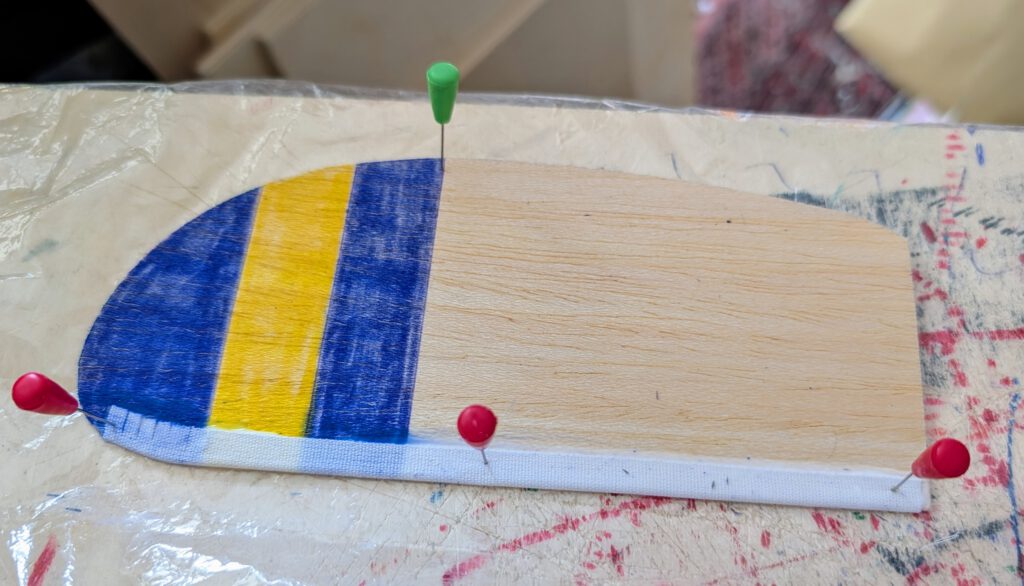
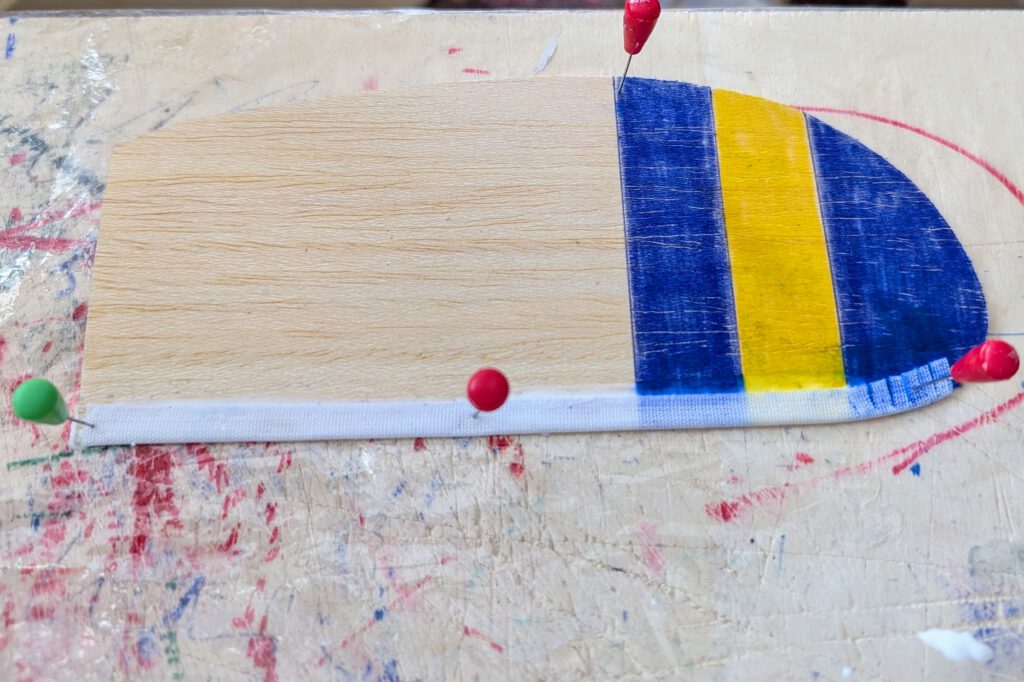
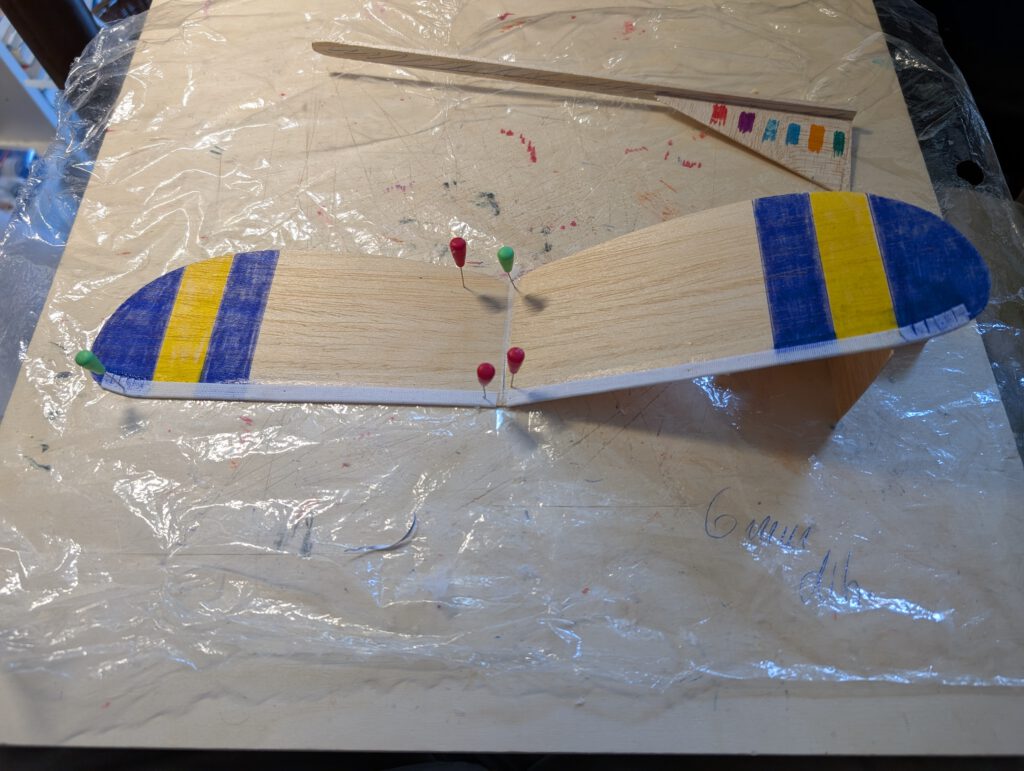
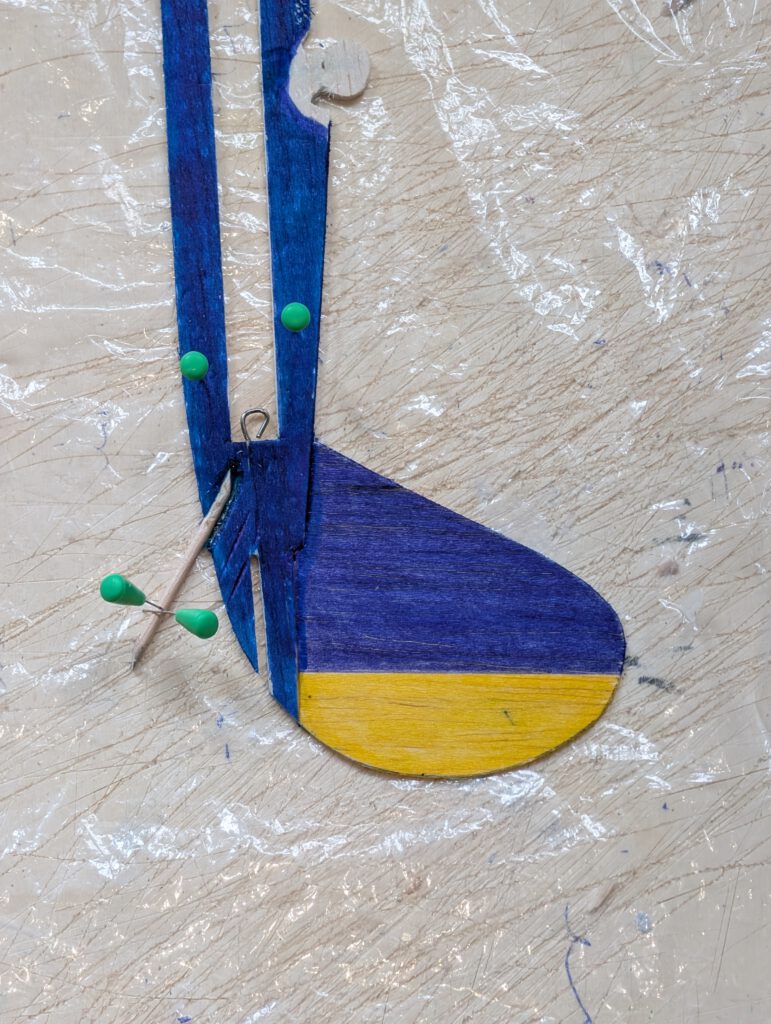
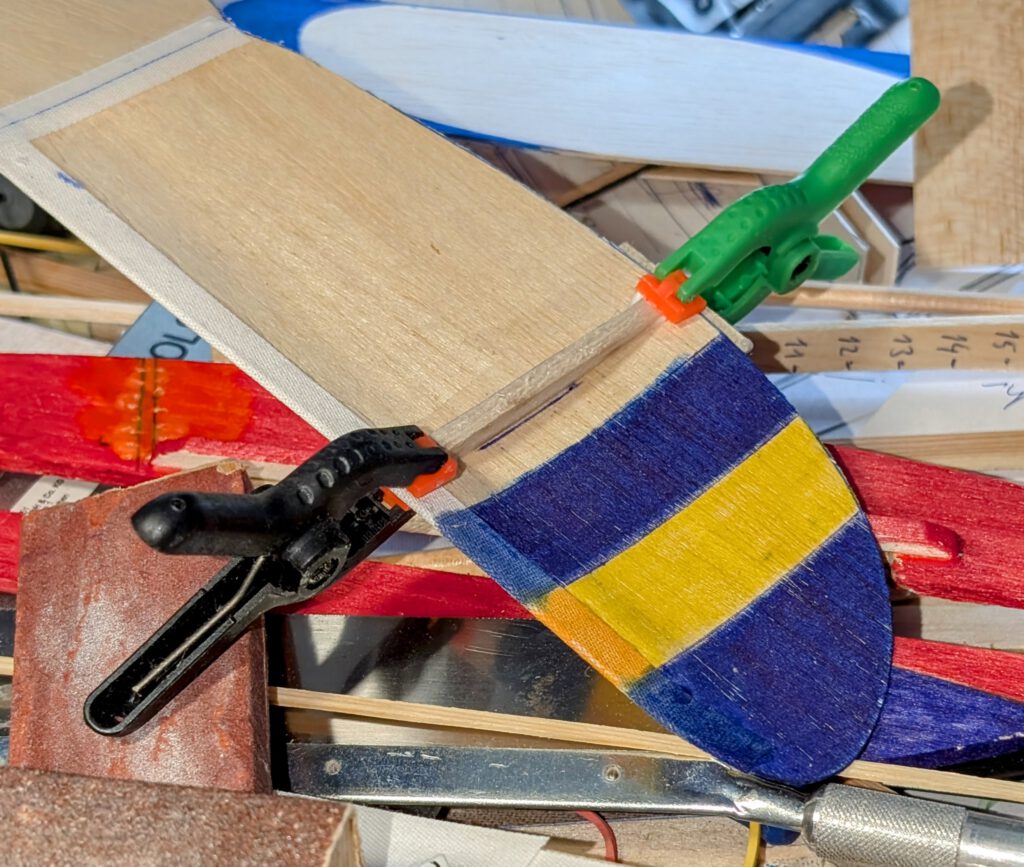
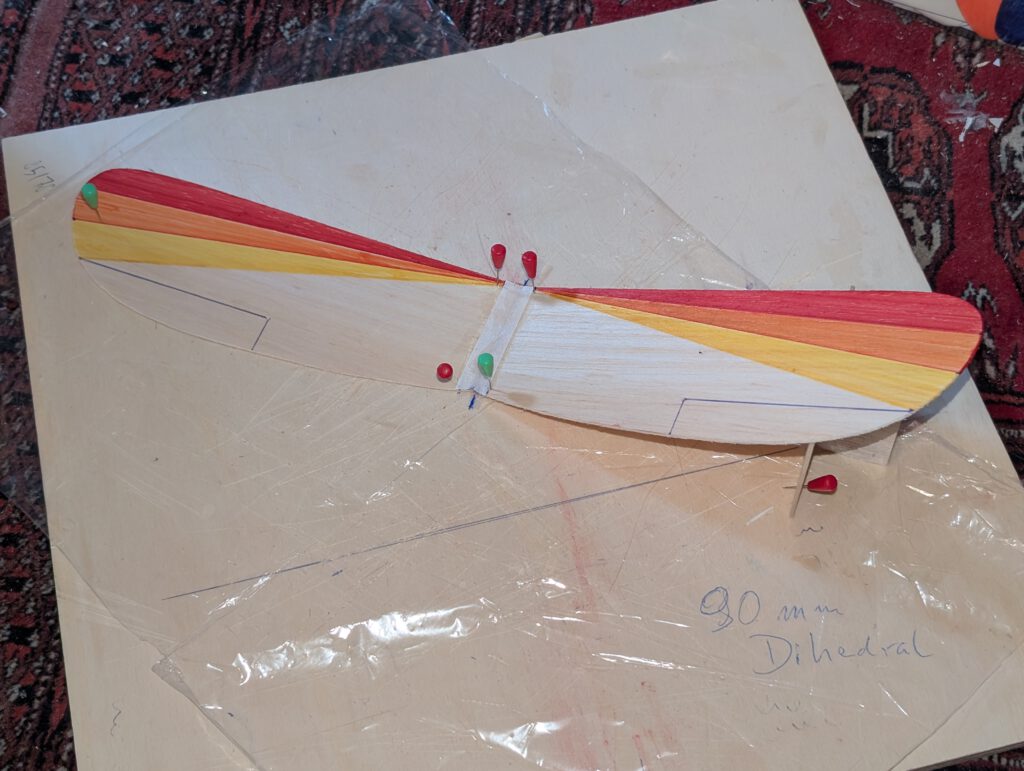
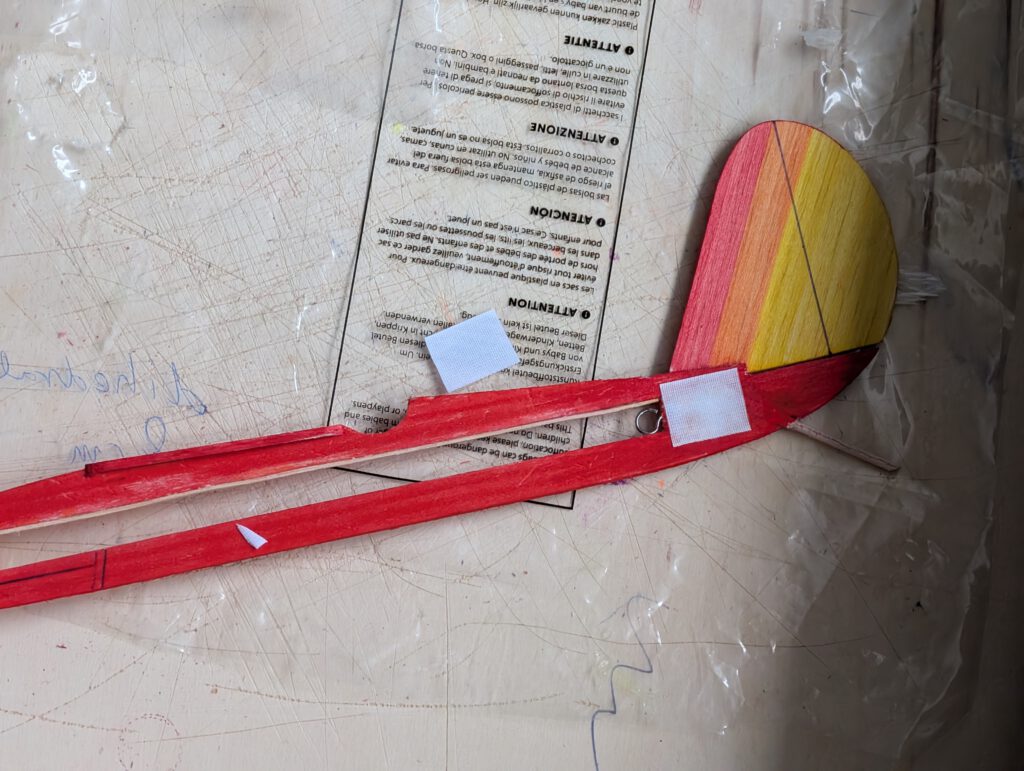
Fix one wing half on building board with pins. Cement corresponding half to it by paying attention to dihedral given on plan. When dry reinforce joining area with linen band (photo) and let dry.
Optionally ribs can be cemented at given position. Wings with a curved line, i.e. profiled wings usually improve flight characteristics considerably.
If wing has tendency to rest on one side only, then it is too heavy on this side. To compensate the imbalance, disperse a small amount of white wood glue on the opposite wing tip area underside and let dry. Do it, if necessary, twice until balance is obtained. Let dry.
Fuselage:
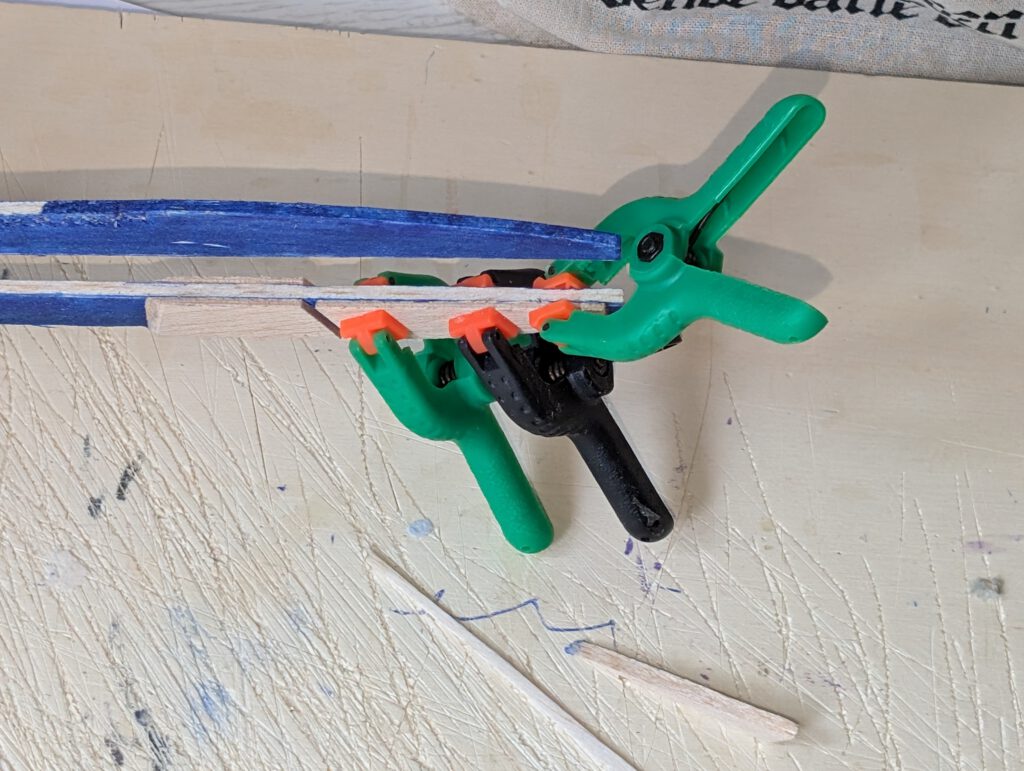
Cement fin on fuselage. Let dry.
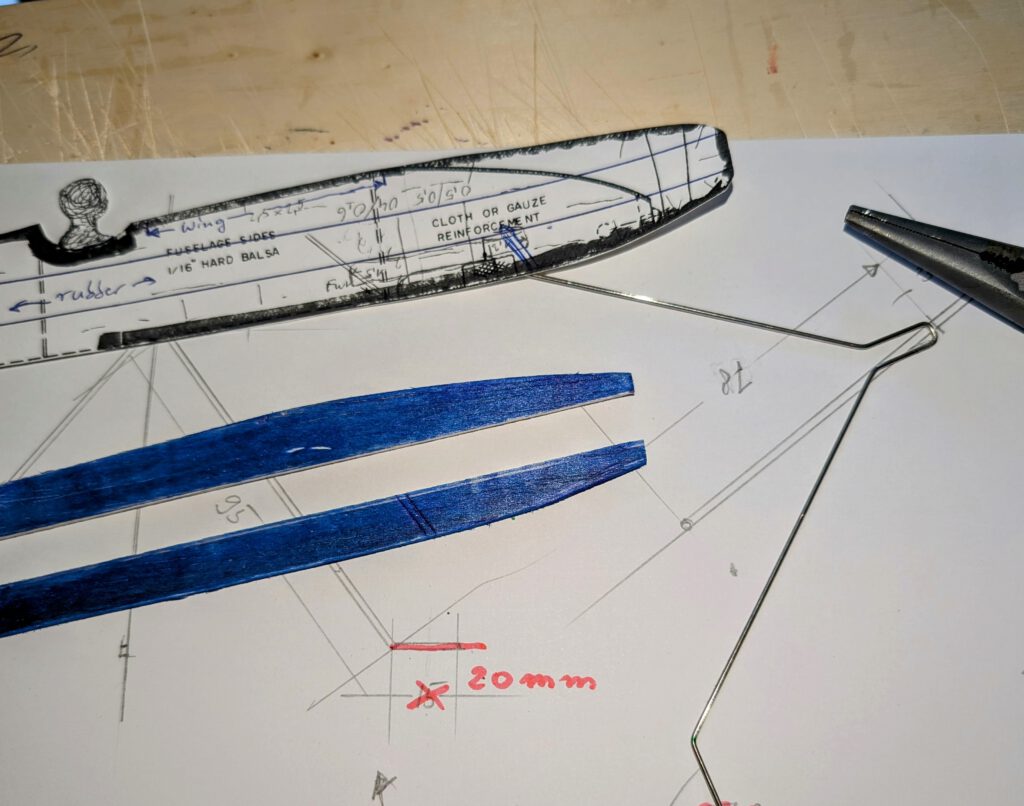
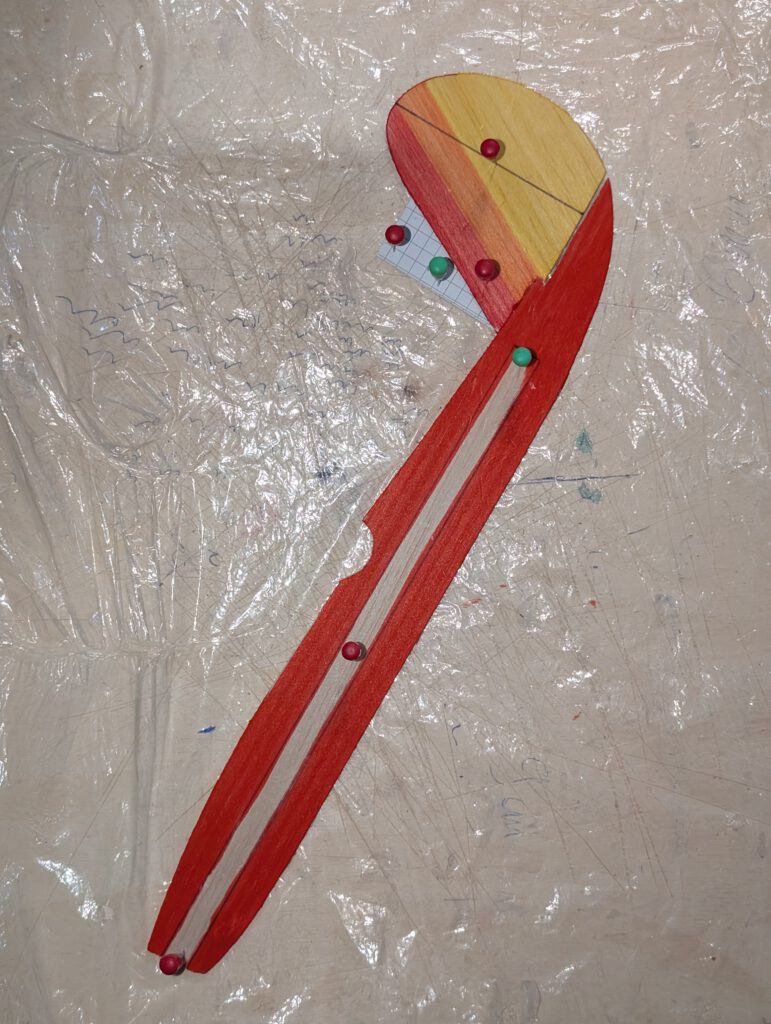
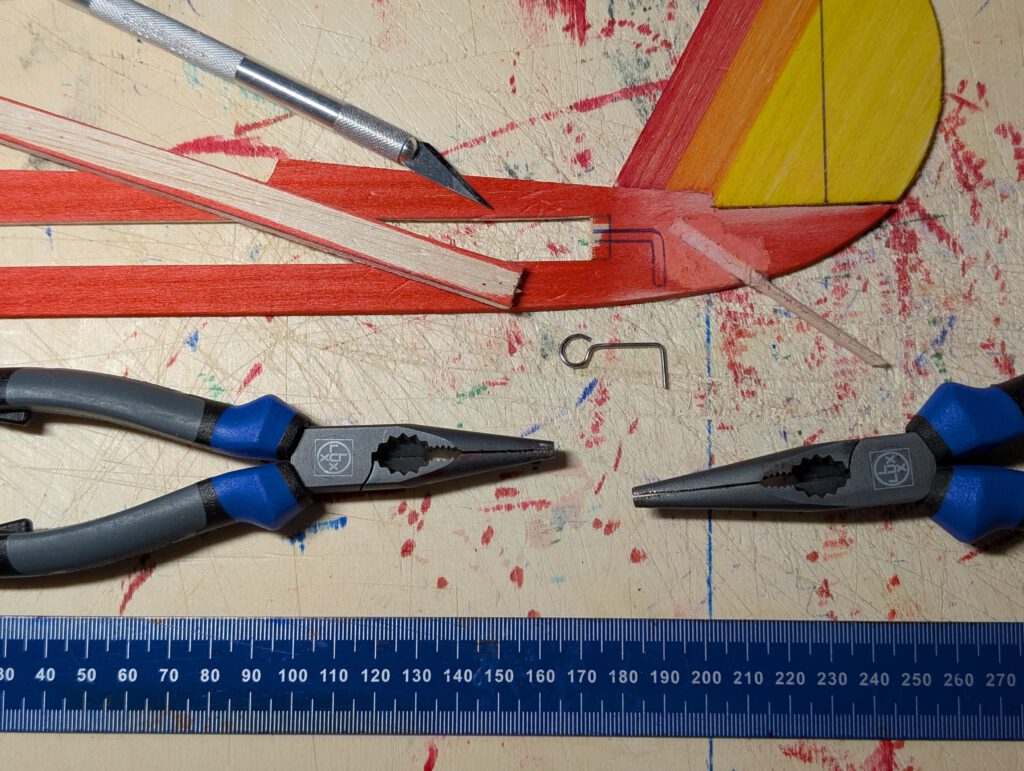
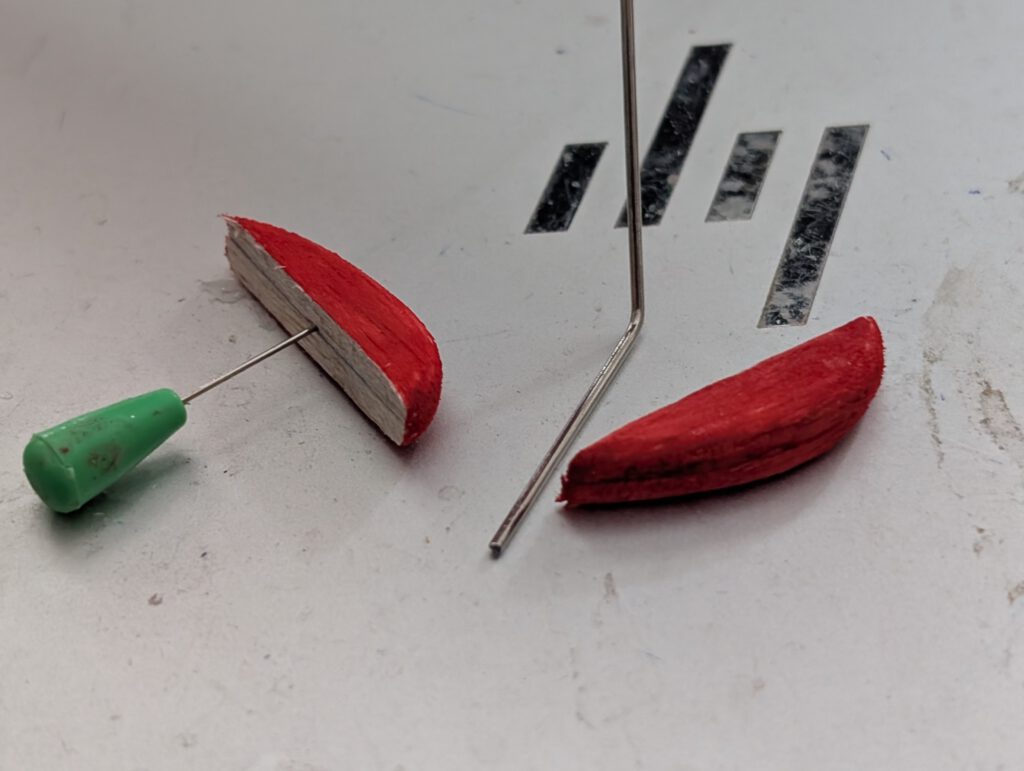
Bend as shown on plan piano wire into given hook shape. Carve out with knife and round file seat for rubber hook on left or right side of fuselage. Cement hook in place and cover hook area with linen band as seen on photos and on plan. Let dry.
Make cutout for tail skid, then install into fuselage and let dry.
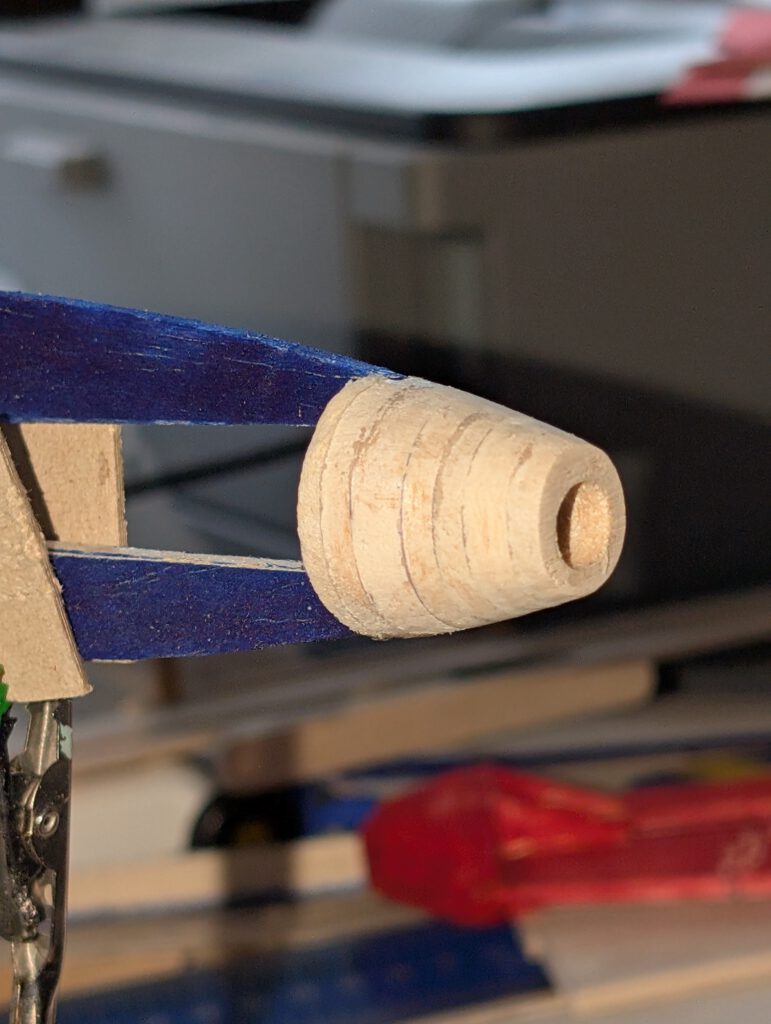
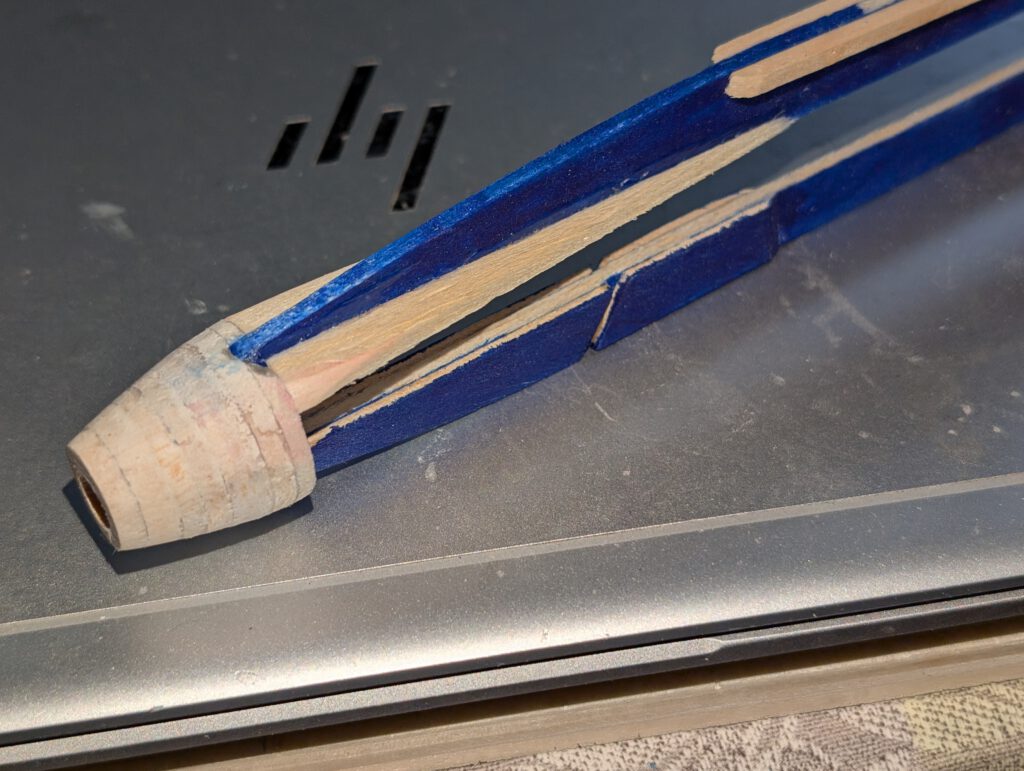
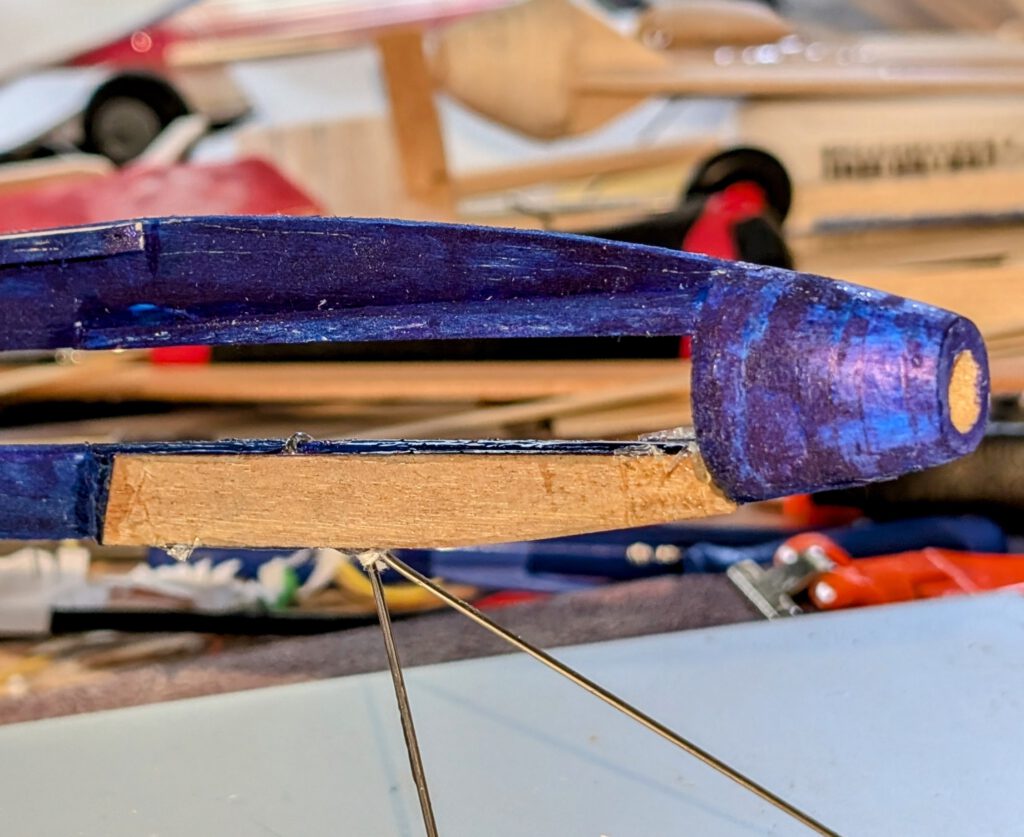
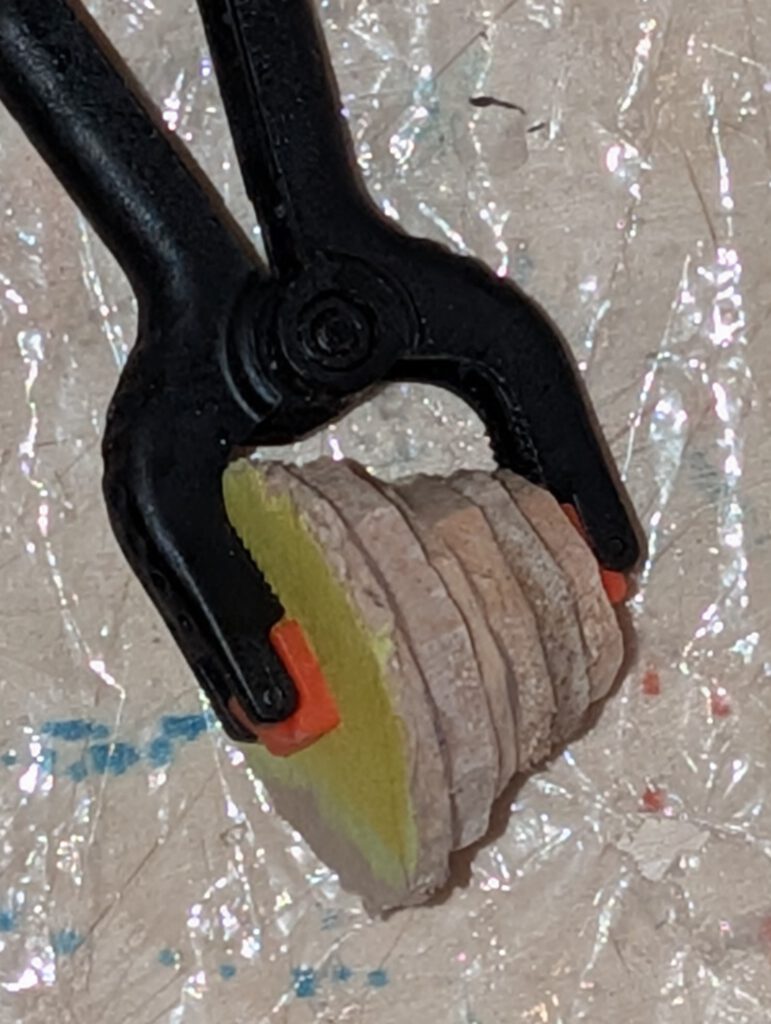
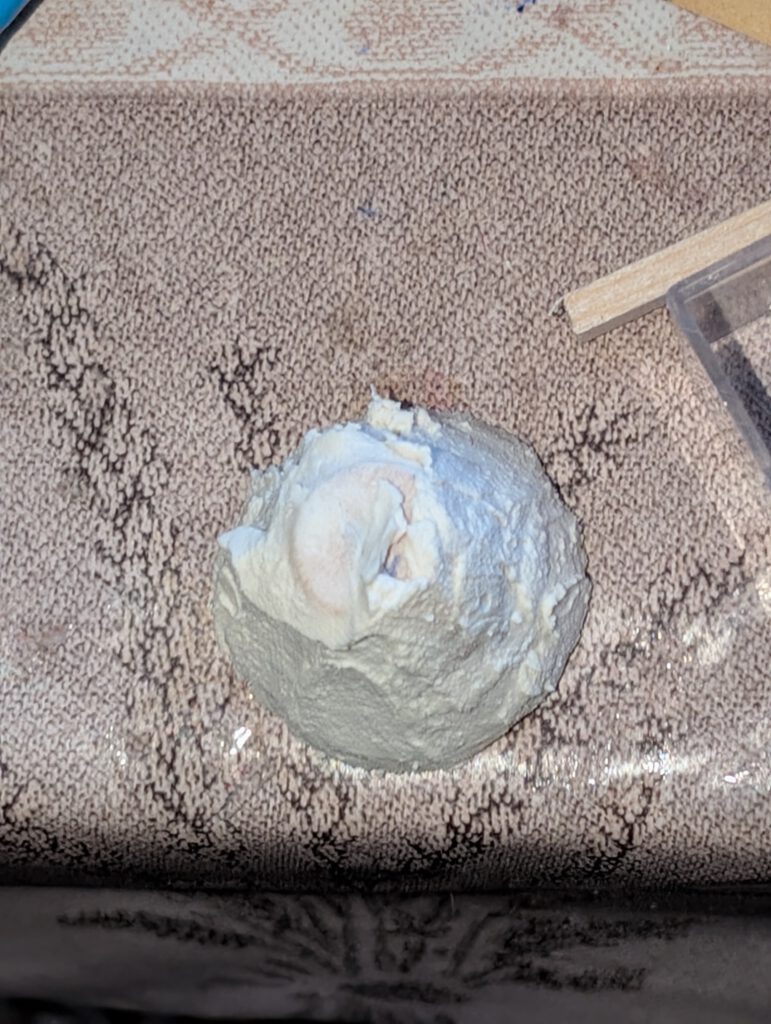
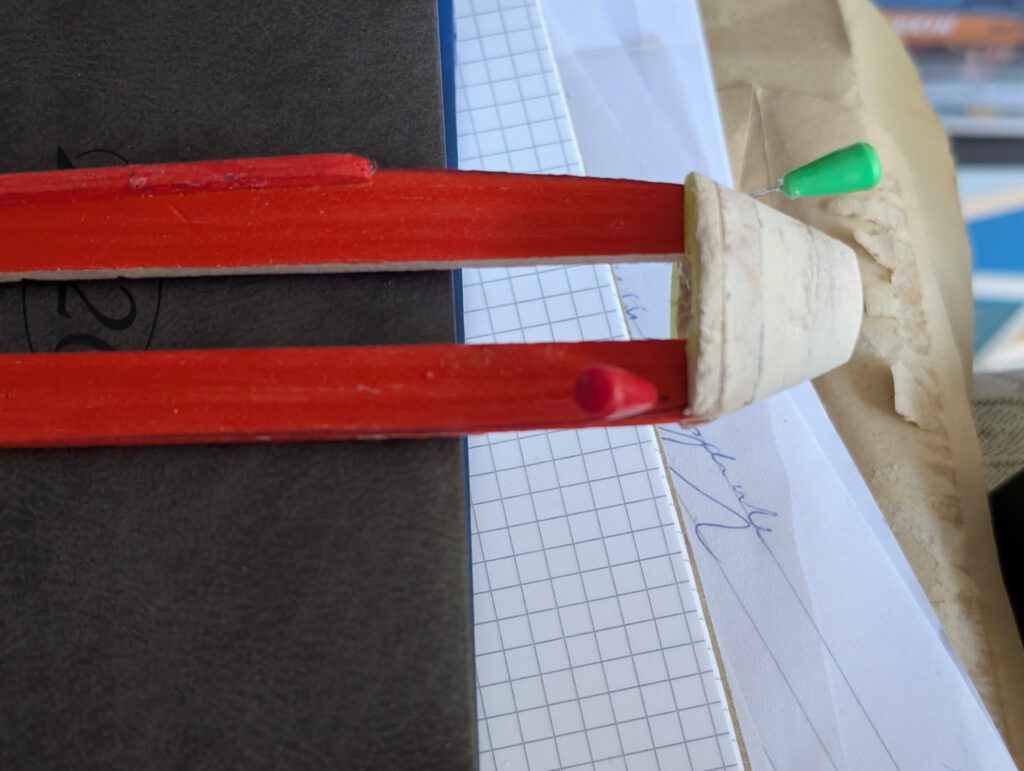
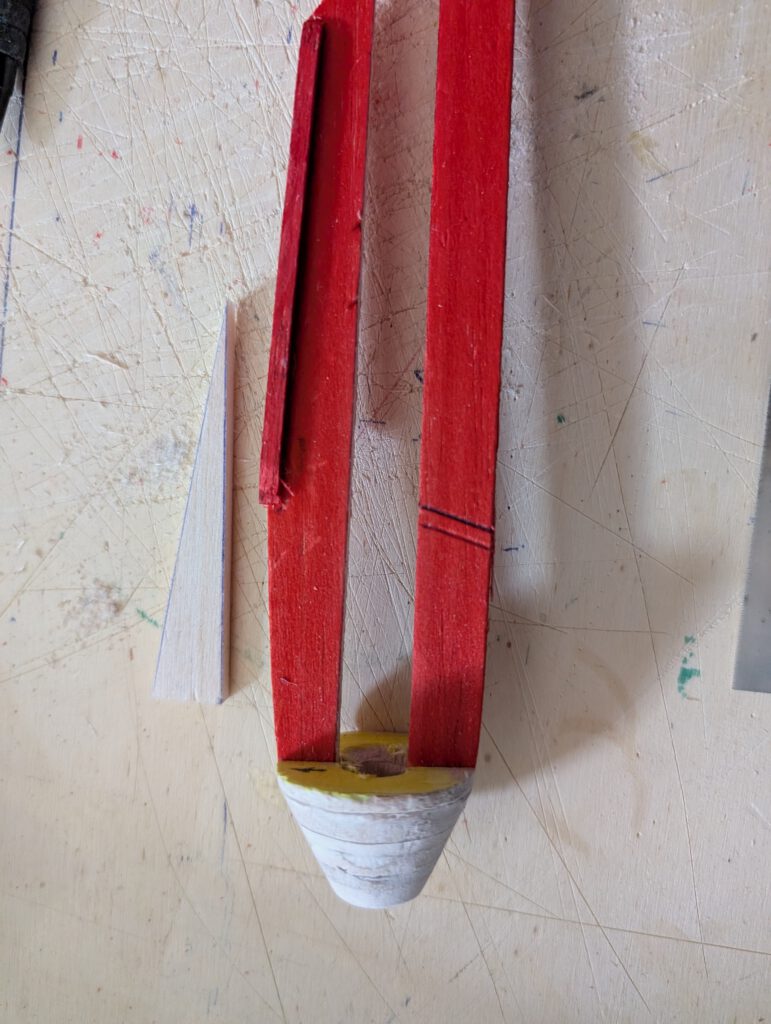
Cement round B 3 nose parts one on the other as shown on plan and let dry. Sand well than treat this part with balsa putty. When dry sand again. May be this procedure has to be repeated. When the nose part is smooth you can start to carve out opening which will hold prop-bearing. Start from behind and don’t do it in a hurry. A little electric drill machine can be useful.
Cement nose assembly onto fuselage according to plan and photos. Let dry.
Landing gear:
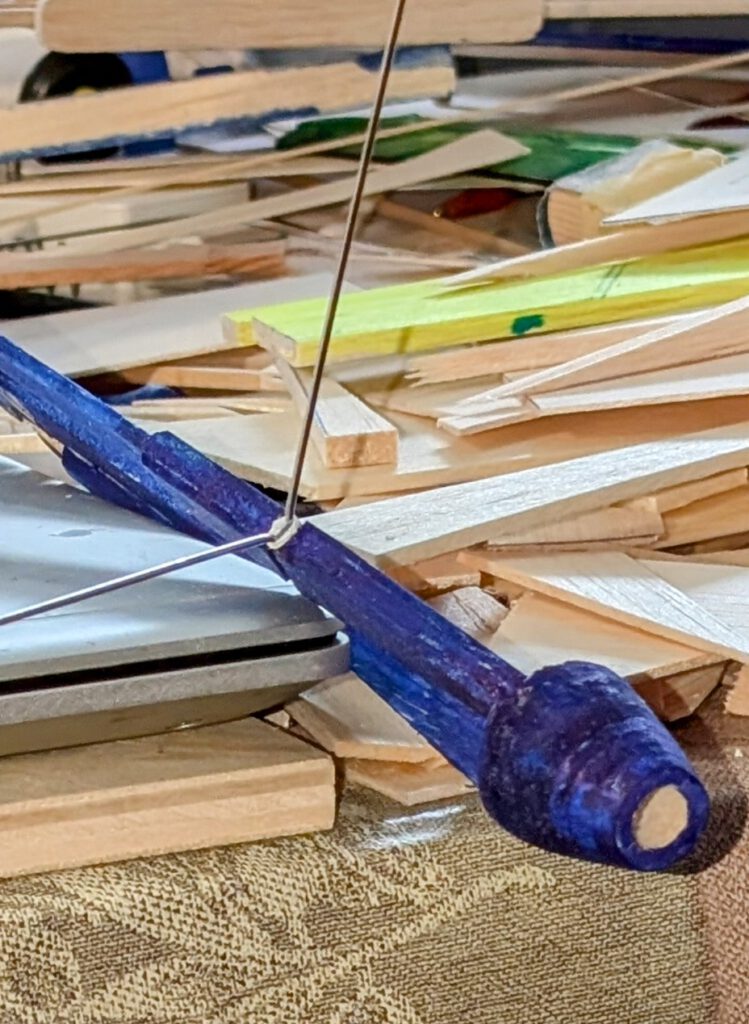
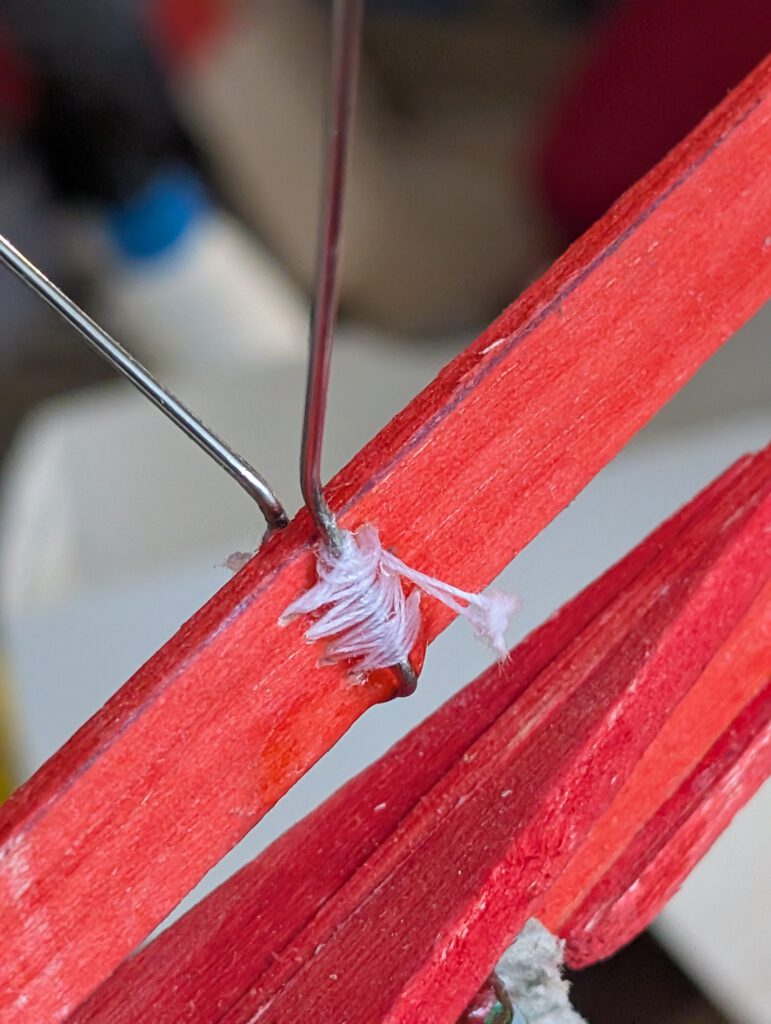
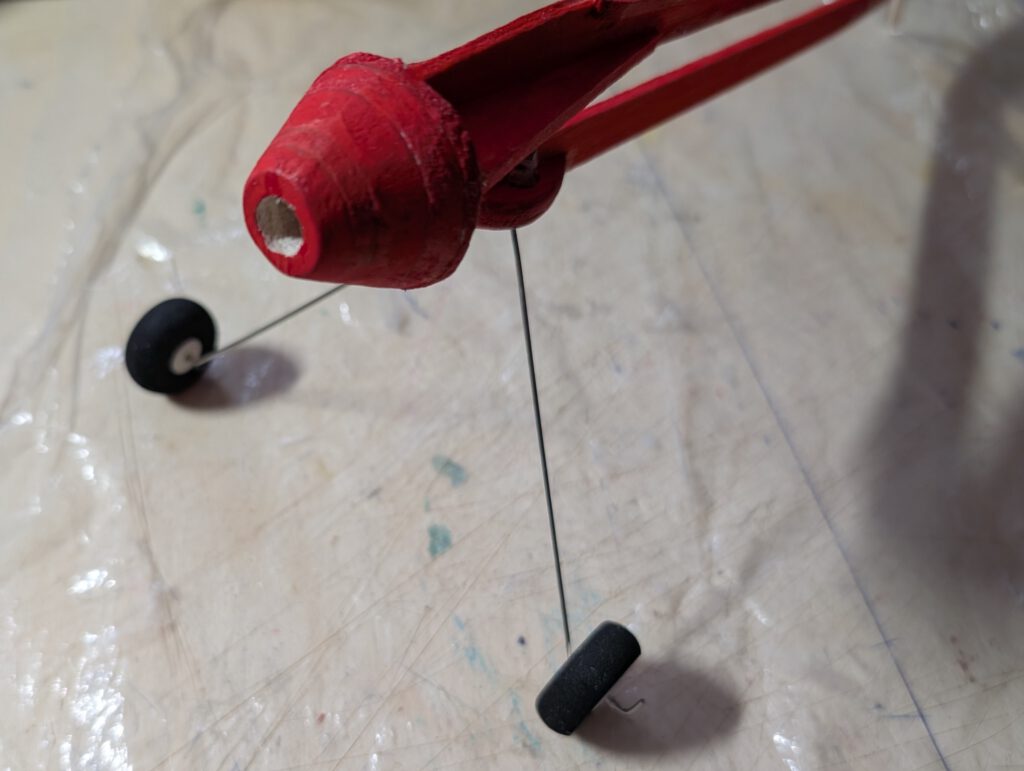
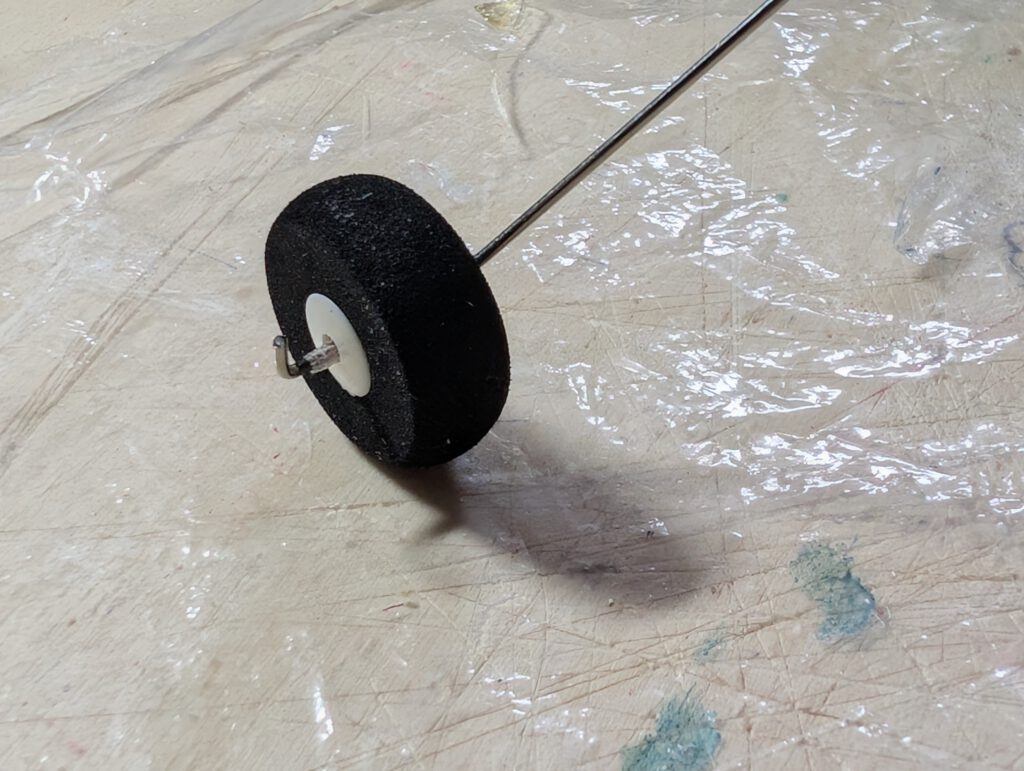
Bend piano wire according to pattern on plan. It is easier than you might think, just start to do it with the help of two needle nose pliers. Regularly compare your result with pattern on plan and correct if necessary. Mark position of landing gear wire on fuselage. Drill little holes into the hull along later seat of landing gear wire. Sew the wire tight to the fuselage with a solid strong thread as shown (photo). Watch for symmetry. Make little cutouts on those B 3 and B 5 balsa parts which will later embrace landing gear wire. Cement or epoxy these parts into their respective places as shown on plan and let dry. Cover still exposed area around the wire generously with cement or epoxy. Let dry. Install wheels as shown on photos.
Pilot:
Carve figure from scratch balsa. Paint and cement it into place.
Empennage:
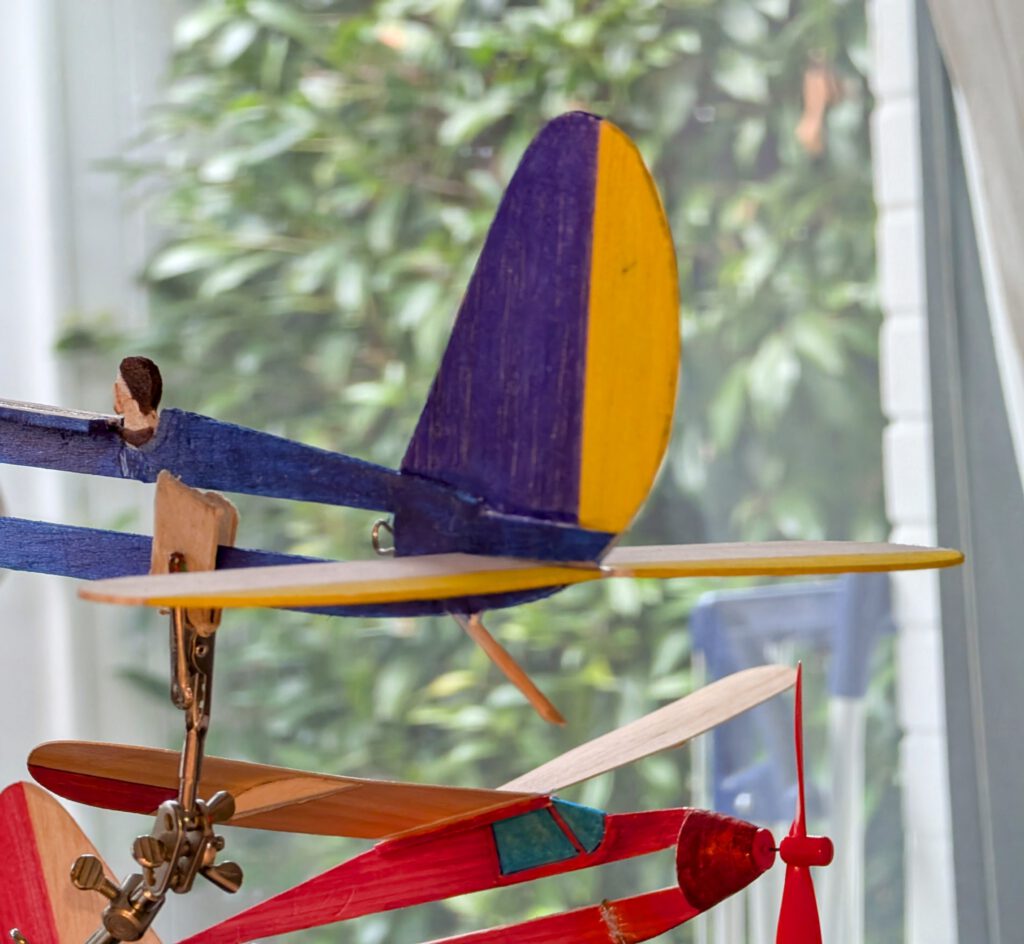
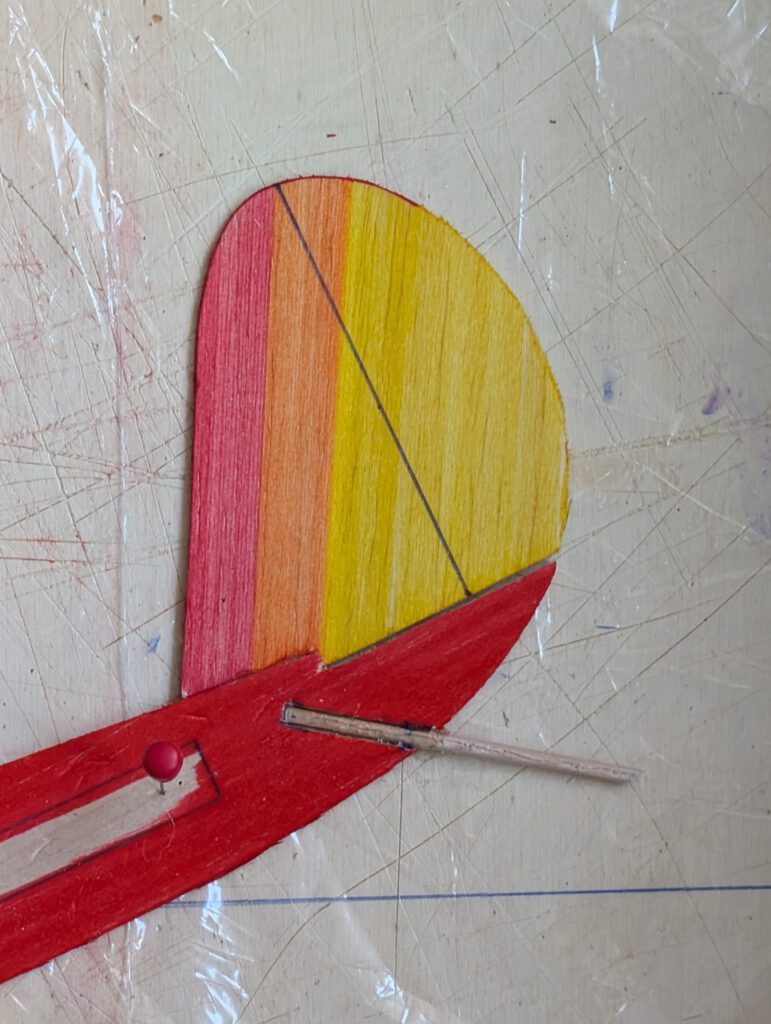
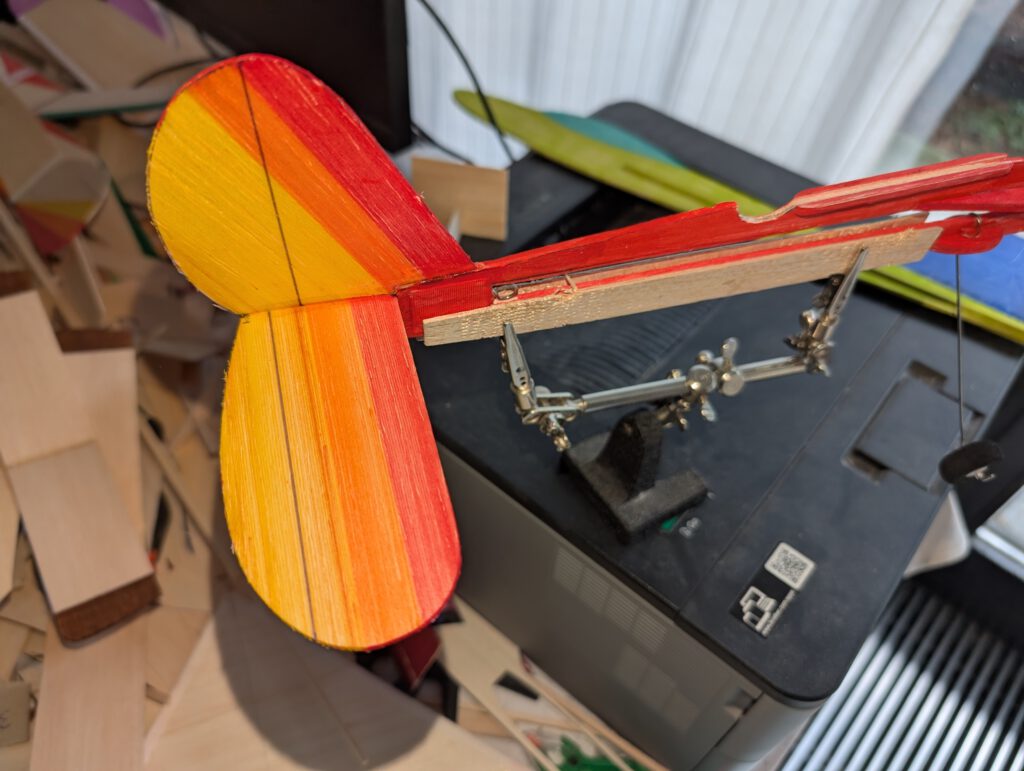
Fix fuselage on a third hand (photo). Cement horizontal stabilizer into its slot on fuselage if necessary use pins to hold. Visual check symmetry from all sides. Let dry.
Final Assembly:
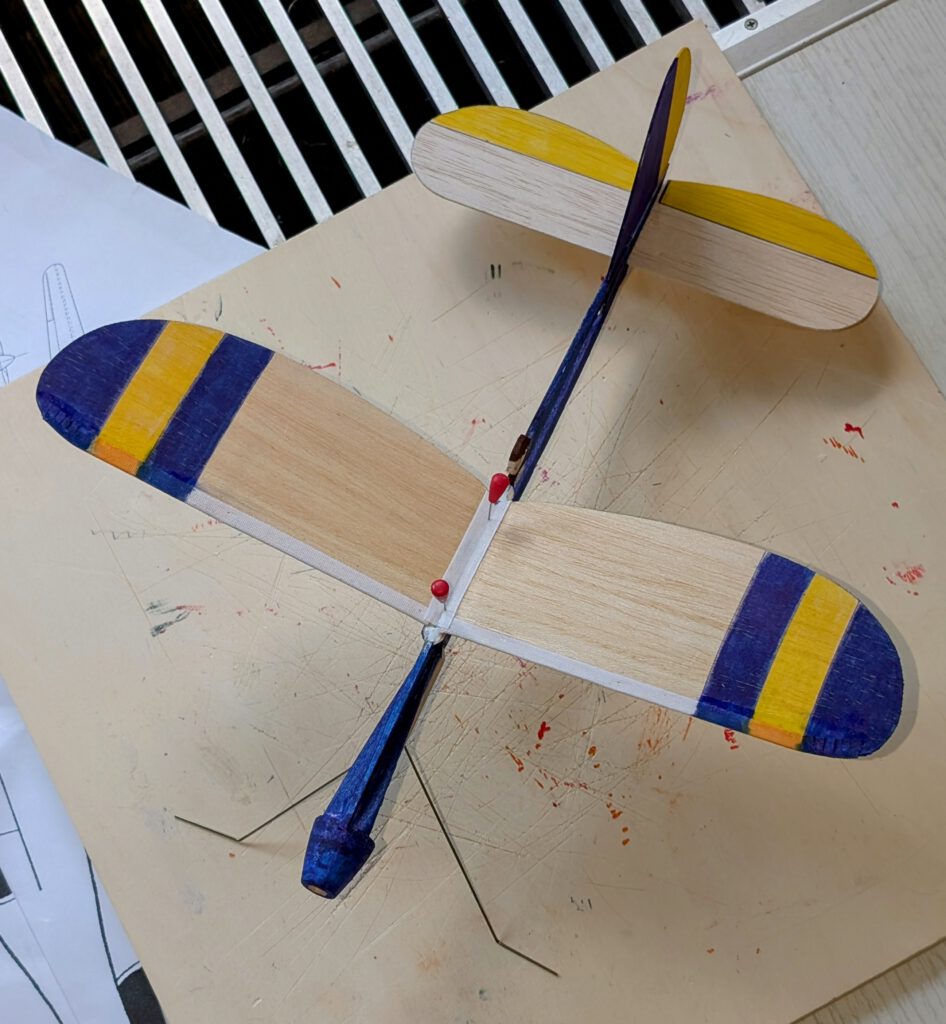
Remove fuselage assembly from third hand, turn it upside down and fix it again on third hand. Cement wing on fuselage and fuselage supports at the position given on plan using pins to hold in place. Doublecheck visually symmetry. Let dry.
A piece of lead or scrap metal may be used to balance model if necessary. My model was balanced nearly correctly without any ballast as prop and landing gear act as ballast too.
Remember correct center of gravity (CG) is essential for successful flights.
Palju edukaid lende! (Paljon onnistuneita lentoja!)
Leave a Reply